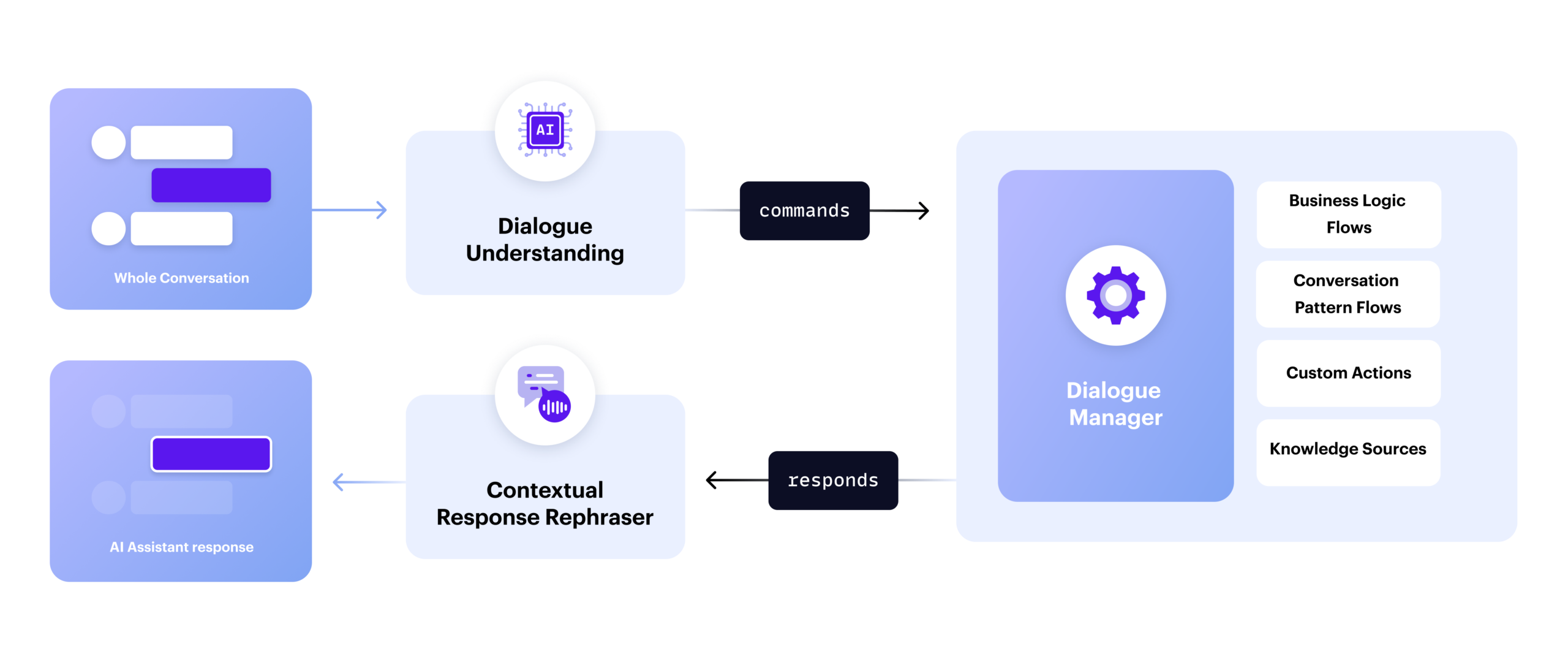
The Rise of Conversational AI: Transforming Human-Computer Interaction
In recent years, conversational AI has emerged as a groundbreaking technology, fundamentally altering the way humans interact with machines. This innovation encompasses technologies like chatbots and virtual assistants, which are designed to simulate human-like conversations. As these systems become more sophisticated, they are increasingly integrated into various aspects of daily life and business operations.
What is Conversational AI?
Conversational AI refers to the use of artificial intelligence to enable computers to understand, process, and respond to human language in a natural way. This involves a combination of natural language processing (NLP), machine learning, and speech recognition technologies. The goal is to create systems that can engage in meaningful dialogue with users, providing information or assistance in a conversational manner.
Key Components
- Natural Language Processing (NLP): NLP allows machines to interpret and understand human language. It involves breaking down sentences into their components and analyzing them for meaning.
- Machine Learning: Through machine learning algorithms, conversational AI systems can learn from interactions and improve over time. This enables them to provide more accurate responses based on past conversations.
- Speech Recognition: This technology converts spoken language into text that the system can process. It is a crucial component for voice-activated assistants like Siri or Alexa.
Applications of Conversational AI
The applications of conversational AI are vast and varied, impacting numerous industries:
- Customer Service: Many companies deploy chatbots on their websites or apps to handle customer inquiries efficiently 24/7. These bots can resolve common issues without human intervention, freeing up customer service representatives for more complex tasks.
- E-commerce: Virtual shopping assistants guide customers through their purchasing journey by providing recommendations based on previous purchases or preferences.
- Healthcare: Conversational AI assists patients by scheduling appointments or providing preliminary diagnoses based on symptoms described by users.
- Banks and Finance: Financial institutions use chatbots for account management tasks such as checking balances or transferring funds securely.
The Future of Conversational AI
The future holds exciting possibilities for conversational AI as advancements continue at a rapid pace. We can expect improved contextual understanding where systems grasp not only words but also intent behind them—leading towards more personalized interactions tailored specifically towards each user’s needs/preferences while maintaining privacy/security concerns paramount throughout development processes involved therein too!
The integration across multiple platforms/devices will become seamless allowing fluid transitions between different mediums (text/voice) without losing context/continuity during exchanges happening therein too! Moreover ethical considerations surrounding data privacy/security must remain top priority ensuring trustworthiness/reliability among consumers utilizing these services daily basis worldwide today tomorrow alike!
9 Essential Tips for Optimizing Conversational AI Interactions
- Understand the user’s intent accurately
- Provide clear and concise responses
- Personalize interactions based on user data
- Offer multi-channel support for seamless experience
- Implement natural language processing for better understanding
- Use machine learning to improve over time
- Maintain a consistent tone and personality
- Allow users to easily escalate to human support when needed
- Regularly analyze data and feedback for continuous improvement
Understand the user’s intent accurately
Understanding the user’s intent accurately is a crucial aspect of conversational AI that significantly enhances the user experience. By accurately interpreting what a user wants to achieve, AI systems can provide more relevant and effective responses, leading to increased satisfaction and engagement. This involves not only recognizing the words being used but also grasping the context and nuances behind them. Advanced natural language processing techniques enable AI to discern intent even when users express themselves in varied or ambiguous ways. As a result, businesses can offer personalized interactions that feel intuitive and responsive, ultimately building trust and improving communication with their audience.
Provide clear and concise responses
In the realm of conversational AI, providing clear and concise responses is essential for enhancing user experience and ensuring effective communication. When AI systems deliver straightforward answers, users can quickly grasp the information they need without confusion or frustration. This clarity not only improves user satisfaction but also builds trust in the technology. By eliminating unnecessary jargon and focusing on delivering precise information, conversational AI can more effectively assist users, whether it’s answering a simple query or guiding them through a complex process. Ultimately, clear and concise responses help streamline interactions, making them more efficient and user-friendly.
Personalize interactions based on user data
Personalizing interactions based on user data is a crucial aspect of enhancing the effectiveness and user experience of conversational AI systems. By leveraging data such as past interactions, preferences, and behavior patterns, these systems can tailor responses to better meet the individual needs and expectations of each user. This personalization not only makes the interaction more relevant and engaging but also fosters a sense of connection between the user and the AI. For instance, a virtual assistant that remembers a user’s favorite music genre or frequently asked questions can provide quicker, more accurate responses, thereby improving satisfaction and encouraging continued use. However, it’s essential to handle user data responsibly, ensuring privacy and security are maintained to build trust in these AI-driven interactions.
Offer multi-channel support for seamless experience
In today’s digital landscape, offering multi-channel support is essential for delivering a seamless conversational AI experience. Users interact with brands across various platforms, including websites, mobile apps, social media, and messaging services. By integrating conversational AI across these channels, businesses ensure that users receive consistent and coherent interactions regardless of the medium they choose. This approach not only enhances user satisfaction by providing flexibility and convenience but also allows for a unified customer journey. Whether a user starts a conversation on a website and continues it via a mobile app or switches from text to voice interaction, the transition should be smooth and uninterrupted. Implementing multi-channel support helps in maintaining context and continuity in conversations, thereby fostering stronger customer relationships and improving overall engagement.
Implement natural language processing for better understanding
Implementing natural language processing (NLP) in conversational AI systems significantly enhances their ability to understand and interpret human language. By breaking down sentences into their fundamental components, NLP allows these systems to grasp the context, sentiment, and intent behind user inputs. This deeper understanding enables more accurate and relevant responses, creating a more seamless and human-like interaction experience. As a result, users are likely to find these AI-driven conversations more intuitive and satisfying. Moreover, as NLP technology continues to advance, it can further refine the nuances of language, accommodating diverse linguistic styles and regional dialects. This makes conversational AI not only more effective but also more inclusive in its communication capabilities.
Use machine learning to improve over time
Machine learning plays a crucial role in enhancing the capabilities of conversational AI systems over time. By leveraging machine learning algorithms, these systems can analyze vast amounts of interaction data to identify patterns and trends. This enables them to adapt and refine their responses based on past conversations, leading to more accurate and contextually relevant interactions. As the system learns from user inputs, it becomes better at understanding nuances in language, recognizing user intent, and handling diverse queries with greater efficiency. This continuous improvement not only enhances user satisfaction but also allows businesses to provide more personalized and effective customer service experiences.
Maintain a consistent tone and personality
Maintaining a consistent tone and personality in conversational AI is crucial for creating a seamless and engaging user experience. When interacting with chatbots or virtual assistants, users expect a coherent and predictable communication style that aligns with the brand’s identity or the intended purpose of the AI. A consistent tone helps build trust and familiarity, making interactions feel more natural and human-like. Whether the AI is designed to be formal, friendly, or humorous, sticking to a defined personality ensures that users know what to expect in their interactions, which can enhance satisfaction and encourage continued engagement. This consistency also aids in reinforcing brand recognition and can lead to more positive perceptions of both the technology and the organization behind it.
Allow users to easily escalate to human support when needed
In the realm of conversational AI, it’s crucial to provide users with a seamless way to escalate interactions to human support when necessary. While AI-driven chatbots and virtual assistants are excellent at handling routine inquiries and tasks, there are instances where the complexity or emotional nuance of a situation requires human intervention. By offering a straightforward and efficient path to connect with a live representative, businesses can enhance customer satisfaction and trust. This approach not only ensures that users feel valued and understood but also allows AI systems to focus on tasks they handle best, ultimately creating a more balanced and effective support system.
Regularly analyze data and feedback for continuous improvement
Regularly analyzing data and feedback is crucial for the continuous improvement of conversational AI systems. By examining interaction logs, user feedback, and performance metrics, developers can identify patterns, understand user behavior, and pinpoint areas that require enhancement. This ongoing analysis allows for the refinement of language models, the correction of errors, and the optimization of response accuracy. Additionally, by staying attuned to user needs and preferences through feedback, developers can tailor the AI to provide more personalized and relevant interactions. Ultimately, this iterative process not only enhances user satisfaction but also ensures that the conversational AI remains effective and efficient in meeting its objectives.