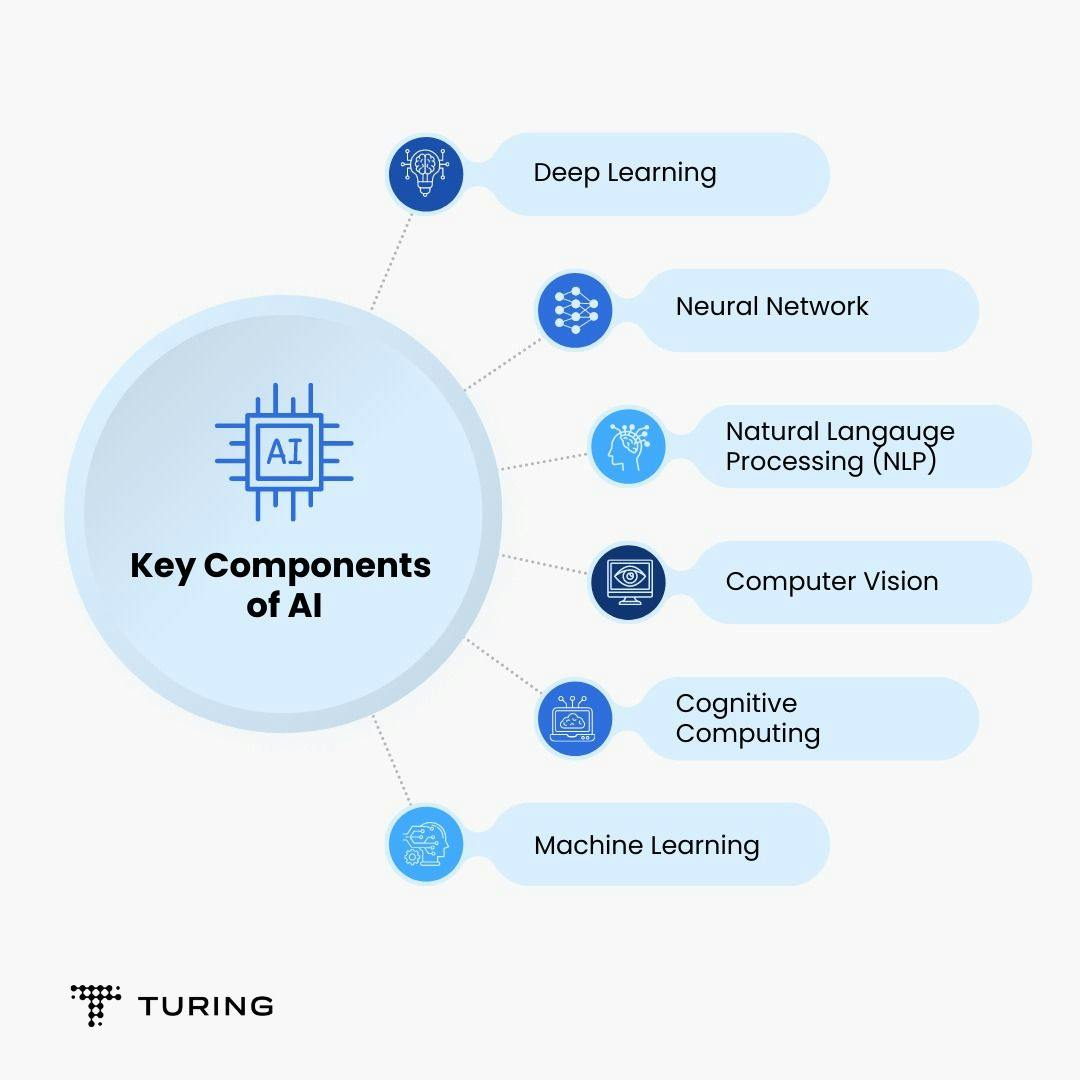
Understanding the Elements of AI
Artificial Intelligence (AI) has become an integral part of modern society, influencing various aspects of daily life and transforming industries. Understanding the fundamental elements of AI is crucial for anyone looking to grasp how this technology works and its potential impact on the future.
Machine Learning
Machine learning is a subset of AI that focuses on developing algorithms that allow computers to learn from and make predictions based on data. It involves training models using large datasets to recognize patterns and improve decision-making over time. Common applications include recommendation systems, image recognition, and natural language processing.
Neural Networks
Neural networks are inspired by the structure and function of the human brain. They consist of interconnected nodes or “neurons” that process information in layers. This architecture enables neural networks to handle complex tasks such as speech recognition, image classification, and autonomous driving.
Natural Language Processing (NLP)
NLP is a field within AI that focuses on the interaction between computers and humans through natural language. It involves enabling machines to understand, interpret, and generate human language in a way that is both meaningful and useful. Applications include chatbots, language translation services, and sentiment analysis.
Robotics
Robotics combines AI with engineering to create machines capable of performing tasks autonomously or semi-autonomously. AI-powered robots are used in various sectors such as manufacturing, healthcare, and logistics to increase efficiency, precision, and safety.
Computer Vision
Computer vision enables machines to interpret visual information from the world around them. By leveraging deep learning algorithms, computer vision systems can identify objects, track movements, and even understand scenes at a high level of accuracy. This technology is essential for applications like facial recognition systems and autonomous vehicles.
The Impact of AI
The integration of these elements has led to significant advancements across industries such as healthcare, finance, transportation, and entertainment. While AI offers numerous benefits such as increased efficiency and new capabilities, it also raises ethical concerns regarding privacy, security, and job displacement.
The Future of AI
The future holds exciting possibilities for AI development as researchers continue to push the boundaries of what machines can achieve. As we move forward into an increasingly automated world, understanding these core elements will be key in harnessing the full potential of artificial intelligence while addressing its challenges responsibly.
8 Key Advantages of AI Elements: Enhancing Efficiency and Innovation Across Industries
- Machine learning helps systems improve from data.
- Neural networks recognize complex patterns.
- Natural language processing enables human-computer communication.
- Computer vision helps machines interpret images.
- Robotics automates repetitive or hazardous tasks.
- AI can analyze large datasets quickly.
- AI tools support faster, data-informed decisions.
- AI elements power useful applications across many industries.
Challenges of AI: Bias, Energy Consumption, Privacy Risks, and Job Disruption
- AI systems can inherit bias from their training data.
- Training advanced models can consume significant energy.
- AI may expose sensitive data or threaten privacy.
- Automation can disrupt jobs and require new skills.
Machine learning helps systems improve from data.
Machine learning is a powerful aspect of artificial intelligence that enables systems to improve and adapt over time by learning from data. Unlike traditional programming, where specific instructions are coded for each task, machine learning algorithms identify patterns and make decisions with minimal human intervention. As more data becomes available, these systems refine their models, enhancing accuracy and efficiency in various applications such as predictive analytics, recommendation engines, and fraud detection. This capability allows businesses to gain insights from vast amounts of information, leading to better decision-making and innovation across industries.
Neural networks recognize complex patterns.
Neural networks excel at recognizing complex patterns due to their unique architecture, which mimics the human brain’s interconnected neurons. This capability allows them to process vast amounts of data and identify intricate relationships within that data, making them particularly effective for tasks such as image and speech recognition. By learning from examples, neural networks can discern subtle differences and similarities that might be challenging for traditional algorithms to detect. This ability to recognize complex patterns enables advancements in various fields, including healthcare for early disease detection, finance for fraud detection, and autonomous vehicles for navigating dynamic environments safely.
Natural language processing enables human-computer communication.
Natural language processing (NLP) makes it easier for people to communicate with computers using everyday language. Instead of relying only on menus or specialized commands, users can ask questions, give instructions, or describe what they need in words. This capability powers tools such as virtual assistants, chatbots, speech-to-text software, and translation services, making technology more accessible and convenient. By helping computers interpret and respond to human language, NLP creates more natural interactions between people and digital systems.
Computer vision helps machines interpret images.
Computer vision helps machines interpret images and video by identifying objects, patterns, and details within visual data. This capability supports practical tools such as medical imaging systems that help clinicians examine scans, quality-control systems that spot defects in products, and driver-assistance technology that detects traffic signs and pedestrians. By turning visual information into useful insights, computer vision can help people work more efficiently and make better-informed decisions.
Robotics automates repetitive or hazardous tasks.
One major benefit of robotics is that it can automate repetitive or hazardous tasks. Robots can perform routine work consistently, helping businesses improve efficiency and reduce human error. In dangerous environments—such as areas with toxic materials, extreme temperatures, or heavy machinery—they can take on tasks that might put workers at risk. This allows people to focus on work that requires human judgment, creativity, and care, while supporting safer workplaces.
AI can analyze large datasets quickly.
AI’s ability to analyze large datasets quickly is one of its most significant advantages, transforming how businesses and researchers approach data-driven decision-making. Traditional data analysis methods can be time-consuming and prone to human error, but AI algorithms can process vast amounts of information in a fraction of the time. This rapid analysis enables organizations to uncover patterns, trends, and insights that might otherwise remain hidden. As a result, companies can make more informed decisions, optimize operations, and respond swiftly to market changes. In fields like healthcare, finance, and logistics, the ability to quickly analyze large datasets can lead to improved outcomes, such as personalized treatment plans, better risk management strategies, and more efficient supply chain operations.
AI tools support faster, data-informed decisions.
AI tools have revolutionized decision-making processes by enabling faster, data-informed choices. These tools can analyze vast amounts of data in real-time, identifying patterns and insights that would be impossible for humans to detect manually. By leveraging machine learning algorithms and predictive analytics, AI systems provide businesses and individuals with actionable intelligence that enhances strategic planning and operational efficiency. This capability allows organizations to respond swiftly to market changes, optimize resource allocation, and improve customer experiences. As a result, AI-driven decision-making not only boosts productivity but also fosters innovation by empowering users with the information needed to make informed choices quickly and accurately.
AI elements power useful applications across many industries.
Elements of AI, including machine learning, natural language processing, and computer vision, power useful applications across many industries. In health care, they can help analyze medical images and support clinical decisions; in finance, they can detect suspicious transactions; and in manufacturing, they can improve quality control and predict equipment failures. By applying these tools to specific tasks, organizations can work more efficiently, make better-informed decisions, and develop services that meet people’s needs.
AI systems can inherit bias from their training data.
AI systems can inherit bias from the data used to train them. If that data reflects historical inequalities, stereotypes, or gaps in representation, the system may produce unfair or inaccurate results for certain groups. For example, a hiring tool trained on biased past decisions could favor some applicants over others. Careful data selection, regular testing, and human oversight can help reduce these risks, though they may not eliminate bias entirely.
Training advanced models can consume significant energy.
Training advanced AI models, particularly deep learning algorithms, requires substantial computational resources, which in turn leads to significant energy consumption. This is primarily due to the vast amounts of data that need to be processed and the complex calculations that are performed across numerous iterations. As these models become more sophisticated, the demand for high-performance hardware such as GPUs and TPUs increases, further driving up energy usage. This not only raises operational costs but also contributes to a larger carbon footprint, posing environmental concerns. The challenge lies in balancing the pursuit of cutting-edge AI capabilities with sustainable practices that minimize ecological impact.
AI may expose sensitive data or threaten privacy.
AI systems often require vast amounts of data to function effectively, which can include sensitive personal information. This reliance on data raises significant privacy concerns, as the collection, storage, and processing of such information can expose individuals to risks if not managed properly. AI algorithms may inadvertently reveal private details through data breaches or unauthorized access. Furthermore, the use of AI in surveillance and monitoring can lead to invasions of privacy, as individuals might be tracked or profiled without their consent. Ensuring robust data protection measures and ethical guidelines is crucial to mitigate these risks and safeguard privacy in an increasingly AI-driven world.
Automation can disrupt jobs and require new skills.
One significant downside of AI-driven automation is its potential to disrupt jobs. As machines take over routine or predictable tasks, some roles may shrink or disappear, leaving workers to adapt to a changing job market. New opportunities may emerge, but they often require different skills, such as data literacy, technical knowledge, problem-solving, and communication. Training and career-transition support can help workers build these skills, but access to education and time for retraining are not equal for everyone.