Ethics and Moral Philosophy: How to Think About What We Ought to Do
Everyday life is full of moral choices. Should a promise be kept when circumstances change? Is it right to prioritize family over strangers? What responsibilities do people have to future generations? These questions are not merely abstract puzzles. They shape laws, relationships, workplaces, and public policy.
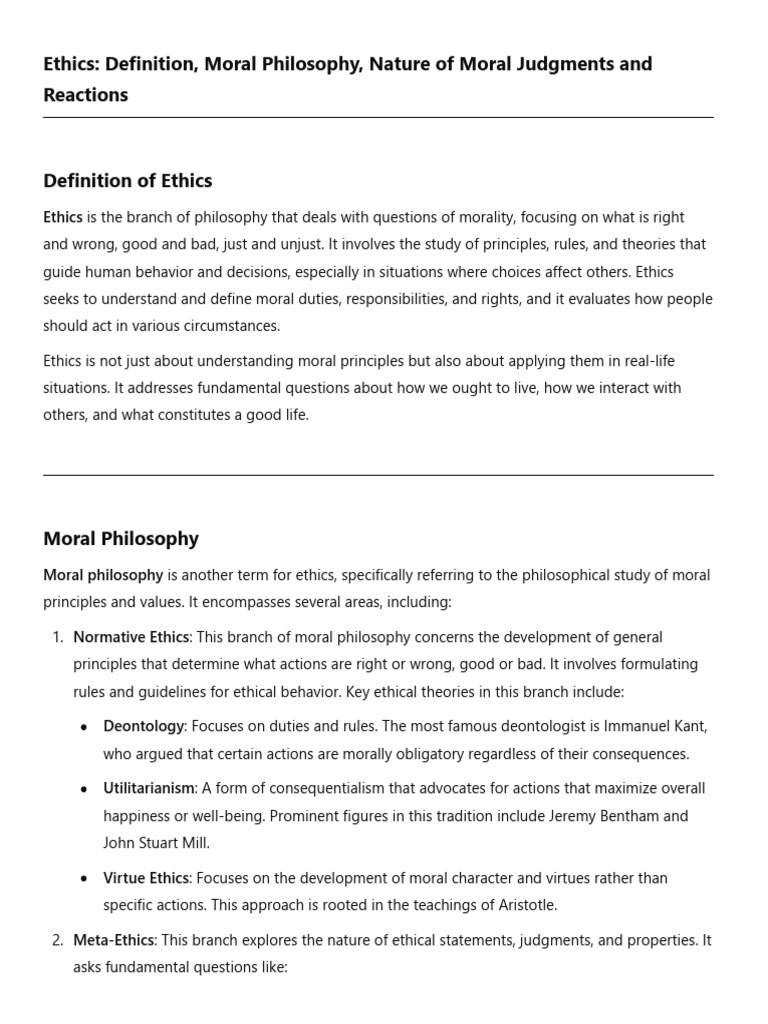
Ethics, also known as moral philosophy, is the systematic study of how people should live and how actions, character, and institutions can be judged as right or wrong. It does not always provide easy answers. Instead, it offers concepts and methods for examining difficult choices, recognizing competing values, and giving reasons for moral conclusions.
Three Major Areas of Ethics
Moral philosophy is often divided into three related fields:
- Metaethics asks what moral claims mean and whether moral truths exist. For example, it examines whether “cruelty is wrong” expresses an objective fact, a personal attitude, or a standard shaped by human society.
- Normative ethics develops principles about how people ought to act. It considers questions such as what makes an action right and what responsibilities people have toward one another.
- Applied ethics uses moral ideas to address particular issues, including medical decisions, environmental protection, business conduct, technology, and criminal justice.
These areas overlap. A debate about the use of artificial intelligence, for instance, may involve questions about the meaning of fairness, general principles of responsibility, and practical rules for designing or deploying a system.
Different Ways to Judge an Action
Several influential ethical theories offer different ways to evaluate choices. Each highlights something important, though none removes the need for careful judgment.
Consequentialism
Consequentialist theories judge actions mainly by their results. An action is considered better when it produces more overall benefit or less harm. Utilitarianism is a well-known form of consequentialism: it asks people to consider the effects of a decision on everyone affected, rather than focusing only on personal advantage.
This approach can encourage broad concern for well-being. However, it also raises hard questions. How should benefits and harms be measured? Can the interests of a few be sacrificed for the benefit of many? Consequentialist reasoning can be useful, but it may need safeguards to protect individual rights and fairness.
Deontology
Deontological ethics emphasizes duties, rules, and respect for persons. From this perspective, some actions may be wrong even when they appear to produce good outcomes. Lying, breaking a promise, or treating someone merely as a tool can violate important moral obligations.
Duty-based ethics helps explain why people may believe that certain protections should not be traded away for convenience. Its challenge is that duties can conflict. Telling the truth, protecting someone from harm, and honoring a commitment may point toward different choices in the same situation.
Virtue Ethics
Virtue ethics focuses less on individual rules or outcomes and more on character. It asks what a wise, courageous, fair, or compassionate person would do. The goal is not simply to follow instructions but to cultivate qualities that support a good life and healthy relationships.
This approach draws attention to judgment and personal development. A rule cannot anticipate every circumstance, and consequences may be uncertain. Virtue ethics therefore highlights practical wisdom: the ability to notice what matters in a particular situation and respond with balance.
Care Ethics
Care ethics emphasizes relationships, dependence, and the responsibilities that arise when people care for one another. It challenges the idea that ethical decisions are always made by isolated individuals weighing abstract principles. Human beings are shaped by relationships, and some people—such as children, older adults, or people who are ill—may rely on others for support.
Care ethics brings attention to needs and context that can be overlooked in more impersonal approaches. At the same time, care must be considered alongside fairness, boundaries, and the needs of people beyond one’s immediate circle.
Why Moral Disagreements Persist
People can share values such as safety, freedom, fairness, and compassion while disagreeing about what those values require. They may predict different consequences, give different weight to competing duties, or interpret the facts in different ways. Personal experience, culture, religion, and social conditions can also shape moral judgment.
Recognizing these influences does not mean that every moral claim is equally convincing. It does mean that serious ethical discussion benefits from curiosity and careful listening. A strong argument should address relevant evidence, consider who may be affected, and explain why one value should take priority when values conflict.
A Practical Approach to Ethical Decisions
When facing a difficult choice, a few questions can help organize moral reasoning:
- What are the facts? Separate reliable information from assumptions, and identify what remains uncertain.
- Who is affected? Include people who may have less power or whose interests are easy to overlook.
- What duties or rights are involved? Consider promises, professional responsibilities, consent, privacy, and basic protections.
- What might the consequences be? Look beyond immediate effects to longer-term and less obvious outcomes.
- What would a fair and compassionate response look like? Consider both the principles involved and the particular circumstances.
- Can the decision be explained openly? A reasoned choice should be defensible to those who bear its effects, not just convenient for the decision-maker.
Ethics as an Ongoing Practice
Moral philosophy is not only a collection of theories. It is a practice of asking better questions, examining assumptions, and taking responsibility for the effects of choices. Ethical reflection can reveal when a decision is driven by habit or self-interest, and it can help people respond more thoughtfully when no option is perfect.
There may not be a single formula for every moral problem. But clear reasoning, attention to consequences, respect for persons, and a willingness to reconsider can make decisions more responsible. In that sense, ethics is both a way of thinking and a continuing effort to live well with others.
9 Essential Tips for Navigating Ethics and Moral Philosophy
- Consider who may be affected by each choice.
- Treat people with dignity and respect.
- Question assumptions before judging.
- Weigh consequences alongside principles.
- Be honest, even when it is difficult.
- Listen to perspectives unlike your own.
- Apply standards consistently and fairly.
- Take responsibility for harm you cause.
- Stay open to revising your moral views.
Consider who may be affected by each choice.
When facing an ethical decision, consider who may be affected by each choice—not just the people closest to you or those with the most influence. Think about how the outcomes could affect individuals, families, communities, and even future generations, especially people who may be vulnerable or overlooked. Taking time to understand these different perspectives can reveal hidden consequences, clarify competing responsibilities, and lead to a more thoughtful and fair decision.
Treat people with dignity and respect.
Treating people with dignity and respect means recognizing that every person has inherent worth, regardless of their background, beliefs, status, or circumstances. In practice, this means listening without dismissing others, speaking honestly and considerately, honoring people’s boundaries, and avoiding actions that humiliate or exploit them. Even during disagreement, respect does not require approval; it asks that others be treated as persons whose rights and perspectives matter. This principle is central to ethical life because it reminds us to consider not only what we want or what an action achieves, but also how it affects the people involved.
Question assumptions before judging.
Question assumptions before judging a person, action, or situation. What seems obvious at first may depend on incomplete information, cultural expectations, or beliefs that have never been examined. Pause to ask what you know, what you may be overlooking, and how the people involved might understand the circumstances. This habit encourages fairness, reduces snap judgments, and helps make moral decisions grounded in thoughtful reasoning rather than untested assumptions.
Weigh consequences alongside principles.
When facing an ethical dilemma, consider both the likely consequences of each choice and the principles that should guide your actions. Thinking about outcomes helps reveal who may benefit or be harmed, while principles such as honesty, fairness, and respect for others set important boundaries. Neither perspective is always enough on its own: a choice that produces a benefit may still violate someone’s rights, and following a rule without considering its effects may cause avoidable harm. Weighing both can lead to decisions that are thoughtful, compassionate, and defensible.
Be honest, even when it is difficult.
Being honest, even when it is difficult, builds trust and shows respect for others. Telling the truth may feel uncomfortable when it could disappoint someone, reveal a mistake, or lead to consequences, but avoiding the truth can create greater harm over time. Honesty does not require being harsh: it can be expressed with compassion, care, and attention to the right moment. When truthfulness is balanced with kindness, it helps people take responsibility, make informed choices, and maintain stronger relationships.
Listen to perspectives unlike your own.
Listening to perspectives unlike your own is an important part of ethical reflection. People’s experiences can reveal harms, needs, or assumptions that may be easy to miss from a single point of view. Listening does not require agreeing with every claim; it means engaging with others respectfully, asking thoughtful questions, and considering whether their insights should change how you understand a moral issue.
Apply standards consistently and fairly.
Apply ethical standards consistently and fairly, regardless of who is involved or whether a decision benefits you. Using the same principles in similar situations helps prevent favoritism, builds trust, and makes decisions easier to explain. When circumstances differ, consider those differences carefully—but make sure any exception is based on a relevant reason, not personal preference.
Take responsibility for harm you cause.
Taking responsibility for harm you cause is an essential part of ethical living. When your words or actions hurt someone, acknowledge the impact without making excuses, listen to the person affected, and offer a sincere apology. If possible, take practical steps to repair the harm and change the behavior that caused it. Accountability does not mean dwelling on guilt; it means recognizing your obligations and making a genuine effort to do better.
Stay open to revising your moral views.
Staying open to revising your moral views is an important part of ethical reflection. New evidence, different perspectives, or a deeper understanding of who may be affected can reveal that an earlier judgment was incomplete or mistaken. Revising a belief does not mean abandoning your principles; it means taking your reasons seriously enough to question them, learn from others, and make a more thoughtful choice.