
The Intersection of AI and Data Science: Transforming the Future
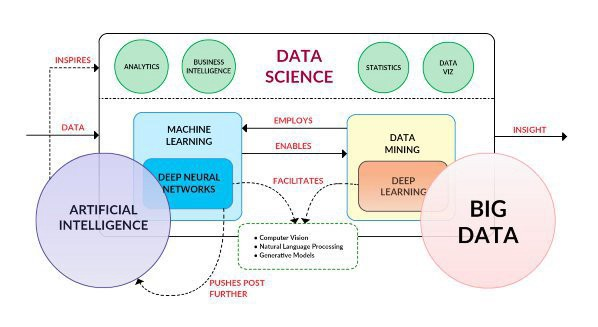
Artificial Intelligence (AI) and Data Science are two of the most transformative technologies of the 21st century. They are revolutionizing industries, reshaping economies, and redefining the way we interact with the world. Together, they form a powerful combination that is driving innovation and creating new opportunities across various sectors.
Understanding AI and Data Science
Artificial Intelligence refers to the simulation of human intelligence in machines that are programmed to think like humans and mimic their actions. It encompasses a range of technologies, including machine learning, natural language processing, and robotics.
Data Science, on the other hand, involves extracting insights from large volumes of data using various techniques such as statistical analysis, data mining, and predictive modeling. It provides the foundation for AI systems by supplying them with the necessary data to learn and improve over time.
The Synergy Between AI and Data Science
The synergy between AI and Data Science is evident in how they complement each other. Data Science provides AI with vast amounts of data to analyze, while AI enhances Data Science by offering advanced algorithms that can process complex datasets quickly and accurately.
- Improved Decision-Making: Organizations can leverage AI-driven insights from data analysis to make informed decisions that enhance efficiency and productivity.
- Automation: By automating routine tasks through AI, businesses can focus on more strategic initiatives that require human creativity and intuition.
- Predictive Analytics: Combining AI with Data Science allows for more accurate predictions about future trends, enabling proactive strategies rather than reactive measures.
Applications Across Industries
The integration of AI and Data Science is transforming industries across the board:
- Healthcare: From personalized medicine to predictive diagnostics, these technologies are enhancing patient care and improving outcomes.
- Finance: In finance, they are used for fraud detection, risk management, algorithmic trading, and customer service automation.
- E-commerce: Retailers utilize them for personalized recommendations, inventory management, and customer experience optimization.
- Agriculture: Precision farming techniques powered by AI help optimize crop yields while minimizing resource usage.
The Challenges Ahead
Despite their potential benefits, integrating AI with Data Science presents several challenges. Issues such as data privacy concerns, ethical considerations in algorithmic decision-making, and the need for skilled professionals in these fields must be addressed to fully realize their potential.
The Road Ahead
The future looks promising as advancements in technology continue to push boundaries. As organizations increasingly adopt these technologies into their operations globally—creating smarter systems capable of solving complex problems—AI combined with Data Science will play an even more critical role in shaping tomorrow’s world.
The journey has just begun; there is much more ground yet unexplored at this exciting intersection where artificial intelligence meets data science—a frontier filled with endless possibilities waiting just beyond our grasp today but within reach tomorrow!
9 Benefits of AI and Data Science: From Automation to Innovation
- Automates repetitive tasks.
- Reveals patterns in large datasets.
- Supports faster, data-informed decisions.
- Improves forecasting accuracy.
- Enables personalized experiences.
- Helps detect fraud and anomalies.
- Optimizes business operations.
- Accelerates scientific research.
- Creates new products and services.
7 Drawbacks of AI and Data Science: From Bias to Job Displacement
- Can reinforce bias in data.
- Raises privacy concerns.
- May expose sensitive information.
- Requires significant computing power.
- Can be costly to develop and maintain.
- May produce inaccurate or misleading results.
- Can automate tasks and displace workers.
Automates repetitive tasks.
AI and data science can automate repetitive tasks, such as sorting records, generating routine reports, and checking data for inconsistencies. By handling these time-consuming steps quickly and consistently, automated systems free people to focus on work that calls for judgment, creativity, and problem-solving. Automation can also reduce manual errors and help organizations complete everyday processes more efficiently.
Reveals patterns in large datasets.
AI and data science can uncover patterns in large datasets that would be difficult or impossible to spot manually. By analyzing information across millions of records, these tools can reveal trends, relationships, and unusual changes that help organizations make better-informed decisions. For example, a retailer might identify shifts in customer preferences, while a healthcare team could spot patterns linked to patient outcomes. These insights can guide planning and help people respond more effectively to changing needs.
Supports faster, data-informed decisions.
AI and data science significantly enhance the decision-making process by enabling faster, data-informed decisions. With the ability to process vast amounts of data quickly and accurately, AI systems can identify patterns and insights that would be difficult for humans to detect. This capability allows organizations to respond swiftly to changing conditions and make informed decisions based on real-time data. Whether it’s optimizing supply chains, tailoring marketing strategies, or improving customer service, the integration of AI and data science ensures that decisions are not only faster but also more precise and reliable. This efficiency leads to increased competitiveness and agility in a rapidly evolving market landscape.
Improves forecasting accuracy.
AI and data science can improve forecasting accuracy by analyzing large, complex datasets and identifying patterns that may be difficult to spot with traditional methods. Machine learning models can combine information from multiple sources, adapt as new data becomes available, and refine their predictions over time. This helps organizations anticipate demand, spot potential risks, and make better-informed decisions. Forecasts are not guaranteed to be correct, but thoughtful use of high-quality data can make them more reliable.
Enables personalized experiences.
AI and data science enable more personalized experiences by analyzing information such as user preferences, past interactions, and behavior patterns. These insights help businesses tailor recommendations, services, and content to each person’s needs—from suggesting products a customer may like to adapting learning materials to a student’s progress. When used thoughtfully and with respect for privacy, personalization can make everyday experiences more relevant, convenient, and engaging.
Helps detect fraud and anomalies.
AI and data science help organizations detect fraud and unusual activity by analyzing large volumes of data and identifying patterns that may be difficult to spot manually. Machine-learning systems can flag transactions, account behavior, or network activity that differs from established norms, allowing teams to investigate potential problems sooner. These tools can improve detection speed and reduce losses, but their alerts should be reviewed carefully to limit false alarms and avoid unfair outcomes.
Optimizes business operations.
AI and Data Science play a crucial role in optimizing business operations by streamlining processes and enhancing efficiency. Through advanced data analytics, businesses can gain valuable insights into their operations, identifying areas that require improvement or innovation. AI algorithms can automate routine tasks, reducing the time and resources spent on manual processes. This automation not only minimizes human error but also allows employees to focus on more strategic activities that drive growth. Furthermore, predictive analytics enable companies to anticipate market trends and consumer behavior, allowing them to make proactive decisions that align with business goals. By harnessing the power of AI and Data Science, businesses can achieve greater operational efficiency, reduce costs, and ultimately enhance their competitive edge in the marketplace.
Accelerates scientific research.
AI and data science are revolutionizing scientific research by significantly accelerating the pace of discovery. By automating complex data analysis and processing large datasets with precision, these technologies allow researchers to focus on innovative thinking and hypothesis generation rather than time-consuming manual tasks. AI algorithms can identify patterns and insights that might be overlooked by human analysis, leading to breakthroughs in fields such as genomics, drug discovery, and climate modeling. This acceleration not only enhances the efficiency of research but also opens new avenues for interdisciplinary collaboration, ultimately driving scientific progress at an unprecedented rate.
Creates new products and services.
AI and data science help businesses turn insights and emerging needs into new products and services. By analyzing patterns in customer behavior and large datasets, organizations can identify unmet needs, personalize existing offerings, and develop solutions that would be difficult to create using traditional methods. From personalized health recommendations to smarter financial tools and predictive maintenance services, these technologies enable more responsive, useful experiences for customers.
Can reinforce bias in data.
AI and data science can reinforce bias when the data used to train or guide a system reflects existing inequalities or excludes important perspectives. Because these systems learn patterns from historical information, they may repeat or even amplify unfair outcomes in areas such as hiring, lending, health care, and policing. Bias can also enter through the way data is collected, labeled, or analyzed. Reducing this risk requires careful data review, testing across different groups, transparency about limitations, and ongoing human oversight.
Raises privacy concerns.
AI and data science can raise serious privacy concerns because they often rely on large amounts of personal information, such as location, browsing habits, health records, or financial activity. If data is collected without clear consent, shared carelessly, or inadequately protected, people may lose control over how their information is used. Even anonymized datasets can sometimes be linked with other sources to identify individuals. Organizations should therefore collect only the data they need, explain how it will be used, secure it properly, and give people meaningful choices about their information.
May expose sensitive information.
AI and data science systems can expose sensitive information when they collect, store, or analyze personal data without adequate safeguards. A data breach, poorly configured database, or model that reveals details from its training data could compromise private information such as health records, financial details, or identifying information. Organizations can reduce these risks by limiting data collection, using strong access controls and encryption, testing systems for privacy vulnerabilities, and being transparent about how data is used.
Requires significant computing power.
The integration of AI and data science demands substantial computing power, which poses a significant challenge for many organizations. As AI algorithms become more sophisticated and datasets grow larger, the need for powerful hardware and advanced computational infrastructure increases. This requirement can lead to high costs for acquiring and maintaining the necessary technology, making it difficult for smaller companies or those with limited resources to compete. Additionally, the energy consumption associated with running these high-performance systems raises concerns about environmental impact and sustainability. As a result, balancing the benefits of AI and data science with their resource demands is an ongoing challenge that requires innovative solutions.
Can be costly to develop and maintain.
Implementing AI and data science solutions can be costly to develop and maintain, posing a significant challenge for many organizations. The initial investment in advanced technologies, infrastructure, and skilled personnel can be substantial. Developing sophisticated algorithms and models requires expertise and time, which translates into higher costs. Additionally, maintaining these systems involves continuous updates, monitoring, and optimization to ensure they remain effective and relevant. As technology evolves rapidly, keeping up with the latest advancements can further increase expenses. For smaller companies or those with limited budgets, these financial barriers may hinder their ability to fully leverage the benefits of AI and data science.
May produce inaccurate or misleading results.
AI and data science can produce inaccurate or misleading results when the data they rely on is incomplete, outdated, biased, or incorrectly labeled. Even a sophisticated model may identify patterns that do not reflect reality, and its predictions can be presented with more confidence than the evidence warrants. These errors may lead to poor decisions, especially in areas such as health care, finance, and hiring. Careful data validation, independent testing, human oversight, and clear communication about uncertainty can help reduce the risk, but they cannot eliminate it entirely.
Can automate tasks and displace workers.
The rapid advancement of AI and data science has led to the automation of many tasks, which, while increasing efficiency and productivity, also poses a significant challenge in terms of workforce displacement. As machines become more capable of performing tasks that were once the domain of human workers, there is a growing concern about job loss across various industries. This shift can lead to economic instability for individuals whose skills are rendered obsolete by technology. The potential for widespread unemployment underscores the need for proactive measures such as reskilling and upskilling programs to help workers transition into new roles that leverage human creativity and emotional intelligence—qualities that machines cannot replicate.