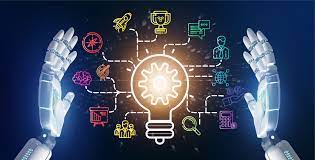
The Future of Artificial Intelligence: Opportunities and Challenges
Artificial Intelligence (AI) is rapidly transforming the world around us, offering immense opportunities while also posing significant challenges. As AI technologies continue to evolve, they promise to reshape industries, enhance productivity, and improve our daily lives. However, this transformation also raises important ethical and societal questions that must be addressed.
Opportunities in AI
AI has the potential to revolutionize numerous sectors:
- Healthcare: AI-powered tools can assist doctors in diagnosing diseases more accurately and at earlier stages. Machine learning algorithms can analyze medical data to predict patient outcomes and personalize treatment plans.
- Transportation: Autonomous vehicles are set to change the way we travel, reducing accidents caused by human error and improving traffic efficiency.
- Finance: AI systems can detect fraudulent activities in real-time and help financial institutions manage risks more effectively.
- Agriculture: AI-driven technologies can optimize crop yields through precise monitoring of soil conditions and weather patterns.
Challenges Ahead
Despite its potential, AI also presents several challenges that need careful consideration:
- Ethical Concerns: The use of AI raises questions about privacy, surveillance, and data security. Ensuring that AI systems are transparent and accountable is crucial.
- Job Displacement: Automation may lead to job losses in certain sectors as machines take over tasks traditionally performed by humans. It is essential to address workforce retraining and education.
- Bias in Algorithms: AI systems can inadvertently perpetuate existing biases if they are trained on biased data sets. Developing fair algorithms requires ongoing vigilance.
- Sustainability: The energy consumption of large-scale AI models poses environmental concerns. Finding ways to make AI more energy-efficient is a pressing issue.
The Path Forward
Navigating the future of artificial intelligence requires collaboration among governments, industry leaders, researchers, and society as a whole. Setting clear ethical guidelines, investing in education for future skills, and fostering innovation while ensuring inclusivity will be key steps toward harnessing the full potential of AI responsibly.
The future of artificial intelligence holds incredible promise but demands proactive measures to ensure it benefits humanity as a whole. By addressing these challenges head-on, we can work towards a future where technology enhances our lives without compromising our values or security.
Exploring the Promising Future of Artificial Intelligence: 8 Key Benefits
- Increased efficiency and productivity in various industries.
- Enhanced decision-making capabilities through data analysis and predictive modeling.
- Improved healthcare outcomes with AI-driven diagnostics and personalized treatment plans.
- Advancements in autonomous vehicles leading to safer transportation systems.
- Greater convenience through smart home automation and virtual assistants.
- Innovations in customer service with chatbots providing instant support 24/7.
- Creation of new job opportunities in AI research, development, and maintenance.
- Potential for breakthroughs in scientific research and exploration through AI-driven simulations and analysis.
7 Challenges Facing the Future of Artificial Intelligence
- Job displacement due to automation
- Privacy concerns related to data collection and surveillance
- Potential for bias in AI algorithms leading to discrimination
- Ethical dilemmas in decision-making by autonomous systems
- Security vulnerabilities that could be exploited by malicious actors
- Dependency on AI systems may lead to loss of critical skills in humans
- Environmental impact of energy-intensive AI infrastructure
Increased efficiency and productivity in various industries.
Artificial intelligence has the potential to significantly boost efficiency and productivity across a wide range of industries. By automating routine tasks and optimizing complex processes, AI allows businesses to operate more swiftly and with greater precision. In manufacturing, AI-driven robots can work around the clock without fatigue, leading to faster production times and reduced errors. In the realm of data analysis, AI algorithms can process vast amounts of information far more quickly than humans, uncovering insights that drive strategic decision-making. Additionally, in customer service, AI-powered chatbots handle inquiries efficiently, freeing up human employees to focus on more complex issues. This increased efficiency not only enhances output but also enables companies to allocate resources more effectively, ultimately driving innovation and growth.
Enhanced decision-making capabilities through data analysis and predictive modeling.
Artificial intelligence is revolutionizing decision-making capabilities by leveraging data analysis and predictive modeling. AI systems can process vast amounts of data at unprecedented speeds, uncovering patterns and insights that would be impossible for humans to discern manually. This capability allows businesses and organizations to make more informed decisions by anticipating trends, identifying potential risks, and optimizing strategies. For instance, in healthcare, AI can predict patient outcomes and suggest personalized treatment plans, while in finance, it can forecast market trends to guide investment decisions. By enhancing decision-making processes across various sectors, AI not only improves efficiency but also drives innovation and competitive advantage.
Improved healthcare outcomes with AI-driven diagnostics and personalized treatment plans.
Artificial intelligence is set to revolutionize healthcare by significantly improving patient outcomes through AI-driven diagnostics and personalized treatment plans. Advanced machine learning algorithms can analyze vast amounts of medical data, including imaging, genetic information, and patient history, to detect diseases with greater accuracy and at earlier stages than traditional methods. This early detection allows for timely interventions that can improve prognosis and reduce treatment costs. Furthermore, AI systems can tailor treatment plans to individual patients by considering unique factors such as genetics, lifestyle, and environmental influences. This personalized approach not only enhances the effectiveness of treatments but also minimizes potential side effects, leading to better overall health outcomes for patients.
Advancements in autonomous vehicles leading to safer transportation systems.
Advancements in autonomous vehicles are poised to revolutionize transportation systems by significantly enhancing safety on the roads. With AI-powered technologies, self-driving cars can react to potential hazards in real-time, reducing the likelihood of accidents caused by human error. By leveraging machine learning algorithms and sensor data, autonomous vehicles have the potential to create a more efficient and secure driving environment for passengers and pedestrians alike. The continued development of this technology holds the promise of a future where transportation is not only more convenient but also markedly safer for everyone involved.
Greater convenience through smart home automation and virtual assistants.
Artificial intelligence is set to revolutionize home living by providing greater convenience through smart home automation and virtual assistants. With AI-powered devices, homeowners can effortlessly control lighting, temperature, security systems, and appliances using voice commands or smartphone apps. Virtual assistants like Amazon’s Alexa or Google Assistant can manage daily schedules, set reminders, and even order groceries with a simple request. This seamless integration of technology into everyday life not only enhances comfort but also saves time and energy, allowing individuals to focus on what truly matters. As AI continues to evolve, smart homes will become even more intuitive and personalized, transforming the way we interact with our living spaces.
Innovations in customer service with chatbots providing instant support 24/7.
Artificial intelligence is revolutionizing customer service through the use of advanced chatbots, providing instant support around the clock. These AI-driven chatbots are capable of handling a wide range of customer inquiries, from answering basic questions to troubleshooting complex issues. By offering 24/7 availability, they ensure that customers receive timely assistance regardless of time zones or business hours, significantly enhancing the overall customer experience. Additionally, chatbots can be programmed to continuously learn and improve from each interaction, leading to more accurate and personalized responses over time. This not only increases customer satisfaction but also allows human support staff to focus on more complex tasks that require a personal touch, ultimately improving efficiency and productivity for businesses.
Creation of new job opportunities in AI research, development, and maintenance.
The future of artificial intelligence is not only about automation and efficiency but also about the creation of new job opportunities in AI research, development, and maintenance. As AI technologies continue to advance, there is a growing demand for skilled professionals who can design, implement, and manage these complex systems. This includes roles such as AI researchers who push the boundaries of what machines can achieve, software developers who build AI applications, and maintenance experts who ensure these systems operate smoothly and securely. Additionally, the rise of AI has spurred demand for data scientists who can interpret vast amounts of information to improve AI algorithms and outcomes. These emerging fields offer exciting career paths that not only contribute to technological progress but also drive economic growth by opening up new industries and markets.
Potential for breakthroughs in scientific research and exploration through AI-driven simulations and analysis.
The potential for breakthroughs in scientific research and exploration through AI-driven simulations and analysis is immense. Artificial intelligence can process vast amounts of data at unprecedented speeds, enabling researchers to uncover patterns and insights that were previously unattainable. AI-powered simulations allow scientists to model complex systems, such as climate change or molecular interactions, with greater accuracy and efficiency. This capability accelerates the pace of discovery, allowing for rapid testing of hypotheses and the development of innovative solutions to global challenges. By enhancing our understanding of intricate phenomena, AI stands to revolutionize fields ranging from medicine to astrophysics, opening new frontiers for exploration and innovation.
Job displacement due to automation
One of the significant concerns regarding the future of artificial intelligence is job displacement due to automation. As AI systems and robotics become increasingly capable, they are expected to take over a wide range of tasks traditionally performed by humans, particularly in industries such as manufacturing, transportation, and even customer service. This shift could lead to widespread unemployment and economic disruption, particularly for workers whose skills are easily replicable by machines. The challenge lies in managing this transition by investing in retraining programs and education that equip the workforce with new skills suited for emerging roles created by technological advancements. Addressing job displacement proactively is crucial to ensuring that the benefits of AI are distributed equitably across society.
Privacy concerns related to data collection and surveillance
As artificial intelligence technologies become increasingly integrated into various aspects of daily life, privacy concerns related to data collection and surveillance are growing. AI systems often rely on vast amounts of personal data to function effectively, which can lead to intrusive monitoring practices if not properly regulated. This raises significant issues about who has access to this data and how it is used. Without stringent privacy protections, there is a risk that sensitive information could be misused or fall into the wrong hands, leading to potential breaches of individual privacy rights. Additionally, widespread surveillance enabled by AI could result in a society where individuals feel constantly monitored, stifling personal freedom and autonomy. Balancing the benefits of AI with robust privacy safeguards is essential to prevent misuse and protect citizens’ rights in an increasingly digital world.
Potential for bias in AI algorithms leading to discrimination
The potential for bias in AI algorithms is a significant concern as it can lead to discrimination and perpetuate existing inequalities. AI systems learn from data, and if the data used to train these algorithms contain biases—whether related to race, gender, socioeconomic status, or other factors—the AI can inadvertently replicate and even amplify these biases in its decision-making processes. This can result in unfair treatment of individuals or groups, such as biased hiring practices, unequal access to services, or discriminatory law enforcement actions. Addressing this issue requires careful design and testing of AI systems to ensure they are trained on diverse and representative data sets. Additionally, ongoing monitoring and adjustments are necessary to minimize bias and promote fairness in AI applications.
Ethical dilemmas in decision-making by autonomous systems
As artificial intelligence systems increasingly take on decision-making roles, particularly in autonomous applications such as self-driving cars and automated drones, they introduce complex ethical dilemmas. These systems may be required to make split-second decisions that could have significant consequences for human safety and well-being. For example, in the event of an unavoidable accident, a self-driving car must decide between minimizing harm to its passengers or pedestrians, raising questions about whose safety should be prioritized. Additionally, the algorithms governing these decisions are often opaque and lack transparency, making it difficult to understand how and why certain choices are made. This lack of clarity can lead to mistrust and concerns about accountability, as it is challenging to assign responsibility when an AI system makes a controversial or harmful decision. Addressing these ethical dilemmas requires a careful balance between technological advancement and moral responsibility, ensuring that AI systems are designed with clear ethical guidelines and robust oversight mechanisms.
Security vulnerabilities that could be exploited by malicious actors
As artificial intelligence systems become more integrated into critical infrastructure and everyday applications, they present new security vulnerabilities that could be exploited by malicious actors. AI systems, particularly those that rely on vast amounts of data and complex algorithms, can be susceptible to attacks such as data poisoning, adversarial inputs, and model theft. These vulnerabilities could lead to unauthorized access, manipulation of outputs, or even the complete disruption of services. For instance, a compromised AI system in a healthcare setting might provide incorrect diagnoses, while an attack on autonomous vehicles could result in safety hazards. As AI continues to advance, ensuring robust security measures is essential to protect against these potential threats and safeguard both individuals and society at large from malicious exploitation.
Dependency on AI systems may lead to loss of critical skills in humans
As artificial intelligence systems become more integrated into everyday life, there is a growing concern that humans may become overly dependent on these technologies, leading to a loss of critical skills. This reliance on AI could result in diminished problem-solving abilities, as individuals might increasingly turn to machines for solutions rather than employing their own analytical thinking. Additionally, essential skills such as navigation, memory retention, and even basic arithmetic could deteriorate if people rely too heavily on AI applications to manage these tasks. Over time, this dependency may create a gap in human capabilities, making it challenging for individuals to function effectively without technological assistance and potentially reducing the overall resilience of society in situations where technology fails or is unavailable.
Environmental impact of energy-intensive AI infrastructure
The environmental impact of energy-intensive AI infrastructure is a growing concern as the demand for advanced computational power increases. Large-scale data centers, essential for training and operating complex AI models, consume vast amounts of electricity, often relying on non-renewable energy sources. This significant energy consumption contributes to carbon emissions and exacerbates climate change. As AI technologies continue to expand, it becomes crucial to develop more sustainable practices, such as optimizing algorithms for efficiency and investing in renewable energy solutions. Addressing these environmental challenges is essential to ensure that the advancement of AI does not come at the expense of our planet’s health.