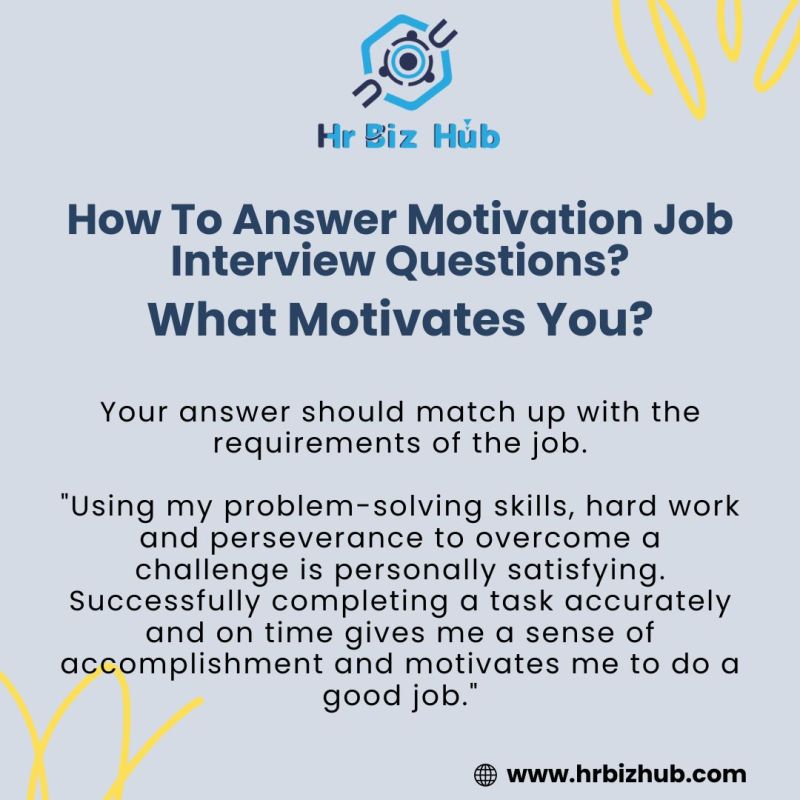
The Power of Motivation Interview Questions
Interviews are not just about assessing a candidate’s qualifications and experience; they are also an opportunity to delve into their motivations and aspirations. Motivation interview questions play a crucial role in understanding what drives a candidate and how they align with the company’s values and goals.
Why Are Motivation Interview Questions Important?
While technical skills are essential for a job, motivation is what fuels long-term success and engagement. By asking the right motivation interview questions, employers can gain valuable insights into a candidate’s passion, work ethic, and commitment.
Examples of Motivation Interview Questions
Here are some common motivation interview questions that can help uncover a candidate’s drive and determination:
- What inspired you to apply for this position?
- How do you stay motivated when faced with challenges?
- Can you share an example of a project that you were particularly passionate about? What made it meaningful to you?
- What do you hope to achieve in your career in the next 5 years?
- How do you prioritize your tasks and stay focused on your goals?
The Impact of Motivation on Performance
Employees who are motivated not only excel in their roles but also contribute positively to the company culture. By hiring individuals who are driven by more than just a paycheck, organizations can foster a dynamic and high-performing team.
In Conclusion
Motivation interview questions provide valuable insights into a candidate’s mindset, values, and goals. Employers who prioritize understanding their candidates’ motivations set the foundation for building a motivated and engaged workforce that drives success.
5 Reasons Motivation Interview Questions Are Key to Hiring Passionate and Aligned Candidates
- Reveal candidate’s passion and drive for the job
- Help assess candidate’s alignment with company values
- Provide insights into candidate’s work ethic and commitment
- Enable employers to build a motivated and engaged workforce
- Contribute to a positive company culture by hiring driven individuals
5 Drawbacks of Motivation Interview Questions: Subjectivity, Verifiability Issues, and More
- 1. Subjectivity
- 2. Lack of Verifiability
- 3. Overemphasis on Talk
- 4. Limited Scope
- 5. Potential for Misrepresentation
Reveal candidate’s passion and drive for the job
Motivation interview questions serve as a powerful tool to uncover a candidate’s passion and drive for the job. By delving into what truly motivates an individual, employers can gain valuable insights into the candidate’s genuine interest in the role and the organization. Understanding a candidate’s passion not only helps in assessing their potential fit within the company culture but also indicates their commitment to going above and beyond in their responsibilities. This insight allows employers to select candidates who are not just qualified on paper but also deeply invested in contributing meaningfully to the team and achieving shared goals.
Help assess candidate’s alignment with company values
Motivation interview questions serve as a valuable tool in assessing a candidate’s alignment with company values. By probing into what drives a candidate and understanding their intrinsic motivations, employers can gauge whether the individual’s beliefs and aspirations resonate with the organization’s core principles. This alignment is crucial for fostering a cohesive work environment where employees are not only skilled but also share a common vision and commitment to the company’s mission. Through motivation interview questions, employers can effectively evaluate the cultural fit of candidates and ensure that they are likely to thrive within the company’s ethos and contribute positively to its growth and success.
Provide insights into candidate’s work ethic and commitment
Motivation interview questions offer a valuable advantage by providing deep insights into a candidate’s work ethic and commitment. By probing into what drives a candidate and understanding their motivations, employers can gauge how dedicated and determined the individual is towards their work. Candidates who demonstrate a strong work ethic and unwavering commitment during these interviews are more likely to show persistence, reliability, and passion in their roles, contributing positively to the organization’s success and culture.
Enable employers to build a motivated and engaged workforce
Motivation interview questions serve as a powerful tool for employers to cultivate a motivated and engaged workforce. By delving into candidates’ motivations, values, and aspirations during the interview process, employers can identify individuals who are not only qualified for the job but also aligned with the company’s mission and culture. Hiring employees who are driven by more than just external rewards leads to a team that is passionate about their work, committed to achieving goals, and invested in the organization’s success. This proactive approach to understanding and nurturing motivation ultimately fosters a positive work environment where employees feel valued, inspired, and empowered to contribute their best efforts towards common objectives.
Contribute to a positive company culture by hiring driven individuals
By incorporating motivation interview questions into the hiring process, companies have the opportunity to cultivate a positive company culture by selecting individuals who are inherently driven and passionate about their work. Hiring employees who are motivated not only enhances productivity and performance but also fosters a collaborative and inspiring environment within the organization. These driven individuals serve as catalysts for innovation, teamwork, and overall morale, ultimately contributing to a workplace culture that thrives on dedication, enthusiasm, and shared goals.
1. Subjectivity
Assessing motivation during interviews can introduce a conundrum of subjectivity, as it relies heavily on personal judgment and interpretation. The inherently subjective nature of evaluating motivation leaves room for unconscious biases to influence hiring decisions. Interviewers may inadvertently favor candidates who share similar motivations or backgrounds, potentially overlooking qualified individuals who approach their work with different but equally valuable perspectives. This subjectivity in assessing motivation underscores the importance of structured interview processes and objective evaluation criteria to mitigate bias and ensure a fair and inclusive hiring process.
2. Lack of Verifiability
In the realm of motivation interview questions, a notable con lies in the lack of verifiability. Candidates have the freedom to offer responses that are subjective and personal, making it arduous for interviewers to validate the accuracy of their claims. This challenge can lead to potential discrepancies between what candidates express during interviews and their actual behaviors or accomplishments. As a result, the reliance on motivation interview questions alone may introduce an element of uncertainty in evaluating candidates’ true motivations and capabilities.
3. Overemphasis on Talk
In the realm of motivation interview questions, one notable con is the overemphasis on talk. While some candidates may possess strong verbal communication skills and excel at articulating their motivations during interviews, there exists a risk that their ability to verbalize their motivations may not align with their actual actions in practice. This discrepancy can result in mismatches between what candidates profess and how they ultimately perform on the job. Employers must be cautious of placing too much weight on verbal assurances alone, as true motivation is ultimately revealed through consistent actions and behaviors over time.
4. Limited Scope
While motivation interview questions serve as a valuable tool in assessing a candidate’s drive and commitment, they have a significant drawback in their limited scope. These questions may fall short in capturing the diverse and complex factors that influence a candidate’s performance and engagement within a role. Factors such as personal experiences, external circumstances, or intrinsic motivations that are not directly addressed by standard motivation questions could be overlooked, potentially leading to an incomplete understanding of the candidate’s suitability for the position.
5. Potential for Misrepresentation
Candidates may manipulate their responses during motivation interview questions to cater to the interviewer’s expectations, leading to a potential for misrepresentation. In an effort to present themselves favorably, candidates may prioritize saying what they think the interviewer wants to hear rather than offering authentic insights into their true motivations. This tendency can create a disconnect between the candidate’s actual drive and the portrayed motivations, making it challenging for employers to accurately assess a candidate’s suitability for the role based on genuine intentions and aspirations.