Artificial Intelligence in Retail: Transforming the Shopping Experience
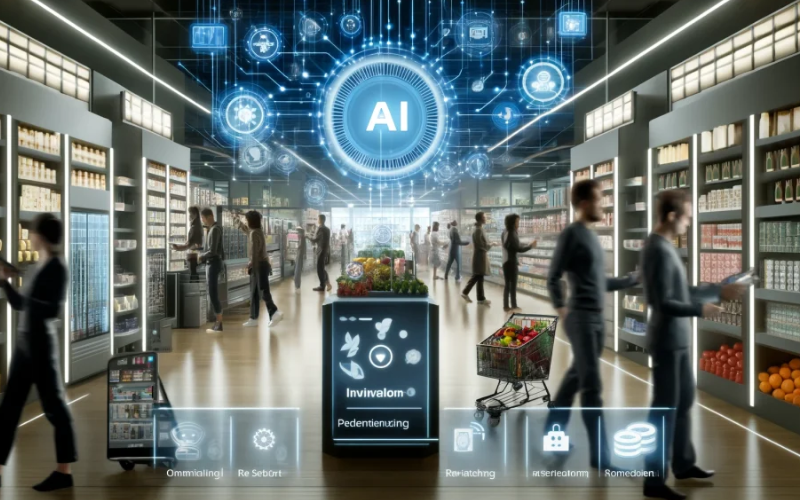
The retail industry is undergoing a significant transformation, largely driven by the integration of artificial intelligence (AI) technologies. From personalized shopping experiences to efficient inventory management, AI is reshaping how retailers operate and interact with customers.
Enhancing Customer Experience
One of the most visible impacts of AI in retail is its ability to enhance the customer experience. Through data analysis and machine learning algorithms, retailers can offer personalized recommendations based on individual shopping habits and preferences. This level of customization not only improves customer satisfaction but also increases sales by guiding consumers to products they are more likely to purchase.
Chatbots and virtual assistants are another way AI is improving customer service. Available 24/7, these tools provide instant support for inquiries and issues, ensuring that customers receive timely assistance without the need for human intervention.
Optimizing Inventory Management
AI plays a crucial role in optimizing inventory management by predicting demand more accurately. Machine learning models analyze historical sales data, seasonal trends, and external factors such as economic conditions to forecast future demand. This allows retailers to maintain optimal stock levels, reducing both overstock and stockouts.
Moreover, AI-powered systems can automate reordering processes, ensuring that products are restocked efficiently without manual oversight. This automation not only saves time but also minimizes human errors that can lead to costly inventory discrepancies.
Streamlining Operations
Beyond inventory management, AI is streamlining various operational aspects within retail businesses. For example, AI-driven analytics provide insights into store layouts and traffic patterns, helping retailers optimize their physical spaces for better flow and increased sales opportunities.
In addition, AI technologies are being used to improve supply chain logistics. Predictive analytics help anticipate shipping delays or disruptions, allowing retailers to adjust their logistics strategies proactively.
The Future of AI in Retail
The ongoing advancement of AI technologies promises even more innovative applications in retail. As natural language processing improves, we can expect more sophisticated conversational agents capable of handling complex customer interactions seamlessly.
Furthermore, computer vision technology is set to revolutionize checkout processes with cashier-less stores where customers simply walk out with their purchases while sensors automatically tally up their total cost.
Challenges and Considerations
While the benefits of AI in retail are substantial, there are challenges that must be addressed. Data privacy remains a critical concern as retailers collect vast amounts of personal information from consumers. Ensuring robust security measures and transparent data usage policies will be essential for maintaining consumer trust.
Additionally, as automation becomes more prevalent, there is an ongoing discussion about its impact on employment within the industry. Retailers must balance technological advancements with workforce considerations to ensure a sustainable future for all stakeholders involved.
Conclusion
Artificial intelligence is undeniably transforming the retail landscape by enhancing customer experiences and streamlining operations across various fronts. As technology continues to evolve rapidly over time—so too will its potential applications—making it an exciting era for both retailers themselves as well as those who shop at them regularly alike!
Enhancing Retail with AI: 6 Essential Tips for Success
- Use AI to forecast demand and reduce overstock.
- Personalize recommendations with customer consent.
- Automate routine support while keeping human help available.
- Check AI systems for bias and inaccurate results.
- Protect customer data with strong security controls.
- Track outcomes to ensure AI improves the shopping experience.
Use AI to forecast demand and reduce overstock.
In the retail industry, leveraging artificial intelligence to forecast demand is a game-changer for managing inventory effectively. By analyzing historical sales data, market trends, and external factors such as economic shifts and seasonal variations, AI-powered systems can predict future customer demand with remarkable accuracy. This foresight enables retailers to maintain optimal inventory levels, significantly reducing the risk of overstocking. Overstock not only ties up capital but also increases storage costs and the likelihood of markdowns to clear excess products. With AI-driven demand forecasting, retailers can ensure they have the right amount of stock at the right time, enhancing operational efficiency and boosting profitability while meeting customer expectations more precisely.
Personalize recommendations with customer consent.
Personalize product recommendations using customer data only with clear, informed consent. Explain what information is collected and how it will be used, and give shoppers an easy way to opt out or change their preferences. When customers understand and control how their data is used, retailers can offer more relevant suggestions while building trust and respecting privacy.
Automate routine support while keeping human help available.
In the retail industry, automating routine support tasks with artificial intelligence can significantly enhance efficiency and customer satisfaction. AI-powered chatbots and virtual assistants can handle common inquiries, process returns, and provide product information around the clock, freeing up human staff to focus on more complex issues that require a personal touch. This approach not only streamlines operations but also ensures that customers receive immediate assistance for straightforward requests. However, it’s crucial to maintain a balance by keeping human help readily available for situations where empathy and nuanced understanding are essential. By combining automated support with human expertise, retailers can offer a seamless and comprehensive customer service experience.
Check AI systems for bias and inaccurate results.
In the rapidly evolving landscape of artificial intelligence in retail, ensuring that AI systems are free from bias and inaccuracies is crucial for maintaining fairness and reliability. Retailers must regularly audit their AI algorithms to identify any biases that could lead to unfair treatment of certain customer groups or skewed decision-making processes. This involves examining the data sets used for training these systems, as biased data can perpetuate existing inequalities. Additionally, retailers should implement robust testing protocols to verify the accuracy of AI-generated results, ensuring they align with real-world scenarios and customer expectations. By proactively addressing these issues, retailers can build trust with their customers and harness the full potential of AI technologies in a responsible manner.
Protect customer data with strong security controls.
In the rapidly evolving landscape of artificial intelligence in retail, protecting customer data with strong security controls is paramount. As retailers leverage AI to personalize shopping experiences and optimize operations, they collect vast amounts of sensitive customer information. Implementing robust security measures, such as encryption, access controls, and regular security audits, is essential to safeguard this data from breaches and unauthorized access. By prioritizing data protection, retailers not only comply with privacy regulations but also build trust with their customers, fostering loyalty and ensuring a secure shopping environment. Moreover, transparent communication about data usage policies further enhances consumer confidence in a brand’s commitment to privacy and security.
Track outcomes to ensure AI improves the shopping experience.
Incorporating AI into retail operations can significantly enhance the shopping experience, but it’s crucial to track outcomes to ensure these technologies deliver on their promises. By closely monitoring metrics such as customer satisfaction, sales conversion rates, and inventory turnover, retailers can assess the effectiveness of AI implementations. This data-driven approach allows businesses to identify areas where AI is successfully enhancing the shopping experience and pinpoint aspects that may require adjustment. Regularly evaluating these outcomes ensures that AI tools are not only meeting current objectives but are also adaptable to evolving consumer needs and market trends. Ultimately, this continuous tracking fosters a more responsive and customer-centric retail environment.