Understanding Deep Learning AI: A Revolution in Technology
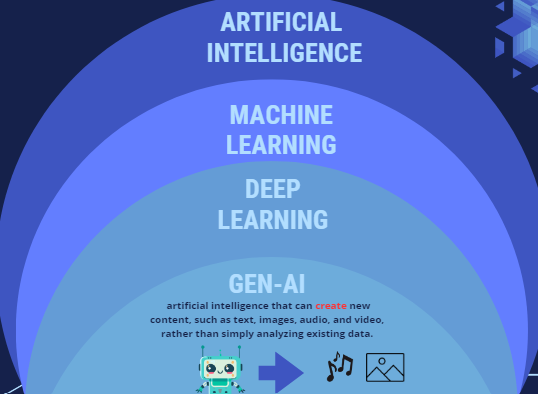
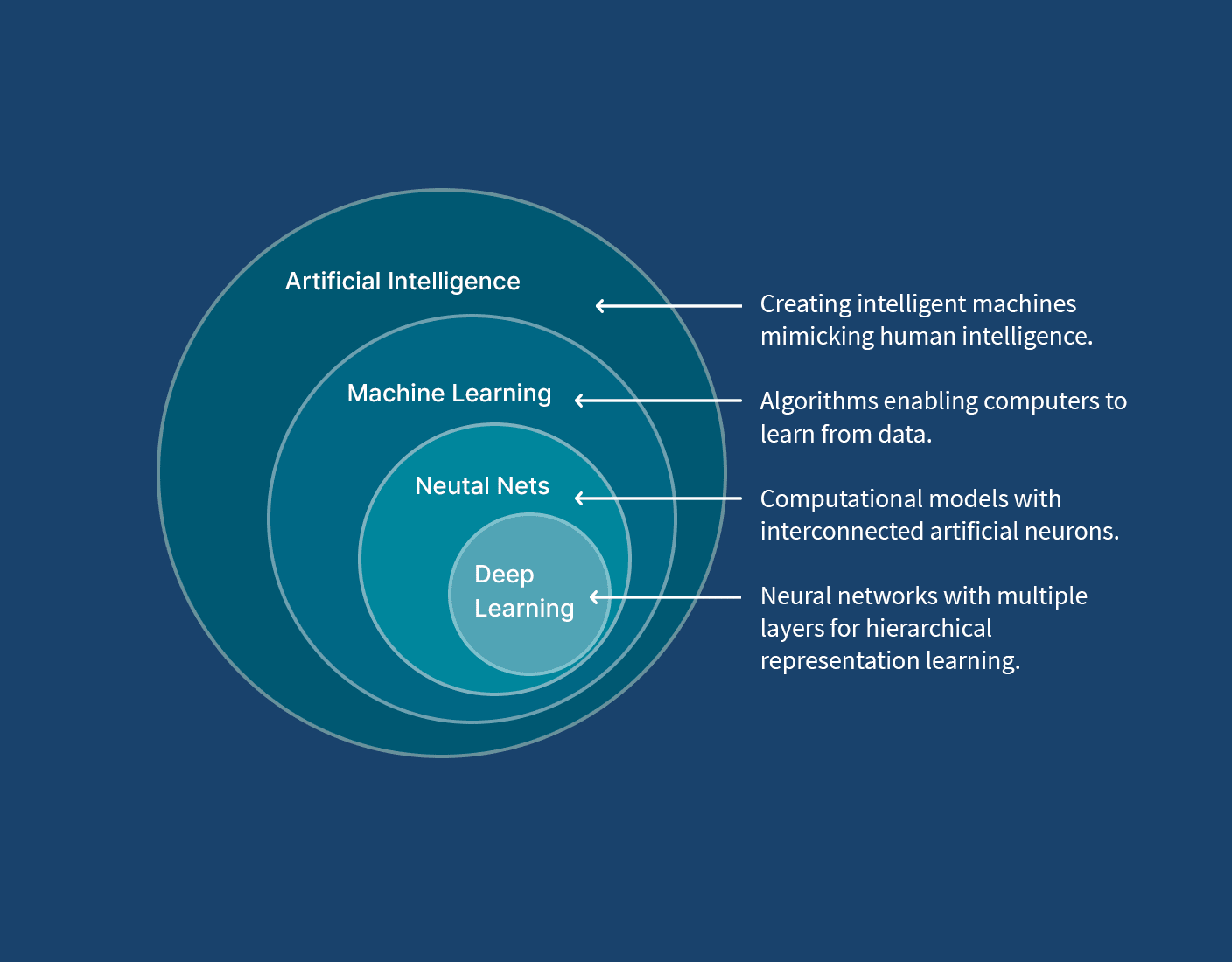
Deep learning, a subset of artificial intelligence (AI), has revolutionized the way machines understand and interpret data. It mimics the human brain’s neural networks, enabling machines to learn from vast amounts of data and make decisions with high accuracy.
What is Deep Learning?
Deep learning is a type of machine learning that uses neural networks with multiple layers—often called deep neural networks. These layers process data through interconnected nodes, allowing the system to learn complex patterns and representations. Unlike traditional algorithms, deep learning models improve their performance as they are exposed to more data over time.
How Does It Work?
The core of deep learning lies in its architecture. Each layer in a deep neural network extracts specific features from the input data. The first few layers might identify simple patterns like edges or colors in an image, while deeper layers recognize more complex structures such as objects or faces.
- Input Layer: Receives raw data for processing.
- Hidden Layers: Perform computations and extract features from the input data.
- Output Layer: Produces the final prediction or classification result.
Applications of Deep Learning
The applications of deep learning are vast and varied, transforming industries across the globe:
- Healthcare: Enhancing diagnostic accuracy through medical imaging analysis.
- Automotive: Powering autonomous vehicles by interpreting sensor data for safe navigation.
- Finance: Detecting fraudulent transactions by analyzing patterns in financial data.
- E-commerce: Personalizing customer experiences through recommendation systems.
- NLP (Natural Language Processing): Improving language translation and sentiment analysis tasks.
The Future of Deep Learning
The future of deep learning holds immense potential as it continues to evolve. Researchers are exploring ways to make models more efficient, interpretable, and capable of understanding context better. As computational power increases and new techniques emerge, deep learning will likely play an even more significant role in advancing AI capabilities.
Challenges Ahead
Despite its success, deep learning faces several challenges:
- Lack of Transparency: Understanding how decisions are made within complex models can be difficult.
- Labeled Data Requirement: Training effective models often requires large amounts of labeled data, which can be costly to obtain.
- Sensitivity to Data Quality: Poor quality or biased training data can lead to inaccurate predictions and perpetuate biases.
The journey of deep learning is just beginning, with ongoing research promising exciting advancements that could reshape technology landscapes worldwide. As we continue to unlock its potential, it will undoubtedly drive innovation across various sectors for years to come.
Understanding Deep Learning AI: Answers to 8 Common Questions
- What is deep learning AI?
- How does deep learning differ from traditional machine learning?
- What are the key components of a deep neural network?
- What are the applications of deep learning in real-world scenarios?
- How does training a deep learning model work?
- What challenges do researchers face when working with deep learning AI?
- Can deep learning models be easily interpreted and explained?
- What advancements are expected in the field of deep learning AI in the near future?
What is deep learning AI?
Deep learning AI is a branch of artificial intelligence that focuses on training machines to learn and make decisions by mimicking the human brain’s neural networks. It involves using deep neural networks, which consist of multiple layers of interconnected nodes, to process and analyze large amounts of data. Each layer in the network extracts increasingly complex features from the input data, allowing the system to recognize patterns and make predictions with high accuracy. Unlike traditional machine learning models, deep learning can automatically improve its performance as it is exposed to more data over time. This technology underpins many modern advancements, such as image and speech recognition, natural language processing, and autonomous systems, making it a cornerstone of AI development today.
How does deep learning differ from traditional machine learning?
In the realm of artificial intelligence, a commonly asked question revolves around the distinction between deep learning and traditional machine learning. While traditional machine learning algorithms require manual feature extraction and selection, deep learning automates this process by learning intricate patterns directly from raw data. Deep learning models, particularly neural networks with multiple layers, excel at capturing complex relationships and representations in data, enabling them to handle tasks that traditional machine learning methods may struggle with. The key difference lies in the depth and complexity of processing: deep learning delves into hierarchical representations through layered architectures, offering a more sophisticated approach to understanding and interpreting data compared to traditional machine learning techniques.
What are the key components of a deep neural network?
In deep learning AI, a deep neural network consists of key components that enable it to process and learn from complex data. These components include an input layer, hidden layers, and an output layer. The input layer receives raw data for processing, while the hidden layers perform computations to extract features from the input data through interconnected nodes. Each layer in the deep neural network plays a crucial role in understanding and representing different levels of abstraction within the data. Finally, the output layer produces the final prediction or classification result based on the learned representations from the hidden layers. By leveraging these components effectively, deep neural networks can tackle intricate tasks and make accurate decisions across various domains.
What are the applications of deep learning in real-world scenarios?
Deep learning, a powerful subset of artificial intelligence, finds extensive applications in real-world scenarios across diverse industries. In healthcare, deep learning aids in medical image analysis for accurate diagnoses and treatment planning. In autonomous vehicles, it interprets sensor data to enable safe navigation and decision-making. Financial institutions leverage deep learning for fraud detection by analyzing patterns in transaction data. E-commerce platforms utilize recommendation systems powered by deep learning to personalize customer experiences. Moreover, natural language processing (NLP) applications benefit from deep learning advancements in tasks such as language translation and sentiment analysis. These real-world applications highlight the transformative impact of deep learning technology on various sectors, paving the way for innovative solutions and enhanced efficiencies.
How does training a deep learning model work?
Training a deep learning model involves a process where the model learns to make predictions by adjusting its internal parameters based on the provided training data. Initially, the model’s parameters are randomly set, and as it processes training data, it compares its predictions with the actual outcomes to calculate errors. Through a technique called backpropagation, these errors are propagated back through the layers of the neural network to adjust the parameters gradually. This iterative process continues until the model’s predictions align closely with the actual data, a state known as convergence. Training a deep learning model requires large amounts of labeled data, computational power for processing complex calculations, and fine-tuning hyperparameters to optimize performance and accuracy.
What challenges do researchers face when working with deep learning AI?
When researchers delve into the realm of deep learning AI, they encounter a myriad of challenges that shape their journey. One significant hurdle lies in the interpretability of complex models, making it difficult to understand how decisions are reached within intricate neural networks. Additionally, the demand for vast amounts of labeled data for training purposes poses a substantial challenge, as acquiring and preparing such data can be resource-intensive. Moreover, the sensitivity of deep learning models to data quality underscores the importance of ensuring that training data is unbiased and representative to avoid reinforcing existing biases. Overcoming these obstacles requires innovative solutions and a deep understanding of both the technology and its implications in real-world applications.
Can deep learning models be easily interpreted and explained?
Explaining the interpretability of deep learning models is a common query in the realm of AI. While deep learning models are known for their exceptional performance in various tasks, such as image recognition and natural language processing, their interpretability poses a challenge. The complexity of deep neural networks with multiple layers makes it difficult to understand how they arrive at specific decisions or predictions. Researchers are actively exploring methods to enhance the interpretability of these models, aiming to make their inner workings more transparent and understandable. Despite the current challenges, efforts in developing techniques for interpreting deep learning models continue to progress, offering hope for improved explainability in the future.
What advancements are expected in the field of deep learning AI in the near future?
The field of deep learning AI is poised for significant advancements in the near future, driven by ongoing research and technological progress. One major area of development is the creation of more efficient algorithms that require less computational power and training data, making deep learning accessible to a wider range of applications and industries. Additionally, researchers are focusing on improving model interpretability, allowing for better understanding and trust in AI decisions. The integration of deep learning with other technologies, such as quantum computing and edge computing, is expected to enhance processing speeds and enable real-time decision-making. Furthermore, advancements in unsupervised and semi-supervised learning techniques are anticipated to reduce reliance on labeled data, facilitating more autonomous learning systems. These innovations will likely lead to breakthroughs in personalized medicine, autonomous vehicles, natural language processing, and beyond.