Understanding Artificial Intelligence and Deep Learning
Artificial Intelligence (AI) and deep learning are two of the most transformative technologies in the modern world. They are reshaping industries, driving innovation, and changing how we interact with machines. In this article, we will explore what these technologies are, how they work, and their impact on various sectors.
What is Artificial Intelligence?
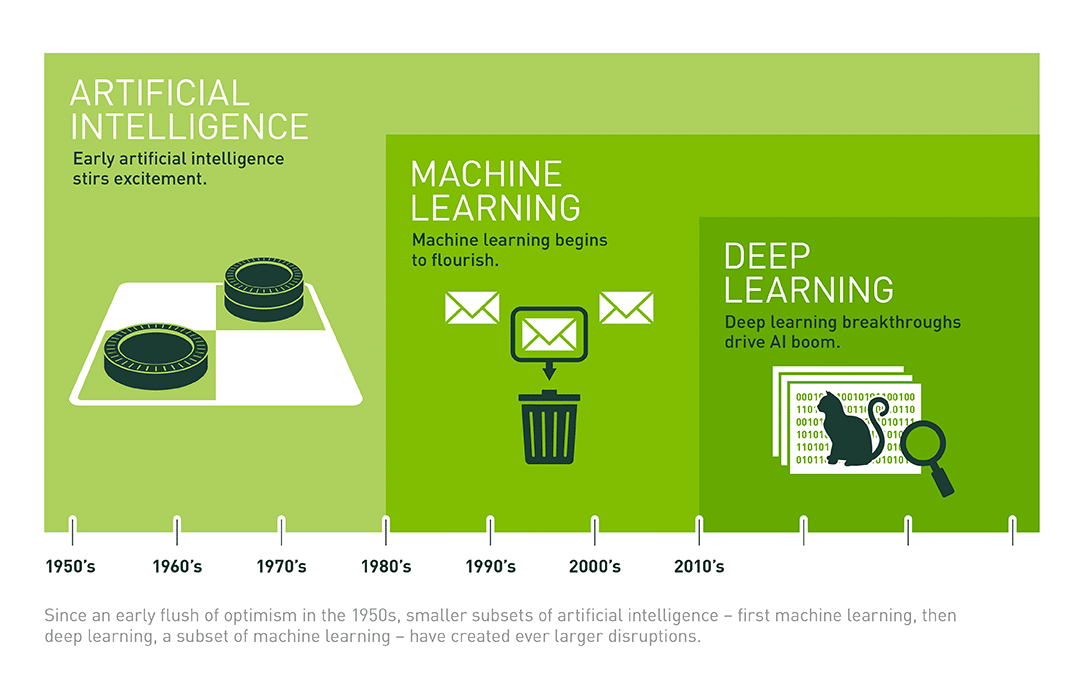
Artificial Intelligence refers to the simulation of human intelligence in machines designed to think and act like humans. These systems can perform tasks such as recognizing speech, making decisions, and translating languages. AI is categorized into two types: narrow AI, which is designed for a specific task, and general AI, which can perform any intellectual task that a human can do.
Introduction to Deep Learning
Deep learning is a subset of machine learning that mimics the workings of the human brain in processing data for use in decision making. It involves neural networks with three or more layers—these neural networks attempt to simulate the behavior of the human brain by allowing it to learn from large amounts of data.
How Deep Learning Works
The fundamental building block of deep learning is the artificial neural network. These networks consist of layers of nodes or neurons that process input data through weighted connections. Each layer extracts features from the input data before passing them on to subsequent layers for further processing. This layered approach enables deep learning models to understand complex patterns in data.
Applications of AI and Deep Learning
- Healthcare: AI is revolutionizing healthcare by enabling early disease detection through image recognition and predictive analytics.
- Automotive Industry: Self-driving cars utilize deep learning algorithms to interpret sensor data and make real-time driving decisions.
- Finance: AI-driven algorithms are used for fraud detection, risk management, and personalized banking services.
- E-commerce: Recommendation engines powered by AI analyze user behavior to provide personalized shopping experiences.
- NLP (Natural Language Processing): Deep learning models enhance language translation services and voice-activated assistants like Siri and Alexa.
The Future Impact of AI
The potential impact of artificial intelligence on society is vast. As these technologies evolve, they promise increased efficiency in various fields but also pose challenges such as ethical considerations around job displacement and privacy concerns. It’s crucial for policymakers, businesses, and technologists to collaborate on guidelines that ensure responsible development and deployment.
The journey into a future shaped by artificial intelligence requires careful consideration but holds immense promise for advancing human capabilities beyond current limitations.
5 Essential Tips to Master Artificial Intelligence and Deep Learning
- Understand the basics of neural networks and how they work.
- Stay updated on the latest research and advancements in AI and deep learning.
- Practice coding and implementing algorithms to gain hands-on experience.
- Experiment with different datasets to improve your understanding of model training.
- Join online communities or attend workshops to collaborate with others in the field.
Understand the basics of neural networks and how they work.
To grasp the fundamentals of artificial intelligence and deep learning, it is essential to comprehend the basics of neural networks and their functioning. Neural networks are at the core of deep learning, mimicking the structure of the human brain to process and learn from data. Understanding how neural networks operate, with layers of interconnected nodes processing information, is crucial in unlocking the potential of these technologies to analyze complex patterns and make informed decisions.
Stay updated on the latest research and advancements in AI and deep learning.
Staying updated on the latest research and advancements in AI and deep learning is essential for anyone involved in these rapidly evolving fields. As technology progresses, new algorithms, techniques, and applications are constantly being developed, offering improved performance and innovative solutions to complex problems. By keeping abreast of the latest findings, professionals can enhance their understanding, adapt to emerging trends, and implement cutting-edge strategies in their work. Engaging with academic journals, attending conferences, participating in webinars, and joining professional networks are effective ways to remain informed about the breakthroughs that are shaping the future of AI and deep learning. This proactive approach not only fosters personal growth but also contributes to driving progress within the industry.
Practice coding and implementing algorithms to gain hands-on experience.
Gaining hands-on experience in artificial intelligence and deep learning is crucial for developing a strong understanding of these fields. Practice coding and implementing algorithms to bridge the gap between theoretical knowledge and practical application. By working on real-world projects, one can better grasp the nuances of various AI frameworks and libraries, such as TensorFlow or PyTorch. This practice not only enhances problem-solving skills but also provides insight into optimizing models and debugging issues. Engaging with coding challenges and participating in hackathons can further solidify one’s expertise, making it easier to innovate and contribute effectively to AI-driven solutions.
Experiment with different datasets to improve your understanding of model training.
Experimenting with different datasets is a crucial step in enhancing your understanding of model training in artificial intelligence and deep learning. By working with diverse datasets, you expose your models to a variety of data structures, patterns, and challenges, which can significantly improve their ability to generalize and perform well in real-world applications. Each dataset comes with its own unique characteristics and potential issues such as noise, missing values, or unbalanced classes. By navigating these challenges, you gain valuable insights into how different preprocessing techniques and model architectures can be applied effectively. Moreover, this experimentation helps you develop a more intuitive grasp of how models learn from data and what adjustments might be necessary to optimize performance. This hands-on experience is invaluable for building robust AI systems that are adaptable to various scenarios.
Join online communities or attend workshops to collaborate with others in the field.
To deepen your understanding and stay updated on the latest trends in artificial intelligence and deep learning, consider joining online communities or attending workshops where you can collaborate with like-minded individuals in the field. Engaging with peers and experts through these platforms not only provides valuable networking opportunities but also fosters knowledge sharing, idea exchange, and potential collaborations that can enhance your expertise and broaden your perspective on these transformative technologies.