Understanding Cognitive Artificial Intelligence: The Future of Machine Learning
Cognitive artificial intelligence (AI) represents a groundbreaking advancement in the field of machine learning, aiming to mimic human thought processes in a computerized model. Unlike traditional AI systems that operate based on predefined algorithms and data sets, cognitive AI seeks to understand, learn, and adapt in ways similar to the human brain.
What is Cognitive AI?
Cognitive AI is designed to simulate human cognitive functions such as perception, reasoning, learning, and problem-solving. It leverages technologies like natural language processing (NLP), neural networks, and deep learning to process information more holistically. This enables machines to interpret complex data patterns and make decisions with minimal human intervention.
Key Features of Cognitive AI
- Natural Language Processing: One of the most significant aspects of cognitive AI is its ability to understand and respond to human language. NLP allows machines to comprehend context, sentiment, and nuances in communication.
- Machine Learning: Cognitive AI systems continuously learn from new data inputs. They can improve their performance over time by adapting their algorithms based on previous outcomes.
- Reasoning: These systems can analyze vast amounts of data to draw logical conclusions and make predictions. This capability is crucial for applications like financial forecasting or medical diagnosis.
- Sensory Perception: Advanced cognitive AI can process sensory inputs such as images or sounds, akin to how humans perceive their environment.
Applications of Cognitive AI
The potential applications for cognitive AI are vast and varied across numerous industries:
- Healthcare: Cognitive AI can assist doctors by analyzing medical records and imaging data to provide diagnostic suggestions or treatment plans.
- Finance: In the financial sector, cognitive systems analyze market trends and customer behavior for better investment strategies and risk management.
- E-commerce: Personalized shopping experiences are enhanced through cognitive AI by predicting customer preferences based on browsing history.
- Customer Service: Virtual assistants powered by cognitive AI offer more intuitive interactions with users by understanding context and emotion in inquiries.
The Future of Cognitive AI
The future holds immense promise for cognitive artificial intelligence as it continues to evolve. As these systems become more sophisticated, they will likely transform how we interact with technology daily. However, this also raises important ethical considerations regarding privacy, security, and the potential displacement of jobs due to automation.
Cognitive AI represents a leap forward in creating machines that not only perform tasks but also think critically about them. As research progresses, society must address these challenges while harnessing the power of cognitive artificial intelligence for positive change across all sectors.
The journey towards fully realizing the potential of cognitive AI is just beginning. Its impact will undoubtedly shape the technological landscape for years to come.
7 Key Advantages of Cognitive AI: Transforming Problem-Solving, Decision-Making, and More
- Enhanced Problem-Solving
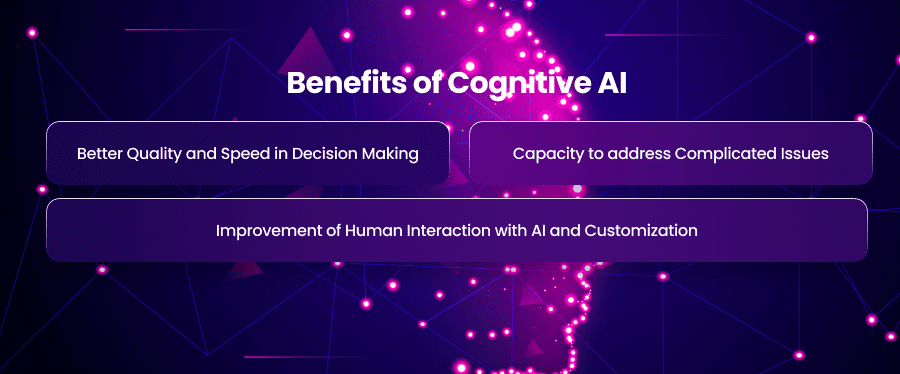
- Improved Decision-Making
- Personalized User Experiences
- Efficient Data Processing
- Continuous Learning
- Natural Language Understanding
- Advanced Automation Capabilities
Addressing the Challenges of Cognitive AI: Privacy, Ethics, and Employment
Enhanced Problem-Solving
Cognitive artificial intelligence significantly enhances problem-solving capabilities by leveraging its advanced analytical skills to tackle complex issues. Unlike traditional AI, which relies on predefined algorithms, cognitive AI can process vast amounts of data, identify patterns, and draw insights much like a human brain. This allows it to generate innovative solutions efficiently and adaptively. By simulating human-like reasoning, cognitive AI can address multifaceted problems across various domains, from optimizing supply chains to diagnosing medical conditions. Its ability to learn from new data and experiences ensures continuous improvement in solution generation, making it an invaluable tool for industries seeking to innovate and solve intricate challenges effectively.
Improved Decision-Making
Cognitive artificial intelligence significantly enhances decision-making processes by efficiently analyzing vast amounts of data to deliver informed and timely decisions. Unlike traditional methods, which may struggle with large datasets or require extended periods for analysis, cognitive AI systems can swiftly sift through complex information, identify patterns, and draw logical conclusions. This capability is particularly valuable in dynamic environments where rapid decision-making is crucial, such as financial markets or emergency response situations. By providing insights that are both data-driven and contextually aware, cognitive AI empowers organizations to make strategic decisions with greater confidence and precision, ultimately leading to improved outcomes and competitive advantages.
Personalized User Experiences
Cognitive artificial intelligence significantly enhances personalized user experiences by leveraging its ability to analyze and interpret individual preferences and behaviors. By processing vast amounts of data, cognitive AI systems can identify unique patterns and trends in user interactions, allowing them to tailor content, recommendations, and services specifically to each user. This personalization goes beyond simple algorithms by incorporating contextual understanding and emotional nuances, resulting in more meaningful and engaging interactions. Whether it’s customizing a shopping experience, suggesting music or movies, or providing targeted customer support, cognitive AI ensures that users receive a highly individualized experience that aligns with their interests and needs. This level of personalization not only improves user satisfaction but also fosters brand loyalty by making every interaction feel relevant and valuable.
Efficient Data Processing
Cognitive artificial intelligence excels in efficient data processing by its ability to interpret unstructured data, such as text, images, and videos, which traditional systems often struggle to handle. This capability allows cognitive AI to process vast amounts of information quickly and accurately, extracting meaningful insights from complex datasets. By understanding and organizing data that lacks a predefined structure, cognitive AI can streamline operations across various industries. For example, in healthcare, it can swiftly analyze patient records and medical images to assist in diagnosis and treatment planning. In finance, it can evaluate market trends and consumer behavior with greater precision. This efficiency not only accelerates decision-making processes but also enhances the overall quality of outcomes by reducing errors associated with manual data handling.
Continuous Learning
One of the significant advantages of cognitive artificial intelligence is its ability to engage in continuous learning, allowing systems to adapt and improve over time. Unlike traditional AI, which relies on static algorithms and predefined data sets, cognitive AI leverages new data inputs to refine its understanding and enhance its performance. This dynamic learning process enables the system to recognize patterns, adapt to changes in the environment, and make more accurate predictions or decisions as it processes additional information. As a result, cognitive AI becomes more efficient and effective with each interaction, ultimately leading to smarter solutions that can better meet the evolving needs of users and industries.
Natural Language Understanding
Machines empowered with cognitive artificial intelligence possess a remarkable ability in natural language understanding, enabling them to grasp and address the intricacies of human language with great effectiveness. By leveraging advanced technologies such as natural language processing (NLP) and deep learning, these systems can interpret context, sentiment, and subtle nuances in communication. This proficiency in understanding human language nuances not only enhances user interactions but also opens up a myriad of possibilities for applications across various industries, from customer service to healthcare and beyond.
Advanced Automation Capabilities
Cognitive artificial intelligence offers advanced automation capabilities that significantly streamline processes across various industries. By simulating human cognitive functions, cognitive AI can efficiently handle complex tasks that traditionally required manual intervention. This not only reduces the likelihood of errors but also enhances overall productivity. For instance, in manufacturing, cognitive AI systems can optimize production lines by predicting maintenance needs and adjusting workflows in real time. In the financial sector, it automates data analysis and fraud detection with greater accuracy and speed than human analysts alone could achieve. By reducing the time and resources spent on routine tasks, businesses can focus more on innovation and strategic growth, making cognitive AI an invaluable asset in today’s competitive landscape.
Privacy Concerns
Cognitive artificial intelligence systems, while offering significant advancements, also pose substantial privacy concerns due to their access to vast amounts of personal data. These systems often require extensive data inputs to function effectively, which can include sensitive information such as personal preferences, health records, and financial details. The aggregation and analysis of such data raise critical issues regarding how this information is stored, who has access to it, and how it might be used beyond its intended purpose. Additionally, the potential for data breaches or misuse by unauthorized parties heightens the risk of compromising individual privacy. As cognitive AI continues to evolve and integrate into various aspects of daily life, ensuring robust data security measures and transparent privacy policies becomes increasingly essential to protect users’ personal information and maintain public trust.
Ethical Dilemmas
As cognitive AI systems become increasingly autonomous in their decision-making processes, they raise significant ethical dilemmas, particularly concerning accountability and bias. When these systems make decisions without direct human oversight, determining who is responsible for the outcomes becomes challenging, especially if those decisions lead to unintended consequences. Furthermore, cognitive AI relies on data to learn and evolve, which means that any biases present in the training data can be perpetuated or even amplified by the AI. This can result in unfair or discriminatory outcomes that are difficult to detect and correct. As these technologies continue to advance, it is crucial to establish robust frameworks for accountability and implement measures to identify and mitigate biases to ensure ethical use of cognitive AI.
Job Displacement
The rise of cognitive artificial intelligence brings with it significant concerns about job displacement. As these advanced systems become increasingly capable of performing tasks that once required human intelligence, there is a growing risk that certain jobs may become obsolete. Industries such as manufacturing, customer service, and even some professional sectors could see a reduction in demand for human labor as AI-driven automation takes over routine and complex tasks alike. This shift poses a challenge for the workforce, as employees may need to adapt by acquiring new skills or transitioning to different roles. The potential impact on employment sectors highlights the importance of developing strategies to mitigate job loss and ensure that workers can thrive alongside advancing technology.