The Importance of ESG Reporting in Corporate Sustainability
ESG reporting, which stands for Environmental, Social, and Governance reporting, has become a crucial aspect of corporate sustainability practices. Companies worldwide are increasingly recognizing the significance of disclosing their performance in these areas to stakeholders, including investors, customers, employees, and the public.
Environmental Factors
Environmental factors encompass a company’s impact on the planet. ESG reports often include information on energy consumption, greenhouse gas emissions, water usage, waste management practices, and efforts to mitigate environmental risks. By transparently reporting on these metrics, companies can demonstrate their commitment to reducing their carbon footprint and preserving natural resources.
Social Responsibility
Social responsibility focuses on how a company interacts with its employees, communities, and society at large. ESG reports may cover topics such as employee diversity and inclusion initiatives, labor practices, community engagement programs, philanthropic activities, and human rights policies. By disclosing their social performance metrics, companies can show that they are prioritizing the well-being of their stakeholders.
Governance Practices
Good governance is essential for maintaining transparency and accountability within an organization. ESG reports often detail information about board composition, executive compensation structures, anti-corruption measures, ethical business practices, and risk management frameworks. By showcasing strong governance practices through ESG reporting, companies can build trust with investors and stakeholders.
The Benefits of ESG Reporting
ESG reporting offers several benefits to companies that embrace it as part of their sustainability strategy. Firstly, it enhances transparency by providing stakeholders with comprehensive insights into a company’s environmental and social impact. This transparency can help build trust with investors who are increasingly considering ESG factors in their investment decisions.
Secondly, ESG reporting can drive innovation by encouraging companies to adopt more sustainable business practices. By setting measurable goals related to environmental conservation and social responsibility, organizations can spur creativity and efficiency in achieving long-term sustainability objectives.
Lastly, ESG reporting can enhance reputation and brand value. Companies that are proactive in disclosing their ESG performance demonstrate a commitment to responsible business practices that resonate positively with consumers and investors alike.
Conclusion
In conclusion, ESG reporting plays a vital role in advancing corporate sustainability efforts worldwide. By transparently disclosing environmental impact data, social responsibility initiatives, and governance practices through comprehensive reports, companies can not only meet the growing expectations of stakeholders but also drive positive change towards a more sustainable future.
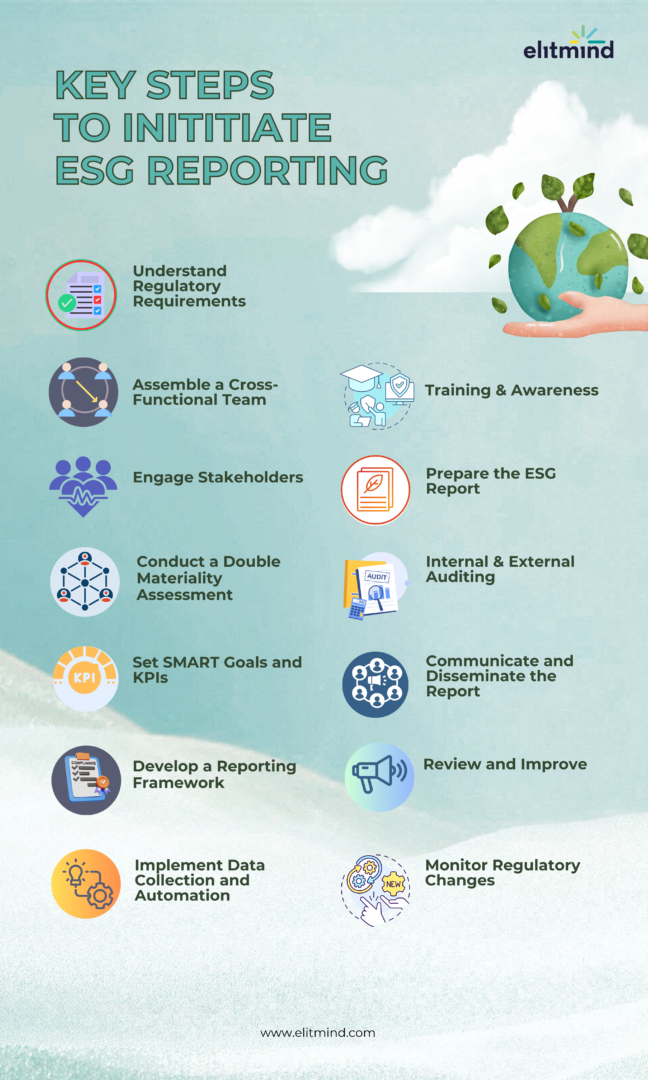
8 Essential Tips for Effective ESG Reporting
- Understand the ESG framework and guidelines before starting the reporting process.
- Identify key stakeholders and their specific ESG information needs.
- Collect accurate and relevant data on environmental, social, and governance factors.
- Ensure transparency in reporting methodologies and data sources used.
- Set clear goals and targets for improving ESG performance over time.
- Regularly review and update your ESG reporting practices to reflect changes in the business environment.
- Consider using third-party verification or assurance to enhance credibility of your ESG reports.
- Engage with investors, customers, employees, and other stakeholders to solicit feedback on your ESG reports.
Understand the ESG framework and guidelines before starting the reporting process.
To ensure a successful ESG reporting process, it is essential to first understand the ESG framework and guidelines thoroughly. Familiarizing oneself with the Environmental, Social, and Governance principles that form the foundation of ESG reporting is crucial for accurately capturing and communicating a company’s sustainability performance. By grasping the framework and guidelines upfront, organizations can align their reporting efforts with industry standards, set meaningful ESG goals, and effectively track their progress towards achieving sustainable outcomes. This proactive approach not only enhances the credibility of ESG reports but also enables companies to demonstrate a genuine commitment to transparency and responsible business practices.
Identify key stakeholders and their specific ESG information needs.
To enhance the effectiveness of ESG reporting, it is essential for companies to identify key stakeholders and understand their specific ESG information needs. By recognizing the diverse interests and concerns of stakeholders such as investors, customers, employees, regulators, and community members, organizations can tailor their reporting to address relevant issues and provide meaningful insights. This targeted approach not only fosters greater stakeholder engagement but also ensures that ESG reports are more aligned with the expectations and priorities of those who have a vested interest in the company’s sustainability performance.
Collect accurate and relevant data on environmental, social, and governance factors.
To ensure effective ESG reporting, it is essential to collect accurate and relevant data on environmental, social, and governance factors. By gathering precise information on metrics such as energy consumption, greenhouse gas emissions, employee diversity, community engagement, board composition, and ethical business practices, companies can provide stakeholders with a comprehensive understanding of their sustainability performance. Accurate data enables organizations to identify areas for improvement, set meaningful targets, and demonstrate their commitment to transparency and responsible corporate citizenship.
Ensure transparency in reporting methodologies and data sources used.
Ensuring transparency in reporting methodologies and data sources used is a fundamental tip for effective ESG reporting. By clearly outlining how information is gathered, analyzed, and presented in ESG reports, companies can build trust with stakeholders and demonstrate their commitment to integrity. Transparency in reporting methodologies helps stakeholders understand the reliability of the data provided and ensures that decisions based on ESG information are well-informed. Additionally, disclosing the sources of data used in ESG reporting enhances accountability and credibility, fostering a culture of openness and responsible corporate behavior.
Set clear goals and targets for improving ESG performance over time.
Setting clear goals and targets for improving ESG (Environmental, Social, and Governance) performance over time is essential for companies committed to sustainability. By establishing specific objectives related to environmental conservation, social responsibility, and governance practices, organizations can create a roadmap for continuous improvement and accountability. These goals provide a framework for measuring progress, identifying areas for enhancement, and demonstrating a genuine commitment to sustainable business practices. Clear targets not only guide strategic decision-making but also inspire innovation and drive positive change within the company and the broader community.
Regularly review and update your ESG reporting practices to reflect changes in the business environment.
Regularly reviewing and updating your ESG reporting practices is essential to ensure that your company’s sustainability efforts remain aligned with the evolving business landscape. By staying attuned to changes in environmental regulations, social trends, and governance standards, you can adapt your reporting strategies to address emerging challenges and opportunities. This proactive approach not only enhances the credibility of your ESG reports but also demonstrates your commitment to continuous improvement in sustainable business practices. Keeping your ESG reporting practices up-to-date allows stakeholders to have a clear and accurate understanding of your company’s progress towards achieving its environmental, social, and governance goals.
Consider using third-party verification or assurance to enhance credibility of your ESG reports.
To enhance the credibility of your ESG reports, consider utilizing third-party verification or assurance services. Third-party verification involves having an independent organization review and validate the accuracy and completeness of your ESG data and reporting processes. This external validation adds a layer of credibility to your reports, assuring stakeholders that the information presented is reliable and trustworthy. By engaging third-party verification or assurance, companies can demonstrate their commitment to transparency and accountability in their ESG reporting practices, ultimately building trust with investors, customers, and other stakeholders.
Engage with investors, customers, employees, and other stakeholders to solicit feedback on your ESG reports.
Engaging with investors, customers, employees, and other stakeholders to solicit feedback on your ESG reports is a valuable practice that fosters transparency and accountability. By actively seeking input from these key stakeholders, companies can gain valuable insights into how their sustainability efforts are perceived and identify areas for improvement. This feedback loop not only enhances the credibility of ESG reporting but also demonstrates a commitment to listening to diverse perspectives and incorporating feedback to drive continuous progress in corporate sustainability initiatives.