Understanding Deep Learning: The Heart of Artificial Intelligence
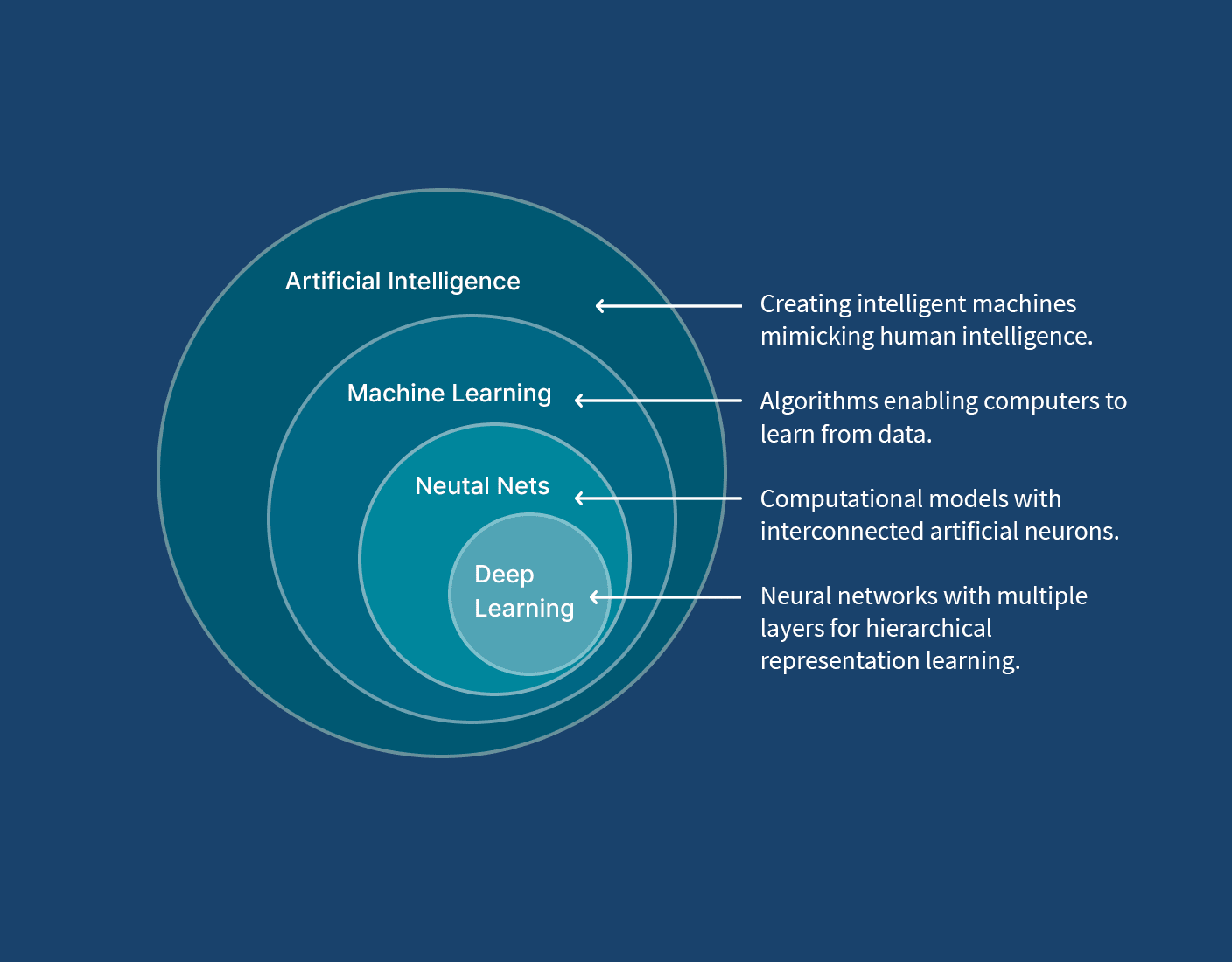
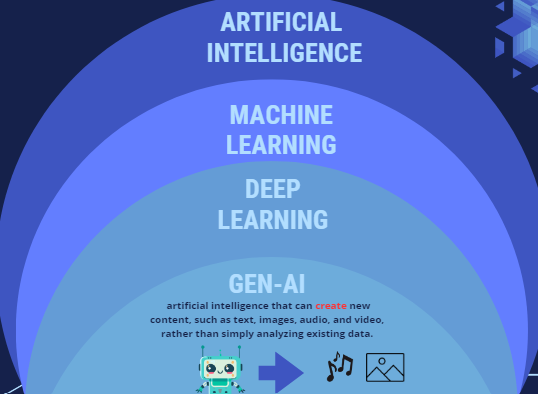
Deep learning, a subset of artificial intelligence (AI), has revolutionized the way machines understand and interact with data. It mimics the human brain’s neural networks, enabling computers to learn from vast amounts of data and make complex decisions.
The Basics of Deep Learning
Deep learning involves layers of neural networks that process information in a hierarchical manner. Each layer extracts specific features from the input data, progressively refining its understanding to make accurate predictions or decisions. This approach allows deep learning models to excel in tasks such as image and speech recognition, natural language processing, and more.
Key Applications
- Image Recognition: Deep learning models can identify objects within images with remarkable accuracy, powering technologies like facial recognition and autonomous vehicles.
- Natural Language Processing (NLP): By understanding human language nuances, deep learning enhances applications like chatbots and translation services.
- Healthcare: AI systems assist in diagnosing diseases by analyzing medical images and predicting patient outcomes.
- Finance: Deep learning algorithms detect fraudulent activities by recognizing unusual patterns in transaction data.
The Technology Behind Deep Learning
The success of deep learning can be attributed to advances in computational power, large datasets, and sophisticated algorithms. GPUs (Graphics Processing Units) are particularly effective for training deep neural networks due to their ability to handle parallel computations efficiently. Additionally, frameworks such as TensorFlow and PyTorch have simplified the development process for researchers and engineers.
Challenges and Considerations
While deep learning offers transformative potential, it also presents challenges. Training models requires significant computational resources and large datasets. Moreover, ensuring model transparency and addressing ethical concerns around bias are critical considerations for developers.
The Future of Deep Learning
The future of deep learning holds exciting possibilities as researchers continue to push the boundaries of what AI can achieve. Innovations such as unsupervised learning techniques aim to reduce dependency on labeled data, while quantum computing promises even greater computational capabilities.
As deep learning technologies evolve, they will undoubtedly play an increasingly integral role across various industries, driving innovation and shaping the future of artificial intelligence.
Exploring Deep Learning: Key Questions and Answers on Concepts, Applications, and Innovations
- What is deep learning and how does it differ from traditional machine learning?
- What are neural networks and how are they used in deep learning?
- Can you explain the concept of backpropagation in deep learning?
- How do convolutional neural networks (CNNs) contribute to image recognition tasks in deep learning?
- What role does recurrent neural networks (RNNs) play in natural language processing within deep learning?
- What are some common applications of deep learning in healthcare?
- How do researchers address issues of bias and ethics when developing deep learning models?
- What advancements are being made in hardware and software to enhance the capabilities of deep learning systems?
What is deep learning and how does it differ from traditional machine learning?
Deep learning is a subset of artificial intelligence that involves complex neural networks to process data and make decisions. What sets deep learning apart from traditional machine learning is its ability to automatically learn representations from data, without requiring explicit programming of features. While traditional machine learning algorithms rely on manually engineered features, deep learning algorithms can discover intricate patterns and relationships within the data on their own. This capability enables deep learning models to achieve higher levels of accuracy and performance in tasks such as image recognition, natural language processing, and speech synthesis.
What are neural networks and how are they used in deep learning?
Neural networks are a fundamental component of deep learning, modeled after the human brain’s interconnected neurons. These networks consist of layers of nodes that process and analyze data inputs, learning patterns and relationships to make predictions or decisions. In deep learning, neural networks utilize multiple hidden layers to extract increasingly complex features from the input data, enabling more sophisticated learning capabilities. By adjusting the strength of connections between nodes through training with labeled datasets, neural networks can recognize patterns in images, understand language nuances in text, and perform various other tasks essential for artificial intelligence applications.
Can you explain the concept of backpropagation in deep learning?
In deep learning, backpropagation is a fundamental concept that lies at the core of training neural networks. It refers to the process of calculating and adjusting the weights of connections between neurons to minimize the difference between predicted and actual outputs. Backpropagation works by propagating the error backward through the network, allowing each layer to update its parameters based on the gradient of the loss function. This iterative process enables neural networks to learn complex patterns and improve their performance over time through multiple training epochs.
How do convolutional neural networks (CNNs) contribute to image recognition tasks in deep learning?
Convolutional Neural Networks (CNNs) play a pivotal role in image recognition tasks within deep learning by leveraging their unique architecture designed to process visual data efficiently. CNNs utilize convolutional layers to extract features from images at different scales, enabling them to identify patterns such as edges, textures, and shapes. Through pooling layers, CNNs reduce the spatial dimensions of the extracted features while retaining their essential information. This hierarchical feature extraction process allows CNNs to learn complex representations of images and make accurate predictions, making them indispensable for tasks like object detection, facial recognition, and image classification in the realm of deep learning.
What role does recurrent neural networks (RNNs) play in natural language processing within deep learning?
Recurrent Neural Networks (RNNs) play a crucial role in natural language processing (NLP) within deep learning by addressing the sequential nature of language. Unlike traditional feedforward neural networks, RNNs have connections that form loops, allowing them to retain information from previous time steps. This sequential memory capability makes RNNs well-suited for tasks such as speech recognition, machine translation, sentiment analysis, and text generation. By processing words in context and capturing dependencies within sentences, RNNs enhance the understanding and generation of human language, contributing significantly to the advancement of NLP applications in deep learning.
What are some common applications of deep learning in healthcare?
Deep learning has made significant strides in revolutionizing healthcare by offering innovative solutions to complex challenges. Some common applications of deep learning in healthcare include medical image analysis for diagnosing diseases such as cancer and detecting abnormalities in radiology scans with high accuracy. Additionally, deep learning algorithms are utilized in predicting patient outcomes, personalized treatment recommendations, drug discovery, and optimizing hospital operations for improved efficiency. These applications demonstrate the transformative potential of deep learning technology in enhancing medical diagnosis, treatment, and overall patient care.
How do researchers address issues of bias and ethics when developing deep learning models?
Researchers address issues of bias and ethics in deep learning models by implementing several strategies throughout the development process. One key approach is ensuring diverse and representative datasets to train models, which helps mitigate biases that may arise from skewed data. Additionally, researchers employ techniques such as fairness-aware algorithms designed to detect and reduce bias in model outputs. Regular audits and evaluations of models are conducted to identify any unintended discriminatory behavior. Transparency is also crucial; researchers often advocate for explainable AI, where the decision-making process of a model is made more understandable to humans. Collaborating with ethicists and stakeholders from various fields further ensures that ethical considerations are integrated into AI development, promoting responsible use of technology.
What advancements are being made in hardware and software to enhance the capabilities of deep learning systems?
Advancements in hardware and software are continuously being made to enhance the capabilities of deep learning systems. On the hardware front, specialized processors like GPUs and TPUs are designed to accelerate the training and inference processes of deep neural networks, allowing for faster computations and higher efficiency. Additionally, innovations in hardware architecture, such as neuromorphic chips and quantum computing, offer promising avenues for further enhancing the speed and scalability of deep learning systems. On the software side, frameworks like TensorFlow, PyTorch, and Keras provide developers with powerful tools for building and deploying complex neural network models with ease. Moreover, research into novel algorithms and optimization techniques aims to improve the performance and accuracy of deep learning systems across various applications. These combined efforts in hardware and software advancements continue to push the boundaries of what is possible in the realm of artificial intelligence deep learning.