The Transformative Power of AI and Machine Learning
Artificial Intelligence (AI) and Machine Learning (ML) have become buzzwords in today’s technological landscape, revolutionizing industries and shaping the future. These technologies are not just confined to the realm of science fiction; they are actively transforming how businesses operate, how we communicate, and even how we understand the world around us.
Understanding AI and Machine Learning
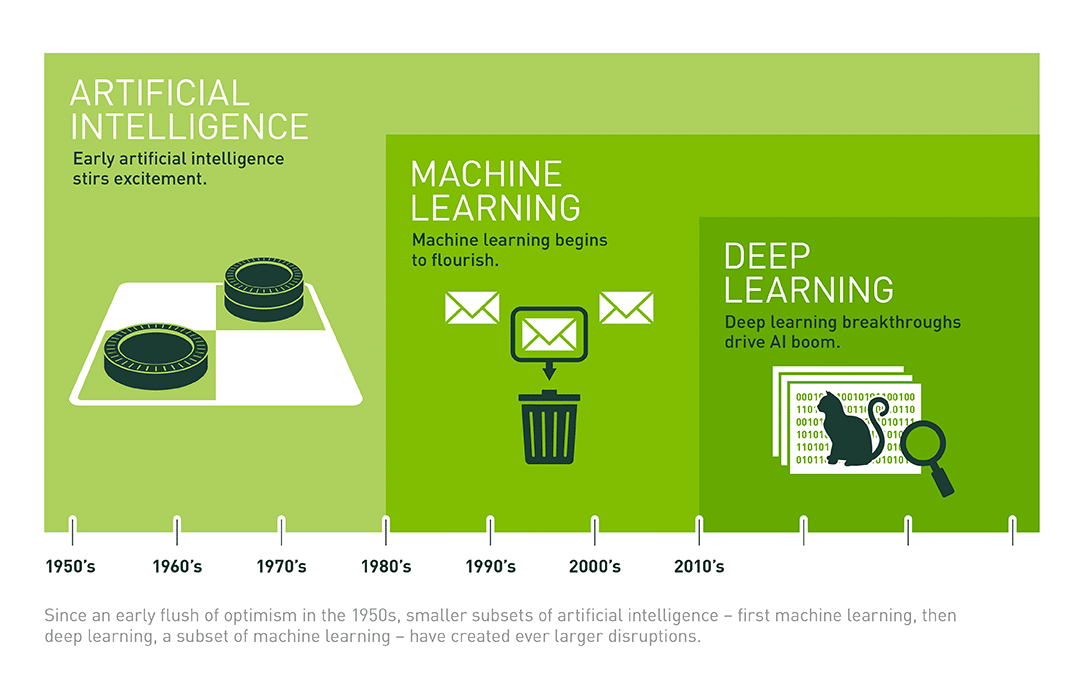
AI refers to the simulation of human intelligence processes by machines, especially computer systems. These processes include learning, reasoning, problem-solving, perception, and language understanding. Machine Learning is a subset of AI that involves the use of algorithms and statistical models to enable computers to improve their performance on a task through experience.
How Machine Learning Works
Machine learning relies on data input to identify patterns and make decisions without being explicitly programmed for specific tasks. It uses various algorithms such as supervised learning, unsupervised learning, and reinforcement learning to process data:
- Supervised Learning: Involves training a model on a labeled dataset, meaning that each training example is paired with an output label.
- Unsupervised Learning: Involves using data that does not have labeled responses. The system tries to learn patterns and structures from the input data.
- Reinforcement Learning: Involves training models through rewards or penalties as they interact with an environment.
The Impact of AI and ML Across Industries
The integration of AI and ML has brought about significant advancements across various sectors:
Healthcare
In healthcare, AI-powered tools assist in diagnosing diseases more accurately by analyzing medical images or predicting patient outcomes based on historical data. ML algorithms help in drug discovery by identifying potential compounds faster than traditional methods.
Finance
The financial industry benefits from AI through improved fraud detection systems that analyze transaction patterns for anomalies. Additionally, machine learning models enhance investment strategies by predicting market trends based on vast datasets.
E-commerce
E-commerce platforms leverage AI for personalized shopping experiences. Recommendation engines use machine learning to suggest products based on user behavior, increasing customer satisfaction and sales.
The Future of AI and Machine Learning
The potential applications of AI and ML are virtually limitless as technology continues to evolve. However, with great power comes great responsibility. Ethical considerations such as bias in algorithms, privacy concerns, and job displacement due to automation need careful attention.
The future will likely see more collaborative efforts between humans and machines—a synergy where machines handle complex computations while humans provide creativity and ethical oversight. As we move forward into this new era powered by intelligent systems, it is crucial to harness these technologies responsibly for the betterment of society.
Understanding AI and Machine Learning: Key Differences, Types, Investment Opportunities, and Self-Learning
- What is artificial intelligence vs machine learning?
- What are the 3 types of machine learning?
- Which AI stock is good to buy?
- What’s the difference between machine learning and AI?
- What are the 4 types of AI?
- What are the 4 types of AI learning?
- Can I self taught AI?
What is artificial intelligence vs machine learning?
Artificial Intelligence (AI) and Machine Learning (ML) are often used interchangeably, but they represent distinct concepts within the realm of computer science. AI is a broad field that encompasses the creation of systems capable of performing tasks that typically require human intelligence, such as visual perception, speech recognition, decision-making, and language translation. It aims to mimic human cognitive functions. On the other hand, Machine Learning is a subset of AI that focuses on the development of algorithms allowing computers to learn from and make predictions or decisions based on data. While all machine learning is AI, not all AI involves machine learning. Machine learning provides one approach to achieving artificial intelligence by enabling systems to improve their performance over time without being explicitly programmed for specific tasks.
What are the 3 types of machine learning?
Machine learning, a pivotal subset of artificial intelligence, is categorized into three primary types: supervised learning, unsupervised learning, and reinforcement learning. Supervised learning involves training a model on a labeled dataset, meaning that each input data point is paired with the correct output. This type is commonly used for tasks like classification and regression. Unsupervised learning, on the other hand, deals with data that lacks labels. The model attempts to identify patterns and relationships within the data, making it ideal for clustering and association tasks. Finally, reinforcement learning focuses on training models through a system of rewards and penalties as they interact with an environment. This approach is particularly effective in scenarios where decision-making is required, such as in robotics or game playing. Each type serves unique purposes and offers distinct advantages depending on the application.
Which AI stock is good to buy?
Investing in AI stocks can be a promising venture, given the rapid advancements and increasing integration of artificial intelligence across various industries. When considering which AI stock might be a good buy, it’s important to evaluate companies based on their innovation, market position, and growth potential. Leading tech giants like NVIDIA and Alphabet (Google) are often highlighted due to their significant investments in AI research and development. NVIDIA, for example, is renowned for its powerful GPUs that are essential in training machine learning models, while Alphabet continues to expand its AI capabilities through initiatives like Google Cloud’s AI services. Additionally, smaller firms specializing in niche AI applications or services may offer substantial growth opportunities. However, as with any investment decision, it’s crucial to conduct thorough research and consider factors such as market trends, financial health of the company, and broader economic conditions before making an investment. Consulting with financial advisors or using investment platforms that provide detailed analyses can also help make more informed decisions.
What’s the difference between machine learning and AI?
Artificial Intelligence (AI) and Machine Learning (ML) are often used interchangeably, but they refer to different concepts within the realm of computer science. AI is a broad field that encompasses the development of systems capable of performing tasks that typically require human intelligence, such as understanding natural language, recognizing patterns, solving problems, and making decisions. Machine Learning, on the other hand, is a subset of AI focused specifically on the development of algorithms and statistical models that enable computers to learn from and make predictions or decisions based on data. In essence, while all machine learning is AI, not all AI involves machine learning; ML is one approach to achieving artificial intelligence by allowing systems to improve their performance over time without being explicitly programmed for each specific task.
What are the 4 types of AI?
Artificial Intelligence (AI) is commonly categorized into four types based on its capabilities: Reactive Machines, Limited Memory, Theory of Mind, and Self-aware AI. Reactive Machines are the most basic type, designed to perform specific tasks without using past experiences to inform current decisions—such as IBM’s Deep Blue chess-playing computer. Limited Memory AI can use past experiences to make decisions and improve over time; this type includes many machine learning models used today, like those in autonomous vehicles. Theory of Mind AI is more advanced and theoretical at this stage; it involves understanding human emotions and thoughts, allowing for more sophisticated interactions. Finally, Self-aware AI represents the pinnacle of AI development, where machines possess self-consciousness and awareness similar to human beings—this type remains purely hypothetical and a subject of ongoing research and ethical debate.
What are the 4 types of AI learning?
In the realm of artificial intelligence and machine learning, there are four primary types of learning that systems utilize to improve their performance: supervised learning, unsupervised learning, semi-supervised learning, and reinforcement learning. Supervised learning involves training a model on a labeled dataset, where the correct output is provided for each input. This allows the model to learn the relationship between inputs and outputs. Unsupervised learning, on the other hand, deals with unlabeled data and aims to identify patterns or structures within the data without any explicit guidance. Semi-supervised learning is a hybrid approach that combines a small amount of labeled data with a large amount of unlabeled data during training. This can be particularly useful when labeling data is expensive or time-consuming. Finally, reinforcement learning involves training models through interactions with an environment where they learn to make decisions by receiving rewards or penalties based on their actions. Each type of learning has its unique applications and advantages in developing intelligent systems.
Can I self taught AI?
Absolutely, it is possible to self-teach AI and machine learning. With the wealth of online resources available today, anyone with dedication and curiosity can learn the fundamentals of AI. There are numerous free and paid courses offered by platforms like Coursera, edX, and Udacity that cover everything from basic concepts to advanced techniques. Additionally, there are countless tutorials, forums, and communities where beginners can seek guidance and collaborate with others. Essential skills to focus on include programming languages such as Python, understanding statistical methods, and gaining familiarity with libraries like TensorFlow or PyTorch. While self-teaching requires discipline and persistence, it offers the flexibility to learn at one’s own pace and tailor the learning experience to personal interests or career goals.