The Role of AI in Revolutionizing Manufacturing
As the manufacturing industry continues to evolve, artificial intelligence (AI) stands at the forefront of this transformation. From automating routine tasks to optimizing complex processes, AI is reshaping how products are made and delivered across the globe.
Enhancing Efficiency and Productivity
AI technologies are significantly enhancing efficiency in manufacturing by automating repetitive tasks and reducing human error. Machine learning algorithms can analyze production data to identify bottlenecks and suggest improvements, leading to increased productivity. For instance, predictive maintenance powered by AI can forecast equipment failures before they occur, minimizing downtime and maintenance costs.
Quality Control and Assurance
Ensuring product quality is paramount in manufacturing. AI-driven inspection systems use computer vision to detect defects with greater accuracy than traditional methods. By analyzing images of products on the assembly line in real-time, these systems can identify anomalies that might go unnoticed by human inspectors, thus ensuring higher quality standards.
Supply Chain Optimization
The integration of AI into supply chain management is transforming how manufacturers manage their resources. AI algorithms analyze vast amounts of data from suppliers, market trends, and consumer demand to optimize inventory levels and reduce waste. This leads to more responsive supply chains that can adapt quickly to changes in demand or disruptions.
Customization and Flexibility
AI enables manufacturers to offer more customized products without sacrificing efficiency. By leveraging data analytics and machine learning, companies can better understand consumer preferences and adjust their production lines accordingly. This flexibility allows for mass customization—producing personalized products at scale—which meets the growing demand for unique consumer experiences.
Challenges and Considerations
While AI presents numerous opportunities for innovation in manufacturing, it also poses challenges that must be addressed. Data privacy concerns are paramount as manufacturers collect vast amounts of information from connected devices. Additionally, there is a need for skilled workers who can manage advanced AI systems, highlighting the importance of workforce training and development.
The Future of AI in Manufacturing
The future holds immense potential for AI-driven advancements in manufacturing. As technology continues to develop, we can expect even more sophisticated applications that further enhance efficiency, quality, and customization capabilities. Collaboration between technology developers and manufacturers will be key to unlocking these possibilities.
In conclusion, AI is not just a tool but a transformative force within the manufacturing industry. By embracing this technology, manufacturers can remain competitive in an increasingly complex global market while meeting evolving consumer demands with agility and precision.
Five Ways AI Revolutionizes Manufacturing: Boosting Efficiency, Quality, and Customization
- Enhances efficiency by automating repetitive tasks
- Improves quality control through accurate defect detection
- Optimizes supply chain management for better resource utilization
- Enables mass customization of products to meet consumer preferences
- Facilitates predictive maintenance to reduce downtime and costs
Challenges of AI in Manufacturing: Costs, Security, and Workforce Impacts
- Initial Implementation Costs
- Data Security Risks
- Dependency on Technology
- Workforce Displacement
- Complexity and Maintenance
Enhances efficiency by automating repetitive tasks
AI significantly enhances efficiency in manufacturing by automating repetitive tasks that were traditionally performed by human workers. This automation not only speeds up production processes but also reduces the likelihood of human error, leading to more consistent and reliable outputs. By taking over mundane and time-consuming activities, such as assembly line operations or routine quality inspections, AI allows human employees to focus on more complex and strategic tasks that require creativity and problem-solving skills. This shift not only boosts overall productivity but also contributes to a more satisfied workforce, as employees can engage in more meaningful work. Additionally, AI systems can operate continuously without fatigue, ensuring that manufacturing facilities can maintain high levels of productivity around the clock.
Improves quality control through accurate defect detection
AI significantly enhances quality control in manufacturing by providing accurate defect detection. Using advanced computer vision systems and machine learning algorithms, AI can analyze products on the assembly line in real-time, identifying defects with a precision that surpasses human capabilities. These systems can detect even the smallest anomalies or inconsistencies that might be missed during manual inspections. By ensuring that only high-quality products reach consumers, AI-driven quality control not only reduces waste and rework but also boosts customer satisfaction and brand reputation. This level of accuracy helps manufacturers maintain stringent quality standards while optimizing their production processes.
Optimizes supply chain management for better resource utilization
AI plays a crucial role in optimizing supply chain management by enhancing resource utilization and streamlining operations. Through advanced data analytics and machine learning algorithms, AI can process vast amounts of data from various sources such as market trends, consumer demand, and supplier performance. This enables manufacturers to make informed decisions about inventory levels, procurement strategies, and logistics planning. By accurately predicting demand fluctuations and identifying potential disruptions, AI helps in minimizing excess inventory and reducing waste. Consequently, manufacturers can achieve a more efficient supply chain that not only cuts costs but also improves responsiveness to market changes, ultimately leading to better resource allocation and increased profitability.
Enables mass customization of products to meet consumer preferences
AI in manufacturing empowers companies to achieve mass customization of products, allowing them to tailor offerings to individual consumer preferences without sacrificing efficiency. By leveraging advanced data analytics and machine learning algorithms, manufacturers can analyze consumer behavior and trends to produce personalized products at scale. This capability means that manufacturers can swiftly adjust production lines to accommodate unique specifications or design variations, catering to the growing demand for personalized experiences. As a result, businesses can enhance customer satisfaction and loyalty by delivering products that align closely with individual tastes and requirements, all while maintaining cost-effectiveness and operational efficiency.
Facilitates predictive maintenance to reduce downtime and costs
In the realm of manufacturing, predictive maintenance powered by AI is a game-changer, significantly reducing downtime and associated costs. By utilizing advanced machine learning algorithms and data analytics, AI systems can monitor equipment performance in real-time and predict potential failures before they occur. This proactive approach allows manufacturers to schedule maintenance activities at optimal times, preventing unexpected breakdowns that can halt production. As a result, companies experience fewer disruptions, extend the lifespan of their machinery, and reduce the need for costly emergency repairs. Ultimately, predictive maintenance not only enhances operational efficiency but also contributes to substantial cost savings and improved productivity across the manufacturing process.
Initial Implementation Costs
Integrating AI systems into manufacturing processes presents a notable challenge due to the significant initial implementation costs. These expenses encompass not only the investment in advanced technology and software but also the necessary upgrades to existing infrastructure to support AI capabilities. Additionally, there is a substantial financial commitment required for training employees to effectively operate and manage these sophisticated systems. For many manufacturers, especially small to medium-sized enterprises, these upfront costs can be a considerable barrier, potentially delaying AI adoption despite its long-term benefits. Balancing these initial financial demands with the anticipated return on investment is a critical consideration for businesses looking to leverage AI in their operations.
Data Security Risks
The integration of AI systems in manufacturing brings with it significant data security risks, primarily due to the extensive collection and analysis of sensitive production data. As manufacturers increasingly rely on AI to optimize processes and improve efficiency, they must also handle vast amounts of information, including proprietary designs, operational metrics, and supply chain details. This concentration of valuable data becomes a prime target for cyberattacks, potentially leading to breaches that can compromise intellectual property and disrupt operations. Furthermore, the sharing of data across interconnected systems heightens the risk of unauthorized access and misuse. Ensuring robust cybersecurity measures and maintaining strict data privacy protocols are essential to mitigate these risks and protect both company assets and consumer trust in an AI-driven manufacturing environment.
Dependency on Technology
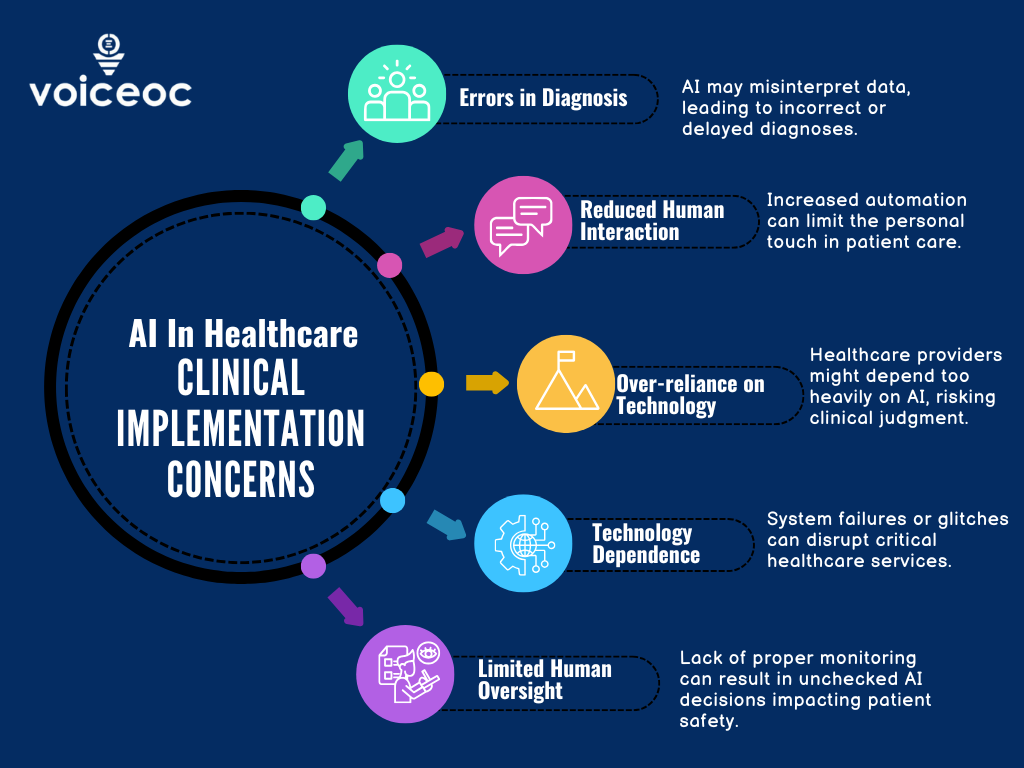
In the rapidly evolving landscape of manufacturing, one significant concern is the dependency on technology, particularly AI, for decision-making processes. As manufacturers increasingly rely on AI systems to guide operations and optimize efficiency, there is a risk of diminishing human oversight and control. This overreliance can lead to potential errors or system failures that may not be immediately identifiable by automated systems. Without adequate human intervention and monitoring, minor issues could escalate into significant disruptions in the production line. Furthermore, in cases where AI systems encounter unexpected situations or anomalies beyond their programmed understanding, the lack of human judgment could result in suboptimal decisions or operational halts. Therefore, while AI offers substantial benefits in manufacturing, maintaining a balance between technological reliance and human oversight is crucial to mitigate risks associated with system dependency.
Workforce Displacement
The rise of AI technologies in manufacturing brings with it the concern of workforce displacement, as automation increasingly takes over tasks traditionally performed by human workers. As machines and algorithms become capable of handling repetitive and labor-intensive jobs more efficiently, there is a growing risk that many workers may find their roles redundant. This shift not only threatens job security but also poses significant challenges for those who may lack the skills needed to transition into new roles within an AI-driven landscape. While automation can lead to cost savings and increased productivity for manufacturers, it is crucial to address the social and economic implications for displaced workers through retraining programs and policies that support workforce adaptation.
Complexity and Maintenance
Managing complex AI systems in manufacturing environments presents significant challenges due to their intricate nature and the specialized expertise required. These systems, while offering advanced capabilities, necessitate continuous monitoring and maintenance to ensure optimal performance. This requirement adds a layer of complexity to manufacturing operations, as companies must invest in training personnel or hiring specialists who can effectively manage and troubleshoot these AI technologies. Additionally, the integration of AI into existing processes can disrupt traditional workflows, requiring careful planning and adaptation. As a result, the benefits of AI must be weighed against the potential operational burdens it introduces, making strategic implementation crucial for success.