The Transformative Role of AI in the Healthcare Industry
The integration of Artificial Intelligence (AI) in the healthcare industry is revolutionizing the way medical professionals deliver care and how patients experience it. From diagnostics to treatment plans, AI is enhancing efficiency, accuracy, and accessibility in healthcare systems worldwide.
AI in Diagnostics
One of the most significant impacts of AI in healthcare is its ability to improve diagnostic processes. Machine learning algorithms can analyze medical images with remarkable accuracy, often surpassing human capabilities. For instance, AI systems are being used to detect abnormalities in X-rays and MRIs, aiding radiologists in identifying potential issues faster and more accurately.
Furthermore, AI-driven diagnostic tools can process vast amounts of data from electronic health records (EHRs) to identify patterns and predict potential health risks. This capability allows for early intervention and personalized treatment plans tailored to individual patient needs.
Enhancing Treatment Plans
AI is also playing a crucial role in developing personalized medicine. By analyzing genetic information alongside other health data, AI can help doctors create customized treatment plans that are more effective for individual patients. This approach not only improves outcomes but also reduces the likelihood of adverse reactions to medications.
In addition, AI algorithms can assist healthcare providers by suggesting optimal treatment pathways based on the latest research and clinical guidelines. This support ensures that patients receive evidence-based care while reducing the burden on medical professionals.
Operational Efficiency
Beyond patient care, AI is streamlining administrative tasks within healthcare facilities. Automated systems powered by AI can handle scheduling, billing, and patient management more efficiently than traditional methods. This automation frees up valuable time for healthcare workers to focus on patient care rather than paperwork.
Challenges and Considerations
Despite its many benefits, integrating AI into healthcare comes with challenges. Data privacy concerns are paramount as sensitive patient information must be protected from breaches. Additionally, there is a need for robust regulatory frameworks to ensure that AI applications are safe and effective.
The ethical implications of using AI in decision-making processes must also be considered. It is crucial that these technologies are used as tools to assist human professionals rather than replace them entirely.
The Future of AI in Healthcare
The future of AI in healthcare holds immense promise. As technology continues to advance, we can expect even more sophisticated applications that will further enhance patient outcomes and operational efficiencies.
Collaboration between technology developers, healthcare providers, policymakers, and patients will be essential to harnessing the full potential of AI while addressing any challenges that arise along the way.
The journey towards an AI-enhanced healthcare system is just beginning, but its potential to transform lives is already evident across various aspects of medical practice today.
5 Ways AI is Revolutionizing Healthcare: From Accurate Diagnoses to Personalized Treatments
- Improved diagnostic accuracy through AI-powered analysis of medical images and patient data.
- Personalized treatment plans based on AI algorithms that consider individual patient needs and genetic information.
- Enhanced operational efficiency by automating administrative tasks, allowing healthcare professionals to focus more on patient care.
- Early detection of potential health risks through AI-driven data analysis, leading to timely interventions and improved outcomes.
- Streamlined decision-making processes for healthcare providers with AI recommendations based on the latest research and clinical guidelines.
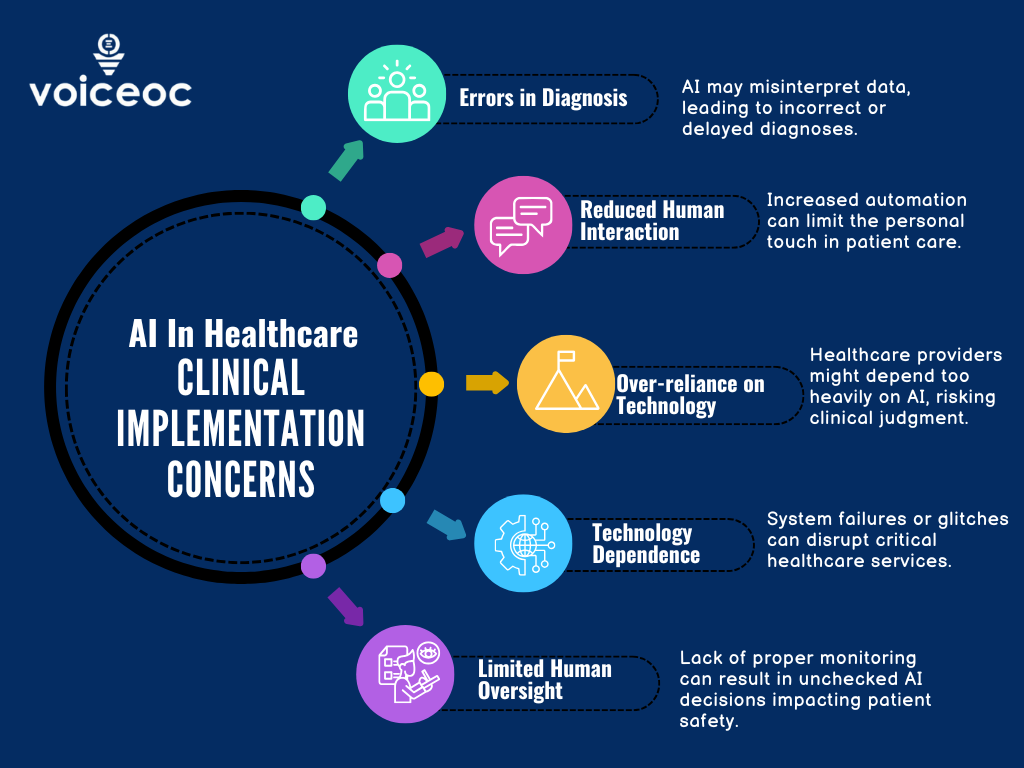
Challenges of AI in Healthcare: Addressing Privacy, Bias, and Ethical Concerns
- Data Privacy Concerns
- Algorithm Bias
- Lack of Transparency
- Integration Challenges
- Legal and Ethical Dilemmas
- Dependency on Technology
Improved diagnostic accuracy through AI-powered analysis of medical images and patient data.
The utilization of Artificial Intelligence (AI) in the healthcare industry has led to a significant pro: enhanced diagnostic accuracy. By leveraging AI-powered analysis of medical images and patient data, healthcare professionals can now make more precise and timely diagnoses. Machine learning algorithms can efficiently process vast amounts of information from various sources, including X-rays, MRIs, and electronic health records (EHRs), to identify patterns and anomalies that may not be apparent to the human eye. This improved accuracy not only aids in early detection of diseases but also ensures that patients receive tailored treatment plans based on their specific needs, ultimately leading to better health outcomes.
Personalized treatment plans based on AI algorithms that consider individual patient needs and genetic information.
AI algorithms in the healthcare industry offer a remarkable advantage by enabling personalized treatment plans that take into account individual patient needs and genetic information. By leveraging AI-driven analyses, healthcare providers can tailor treatments to each patient’s unique characteristics, ensuring more effective and targeted care. This personalized approach not only enhances treatment outcomes but also minimizes the risk of adverse reactions, ultimately leading to improved patient satisfaction and overall well-being.
Enhanced operational efficiency by automating administrative tasks, allowing healthcare professionals to focus more on patient care.
AI’s ability to automate administrative tasks significantly enhances operational efficiency within the healthcare industry. By handling repetitive and time-consuming duties such as scheduling, billing, and patient data management, AI systems free up healthcare professionals to dedicate more time to patient care. This shift not only reduces the burden on medical staff but also minimizes human error in administrative processes, leading to more accurate and timely operations. As a result, healthcare providers can improve service delivery, streamline workflows, and ultimately enhance patient satisfaction by focusing their expertise where it matters most—directly with patients.
Early detection of potential health risks through AI-driven data analysis, leading to timely interventions and improved outcomes.
AI-driven data analysis in healthcare offers the significant advantage of early detection of potential health risks, which can lead to timely interventions and improved patient outcomes. By processing vast amounts of data from electronic health records, wearable devices, and other health monitoring systems, AI algorithms can identify patterns and anomalies that may indicate the onset of diseases or health issues. This proactive approach allows healthcare providers to intervene earlier than traditional methods might allow, potentially preventing the progression of conditions and reducing the severity of complications. As a result, patients benefit from more personalized care plans that address their specific needs at an earlier stage, ultimately enhancing their overall health and quality of life.
Streamlined decision-making processes for healthcare providers with AI recommendations based on the latest research and clinical guidelines.
AI is significantly enhancing decision-making processes for healthcare providers by offering recommendations grounded in the latest research and clinical guidelines. These AI systems can rapidly analyze vast amounts of medical data, including recent studies and patient records, to provide evidence-based suggestions tailored to individual cases. This capability not only accelerates the decision-making process but also ensures that healthcare professionals are equipped with the most current and comprehensive information available. As a result, patients receive care that is both timely and aligned with the best practices in the field, ultimately improving outcomes and optimizing resource allocation within healthcare facilities.
Data Privacy Concerns
Data privacy concerns are a significant issue in the integration of AI within the healthcare industry. As AI systems increasingly rely on vast amounts of patient data to function effectively, ensuring the security and privacy of this sensitive information becomes paramount. The risk of unauthorized access or data breaches poses a serious threat, potentially exposing confidential medical records and personal health details. This vulnerability not only undermines patient trust but also highlights the need for robust cybersecurity measures and stringent regulatory frameworks to protect patient data. Safeguarding this information is crucial to maintaining the integrity of AI applications in healthcare and ensuring that technological advancements do not come at the cost of patient privacy.
Algorithm Bias
Algorithm bias in AI systems used in healthcare is a significant concern that can lead to unequal treatment and misdiagnosis among different patient populations. This bias often arises from the data used to train AI models, which may not adequately represent diverse demographic groups. As a result, AI algorithms might perform well for certain populations while failing to provide accurate results for others, particularly those from underrepresented or marginalized communities. Such disparities can exacerbate existing health inequalities and undermine trust in AI-driven healthcare solutions. Addressing this issue requires careful consideration during the development and training of AI systems, ensuring that they are inclusive and equitable across all patient demographics.
Lack of Transparency
The lack of transparency in AI algorithms presents a significant challenge in the healthcare industry. These algorithms often operate as “black boxes,” meaning that their decision-making processes are not easily understood by humans, including the medical professionals who rely on them. This complexity can lead to difficulties in determining how specific conclusions or recommendations are reached, raising concerns about accountability and trust in AI-driven healthcare practices. Without clear insights into how AI systems make decisions, it becomes challenging to ensure that these tools are being used ethically and effectively. This opacity can hinder the adoption of AI technologies, as healthcare providers and patients alike may be wary of relying on systems whose inner workings remain obscure. Addressing this issue requires ongoing efforts to develop more interpretable AI models and establish guidelines that prioritize transparency and accountability in healthcare applications.
Integration Challenges
Integrating AI systems into existing healthcare infrastructure presents significant challenges that can hinder their widespread adoption. The process of implementing these advanced technologies is often both costly and time-consuming, as it requires substantial investment in new hardware and software. Moreover, healthcare professionals must undergo extensive training to effectively utilize AI tools, ensuring they are equipped to interpret AI-generated insights accurately and integrate them into patient care. This transition period can be disruptive, as medical staff balance learning new systems with maintaining their regular duties. Additionally, the complexity of integrating AI with existing electronic health records and other hospital systems can lead to technical difficulties, further complicating the implementation process. These hurdles underscore the need for strategic planning and investment to successfully incorporate AI into healthcare settings.
Legal and Ethical Dilemmas
The integration of AI into the healthcare industry introduces significant legal and ethical dilemmas, particularly around liability issues. As AI systems become more involved in patient care, determining who is responsible when errors or malfunctions occur becomes complex. For instance, if an AI diagnostic tool provides an incorrect diagnosis that leads to improper treatment, questions arise about whether the liability lies with the software developers, the healthcare providers who relied on the AI’s input, or the institutions that implemented the technology. Additionally, ethical concerns emerge regarding transparency and accountability in decision-making processes influenced by AI. Ensuring that these systems operate fairly and without bias is critical to maintaining trust in healthcare innovations. Addressing these challenges requires comprehensive legal frameworks and ethical guidelines to safeguard patient welfare while embracing technological advancements.
Dependency on Technology
The increasing dependency on AI technology in the healthcare industry poses a significant concern regarding the potential diminishment of human judgment and expertise. As medical professionals rely more heavily on AI tools for diagnostics and treatment planning, there is a risk that the nuanced understanding and critical thinking skills of healthcare providers may be undervalued or underutilized. This overreliance could lead to situations where AI-generated recommendations are accepted without sufficient scrutiny, potentially resulting in suboptimal patient care. Furthermore, while AI can process vast amounts of data quickly, it lacks the ability to consider contextual factors and patient-specific nuances that experienced clinicians bring to decision-making. Consequently, balancing technological advancements with human insight is crucial to maintaining high-quality healthcare standards.