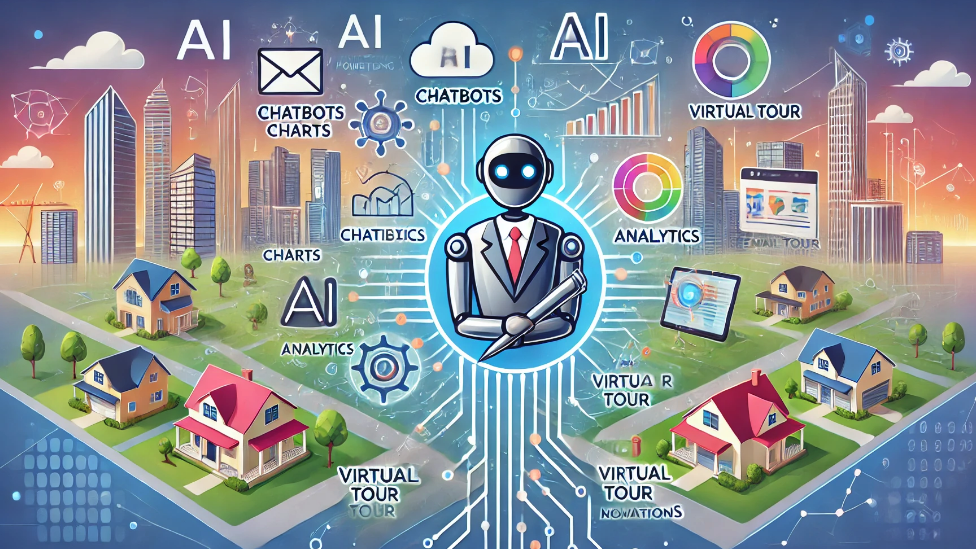
AI in Real Estate: Transforming the Industry
The real estate industry, traditionally known for its reliance on human expertise and intuition, is undergoing a significant transformation with the integration of artificial intelligence (AI). From streamlining operations to enhancing customer experiences, AI is reshaping how real estate professionals and consumers interact with the market.
Enhancing Property Valuation
One of the most impactful applications of AI in real estate is in property valuation. Traditionally, appraisers relied on comparable sales and manual assessments to determine property values. Now, AI algorithms can analyze vast amounts of data, including historical sales prices, market trends, and neighborhood dynamics, to provide more accurate and timely valuations. This not only speeds up the process but also reduces human error.
Improving Customer Experience
AI-powered chatbots and virtual assistants are revolutionizing customer service in real estate. These tools can handle inquiries 24/7, providing potential buyers or renters with instant responses to their questions. By automating routine interactions, real estate agents can focus on more complex tasks that require a personal touch.
Predictive Analytics for Market Trends
AI’s ability to process large datasets allows it to identify patterns and predict future market trends with remarkable accuracy. Real estate investors and developers can use these insights to make informed decisions about where to invest or develop properties. Predictive analytics can forecast demand for specific types of properties or identify emerging neighborhoods poised for growth.
Streamlining Property Management
Property management can be a cumbersome task involving maintenance requests, tenant communications, and lease management. AI-driven platforms can automate many of these processes by scheduling maintenance tasks based on predictive analytics or managing tenant inquiries through intelligent systems. This not only saves time but also enhances tenant satisfaction by ensuring prompt responses.
Virtual Tours and Augmented Reality
The COVID-19 pandemic accelerated the adoption of virtual tours in real estate. AI technologies have further enhanced this experience by integrating augmented reality (AR) features that allow potential buyers to visualize changes they might want to make to a property before purchasing it. This immersive experience helps buyers feel more confident in their decisions without needing multiple physical visits.
The Future of AI in Real Estate
The integration of AI into the real estate sector is still evolving. As technology advances, we can expect even more sophisticated applications that will continue to enhance efficiency and decision-making processes across the industry. While some may worry about AI replacing jobs, it’s more likely that it will augment human capabilities rather than replace them entirely.
The future looks promising as AI continues to unlock new possibilities within real estate—creating opportunities for innovation while maintaining the essential human element that defines this industry.
Exploring AI’s Role in Real Estate: Valuation, Customer Experience, Market Trends, and More
- How is AI being used in property valuation in real estate?
- What impact does AI have on customer experience in the real estate industry?
- How can predictive analytics powered by AI help in predicting market trends for real estate?
- In what ways is AI streamlining property management processes in real estate?
- What are the benefits of virtual tours and augmented reality in the context of real estate with AI technology?
- What advancements can we expect to see regarding the use of AI in real estate in the future?
- Are there concerns about AI replacing human jobs within the real estate sector?
How is AI being used in property valuation in real estate?
AI is revolutionizing property valuation in real estate by leveraging advanced algorithms and data analytics to enhance accuracy and efficiency. Traditional valuation methods often rely on manual assessments and historical sales data, which can be time-consuming and prone to human error. In contrast, AI can analyze vast datasets, including recent sales prices, market trends, geographical information, and even social factors, to provide a more comprehensive evaluation of a property’s value. Machine learning models can identify patterns and correlations that might not be immediately apparent to human appraisers, allowing for more precise predictions of property values. Additionally, AI-driven tools can continuously update valuations in real-time as new data becomes available, ensuring that appraisals reflect the most current market conditions. This not only speeds up the valuation process but also provides real estate professionals and investors with deeper insights for making informed decisions.
What impact does AI have on customer experience in the real estate industry?
AI has a profound impact on customer experience in the real estate industry by revolutionizing how buyers and sellers interact with the market. With AI-powered chatbots and virtual assistants, customers can receive instant responses to their inquiries 24/7, enhancing communication efficiency and responsiveness. These tools streamline the process of finding information about properties, scheduling viewings, and obtaining details on listings, ultimately improving customer satisfaction. By automating routine interactions, real estate professionals can focus on providing personalized services and building stronger relationships with clients, leading to a more seamless and engaging experience for all involved parties.
How can predictive analytics powered by AI help in predicting market trends for real estate?
Predictive analytics powered by AI can significantly enhance the ability to forecast market trends in real estate by analyzing vast amounts of data quickly and accurately. AI algorithms can process historical sales data, economic indicators, demographic shifts, and even social media sentiment to identify patterns and correlations that might not be immediately apparent to human analysts. By leveraging machine learning models, these systems can predict future demand for certain types of properties or identify emerging neighborhoods that are likely to experience growth. This allows real estate professionals to make informed decisions about investments, pricing strategies, and development projects, ultimately leading to more strategic planning and competitive advantage in the market.
In what ways is AI streamlining property management processes in real estate?
AI is streamlining property management processes in real estate by automating a variety of routine tasks and enhancing efficiency. For instance, AI-driven platforms can handle maintenance requests by predicting potential issues before they arise and scheduling repairs proactively. This predictive maintenance reduces downtime and ensures properties remain in optimal condition. Additionally, AI can manage tenant communications through chatbots that provide instant responses to common inquiries, such as rent payment schedules or lease terms, freeing up property managers to focus on more complex issues. Lease management is also simplified with AI tools that automate renewals, track important dates, and ensure compliance with regulations. By integrating these technologies, property managers can improve operational efficiency, reduce costs, and enhance tenant satisfaction.
What are the benefits of virtual tours and augmented reality in the context of real estate with AI technology?
Virtual tours and augmented reality (AR) powered by AI technology offer significant benefits in the real estate industry by enhancing the buying and renting experience. These tools allow potential buyers or tenants to explore properties remotely, providing a realistic sense of space and layout without the need for physical visits. AI-driven virtual tours can be customized to highlight key features of a property, while AR enables users to visualize modifications or furnishings in real time. This immersive experience not only saves time and resources for both clients and agents but also broadens the reach of property listings, attracting a global audience. Additionally, these technologies can facilitate quicker decision-making, as clients gain a more comprehensive understanding of properties from the comfort of their own homes.
What advancements can we expect to see regarding the use of AI in real estate in the future?
In the future, AI is expected to bring several advancements to the real estate industry, further enhancing efficiency and decision-making processes. One significant development will be the increased use of machine learning algorithms to provide even more precise property valuations by considering a broader range of data points, including environmental factors and consumer sentiment analysis. Additionally, AI-driven platforms will likely offer more sophisticated predictive analytics, helping investors and developers anticipate market shifts with greater accuracy. The integration of AI with virtual and augmented reality technologies will continue to evolve, offering immersive property tours that allow potential buyers to customize and visualize spaces in real-time. Moreover, AI could revolutionize property management by implementing advanced automation for maintenance scheduling and tenant communications, ultimately improving operational efficiency and tenant satisfaction. As these technologies advance, they will not only streamline processes but also empower real estate professionals to make more informed decisions while maintaining a personalized approach to client interactions.
Are there concerns about AI replacing human jobs within the real estate sector?
There are indeed concerns about AI potentially replacing human jobs within the real estate sector, but the reality is more nuanced. While AI can automate certain tasks, such as data analysis, property valuations, and customer service inquiries through chatbots, it is unlikely to fully replace the human element that is crucial in real estate transactions. The industry relies heavily on personal relationships, negotiation skills, and the nuanced understanding of market dynamics that humans provide. Instead of replacing jobs, AI is more likely to augment them by handling routine tasks and allowing professionals to focus on more complex aspects of their roles. This shift can lead to increased efficiency and productivity while enabling real estate professionals to offer a higher level of service and expertise to their clients.