Team Player Interview Questions: What Employers Ask and How to Answer
Teamwork is essential in many workplaces, but being a team player means more than simply getting along with coworkers. Employers want to know how you communicate, handle disagreements, share responsibility, and help a group reach its goals.
Preparing for team player interview questions can help you give clear, specific answers that show how you work with others. Below are common questions, what interviewers are looking for, and tips for responding.
What Employers Mean by “Team Player”
A strong team player contributes to shared goals while taking responsibility for their own work. They listen to others, communicate openly, follow through on commitments, and adapt when a project or team needs change. They can also raise concerns respectfully and work through differences without losing sight of the goal.
Common Team Player Interview Questions
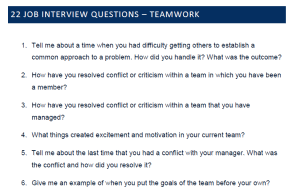
How would you describe your approach to teamwork?
This broad question gives you a chance to explain what effective teamwork looks like to you. Include a few specific behaviors rather than relying on general claims such as “I work well with everyone.”
How to answer: Mention how you communicate, share responsibility, and support group goals. Then give a brief example that demonstrates those qualities.
Tell me about a time you worked successfully as part of a team.
The interviewer wants to hear what you contributed and how your actions helped the group. Choose an example with a clear goal and outcome.
How to answer: Explain the situation, your role, the steps you took, and the result. Be precise about your contribution while giving appropriate credit to your teammates.
Describe a time you disagreed with a coworker or teammate.
Disagreements are normal. Employers are often more interested in how you handled one than whether you have ever had one.
How to answer: Focus on listening, discussing the issue respectfully, and finding a practical way forward. Avoid blaming the other person or suggesting that every disagreement must end with everyone agreeing.
What do you do when a team member is not meeting a commitment?
This question explores how you respond to missed deadlines or uneven contributions. Interviewers want to see judgment, communication, and accountability.
How to answer: Describe how you would first check in privately and respectfully. Explain how you would clarify what is needed, offer appropriate support, and alert a manager if the issue puts the project at risk.
Tell me about a time you helped a teammate.
This question looks for generosity and awareness of the wider team’s needs. Your example might involve sharing knowledge, reviewing someone’s work, or stepping in during a busy period.
How to answer: Explain why you offered help, what you did, and how it affected the team. Make clear that you supported your colleague without neglecting your own responsibilities.
How do you handle feedback from other people?
Teams depend on people who can give and receive feedback constructively. Employers want to know whether you can consider input without becoming defensive.
How to answer: Share an example of feedback you received, how you evaluated it, and what you changed as a result. If you did not agree with all of it, explain how you discussed your perspective professionally.
What role do you usually take on in a team?
You might naturally organize tasks, contribute specialized knowledge, generate ideas, or keep a project moving. There is no single ideal role; the important thing is showing flexibility.
How to answer: Describe the role you often take and explain how you adjust to the needs of the group. Avoid implying that you always need to lead or that you prefer to avoid responsibility.
Tell me about a time your team faced a challenge.
This question helps interviewers assess how you respond to pressure and uncertainty. Choose a challenge that lets you show practical problem-solving and cooperation.
How to answer: Describe the obstacle, how the team coordinated its response, and what you personally contributed. End with the outcome or lesson learned.
How do you make sure quieter team members are heard?
Inclusive collaboration can lead to better decisions. This question may come up for roles that involve meetings, project planning, or cross-functional work.
How to answer: Explain how you create space for different perspectives—for example, by asking open-ended questions, sharing agendas in advance, or inviting input in writing. Use an example if possible.
How do you balance your individual responsibilities with team priorities?
Teamwork does not mean ignoring your own workload. Employers want to know that you can manage commitments while staying responsive to the group.
How to answer: Talk about how you prioritize, communicate early when timelines conflict, and coordinate with others before taking on additional work.
What would you do if you believed the team was making the wrong decision?
This question tests whether you can speak up thoughtfully and still support a team process.
How to answer: Explain how you would present your concerns with evidence, listen to other viewpoints, and ask questions. If the group makes a decision after discussion, describe how you would help carry it out unless there is a serious ethical or safety concern.
How do you work with people whose communication styles differ from yours?
Most teams include people with different preferences, backgrounds, and ways of approaching work. Interviewers want to see that you can adapt rather than expect everyone to communicate the same way.
How to answer: Describe how you clarify expectations, choose an appropriate communication method, and check that important details are understood.
Use the STAR Method to Structure Your Answers
The STAR method can help you keep behavioral interview answers organized:
- Situation: Briefly describe the context.
- Task: Explain the goal or responsibility.
- Action: Describe the steps you personally took.
- Result: Share what happened and what you learned.
Keep the setup concise and spend most of your answer on your actions and the result. Use “I” to explain your contribution and “we” when describing the team’s shared work.
Tips for Giving Strong Answers
- Choose real examples. Work, school, volunteer, and community projects can all demonstrate teamwork.
- Be specific. Explain what you did instead of simply saying you are collaborative.
- Show accountability. If you made a mistake, describe how you addressed it and what you learned.
- Give teammates credit. Strong collaboration includes recognizing other people’s contributions.
- Focus on the outcome. Share the result, such as meeting a deadline, resolving a problem, or improving a process.
- Avoid criticizing former coworkers. Describe challenges neutrally and keep your response professional.
What to Avoid
Answers such as “I never have conflicts” may sound unrealistic, while “I do all the work myself” can suggest difficulty trusting others. Avoid vague responses, taking sole credit for a group achievement, or describing a disagreement as someone else’s fault. A balanced answer shows that you can contribute independently and collaborate when the work calls for it.
Final Preparation Checklist
Before your interview, prepare two or three examples that show different aspects of teamwork. Consider a successful collaboration, a disagreement you handled constructively, and a time you helped a group overcome a challenge. Review the job description, then connect your examples to the kinds of collaboration the role requires.
The strongest answers are honest, focused, and backed by evidence. By explaining how you communicate, take responsibility, and help a group succeed, you can give employers a clear picture of the teammate you would be.
Mastering Team Player Interview Questions: 9 Tips for Success
- Use specific examples of successful teamwork.
- Explain your role clearly.
- Highlight collaboration over individual credit.
- Describe how you handle disagreements.
- Show how you support teammates.
- Mention how you communicate progress.
- Share how you adapt to team needs.
- Explain what you learned from a team challenge.
- Connect your teamwork style to the role.
Use specific examples of successful teamwork.
Use specific examples of successful teamwork to show employers how you collaborate in practice. Choose a situation where you helped a group meet a goal, solved a problem with coworkers, or supported a teammate, then briefly explain your role and the outcome. Concrete details make your answer more credible than simply saying, “I’m a team player,” and help the interviewer understand the value you could bring to their team.
Explain your role clearly.
Explain your role clearly when answering team player interview questions so the interviewer can understand exactly how you contributed to the group’s success. Briefly describe your responsibilities, the actions you personally took, and how those actions supported the team’s goal. Give credit to your teammates for their contributions, but avoid speaking so generally that your own impact gets lost.
Highlight collaboration over individual credit.
When answering team player interview questions, emphasize how you worked with others to achieve a shared goal rather than focusing only on personal accomplishments. Explain your contribution clearly, but also recognize your teammates’ ideas and efforts. This shows that you take responsibility while valuing collaboration—a quality employers look for in strong team members.
Describe how you handle disagreements.
When describing how you handle disagreements, show that you can address differences respectfully and stay focused on the shared goal. Explain how you listen to the other person’s perspective, share your own concerns clearly, and look for a practical solution. A specific example—especially one that shows how the discussion led to a better decision or helped the team move forward—will make your answer more convincing.
Show how you support teammates.
Show how you support teammates by sharing a specific example of helping someone solve a problem, learn a skill, or meet a deadline. Explain what you noticed, what you did, and how your support benefited both your teammate and the team. Keep the focus on collaboration rather than presenting yourself as a rescuer, and give credit to others for their contributions.
Mention how you communicate progress.
When answering team player interview questions, explain how you keep others informed about your progress. Mention the tools or routines you use, such as regular check-ins, status updates, or shared project boards, and describe how you flag delays or obstacles early. A specific example can show that you communicate clearly, help teammates coordinate their work, and take responsibility for keeping the group on track.
Share how you adapt to team needs.
When answering team player interview questions, explain how you adjust your approach to support the group’s needs. For example, you might take the lead when a project needs direction, step back to make room for another person’s expertise, or offer help when a teammate is facing a tight deadline. Include a specific example that shows how you recognized what the team needed, adapted your role, and helped achieve a shared goal.
Explain what you learned from a team challenge.
When describing a team challenge, explain not only how you helped address the problem but also what the experience taught you. You might have learned to communicate concerns earlier, clarify responsibilities, or adapt your approach when priorities change. Connect that lesson to how you work today, and show how it could help you contribute to the new team.
Connect your teamwork style to the role.
Connect your teamwork style to the role by highlighting the ways you collaborate that matter most for the position. For example, a project-based role may call for clear communication, dependable follow-through, and comfort coordinating deadlines, while a customer-facing job may require listening closely and working smoothly with colleagues to solve problems. Review the job description, choose a relevant example, and explain how your approach helped the team achieve a specific result.