The Future of Artificial General Intelligence: A Comprehensive Overview
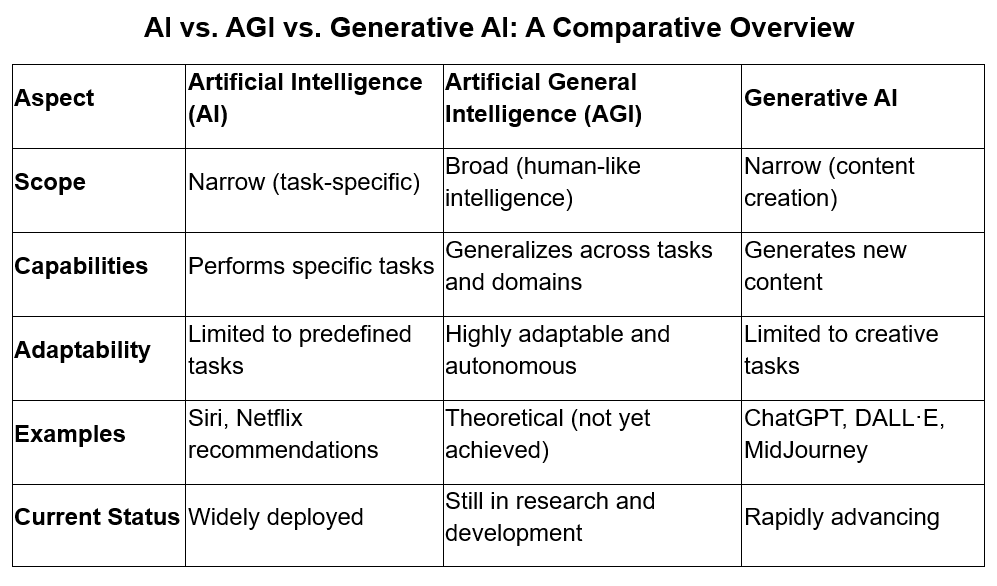
Artificial General Intelligence (AGI) represents a significant milestone in the field of artificial intelligence. Unlike narrow AI, which is designed to perform specific tasks, AGI aims to possess the ability to understand, learn, and apply knowledge across a wide range of tasks at a level comparable to human intelligence.
Understanding AGI
AGI is characterized by its versatility and adaptability. While current AI systems excel in specialized areas like image recognition or language processing, they lack the general cognitive abilities that humans possess. The development of AGI involves creating systems that can autonomously learn and solve problems without being explicitly programmed for each task.
Potential Applications
The potential applications of AGI are vast and transformative. Here are some areas where AGI could have a profound impact:
- Healthcare: AGI could revolutionize medical diagnostics, treatment planning, and personalized medicine by analyzing complex data more efficiently than current systems.
- Education: Personalized learning experiences tailored to individual needs could become possible with AGI-powered educational tools.
- Agriculture: Optimizing crop yields and managing resources more effectively could be achieved through advanced data analysis capabilities.
- Scientific Research: Accelerating discoveries in fields like physics, biology, and chemistry by automating hypothesis generation and experimentation.
Challenges in Developing AGI
The journey toward achieving AGI is fraught with challenges. Some of the key obstacles include:
- Technical Complexity: Developing algorithms that can mimic human-like understanding and reasoning remains a formidable task.
- Ethical Concerns: Ensuring that AGI systems are aligned with human values and do not pose risks to society is crucial.
- Sustainability: The computational resources required for developing and running AGI systems may have significant environmental impacts.
- Control and Safety: Establishing robust mechanisms for controlling highly autonomous systems is essential to prevent unintended consequences.
The Path Forward
The development of AGI requires collaboration across multiple disciplines, including computer science, neuroscience, psychology, ethics, and law. As researchers make progress toward this ambitious goal, it will be important to maintain transparency in research practices and involve diverse stakeholders in discussions about the implications of AGI.
The future of AGI holds immense promise but also demands careful consideration of its potential impacts on society. By addressing the technical challenges and ethical dilemmas associated with its development, we can work towards harnessing the power of artificial general intelligence for the benefit of all humanity.
8 Benefits of AGI: Unlocking Versatility, Problem-Solving, and More
- 1. Versatility
- 2. Problem-Solving
- 3. Efficiency
- 4. Innovation
- 5. Personalization
- 6. Autonomous Learning
- 7. Creativity
- 8. Adaptability
Five Critical Concerns About Artificial General Intelligence: Unintended Consequences, Ethical Challenges, Job Displacement, Security Threats, and Inequality
- Potential for Unintended Consequences
- Ethical Dilemmas
- Job Displacement
- Security Risks
- Inequality Amplification
1. Versatility
Artificial General Intelligence (AGI) offers unparalleled versatility, setting it apart from current AI systems that are typically designed for specific tasks. This adaptability allows AGI to seamlessly transition between different activities, much like a human can. For instance, an AGI system could analyze complex scientific data one moment and assist in creative problem-solving the next. Its ability to learn and apply knowledge across various domains means that it can tackle challenges in healthcare, education, finance, and more without needing extensive retraining or reprogramming. This versatility not only enhances efficiency but also opens up new possibilities for innovation and advancement across multiple industries, making AGI a transformative force in the future of technology.
2. Problem-Solving
Artificial General Intelligence (AGI) holds the promise of revolutionizing problem-solving capabilities by surpassing the limitations of narrow AI. Unlike narrow AI, which is designed for specific tasks, AGI can understand and adapt to a wide array of situations, making it exceptionally suited for tackling complex and multifaceted problems. This adaptability allows AGI to integrate knowledge from various domains, offering more holistic and innovative solutions. For instance, in fields such as climate change or global health, where challenges are interconnected and constantly evolving, AGI could analyze vast amounts of data, identify patterns, and propose strategies that are both comprehensive and efficient. By leveraging its ability to learn and reason across diverse contexts, AGI has the potential to address some of the most pressing issues facing humanity today with unprecedented effectiveness.
3. Efficiency
AGI, or Artificial General Intelligence, offers the significant advantage of efficiency by automating tasks across diverse industries. By harnessing the capabilities of AGI to handle a wide range of tasks with intelligence and adaptability, businesses can streamline operations, reduce manual labor, and enhance overall productivity. The automation enabled by AGI has the potential to revolutionize workflows, optimize resource utilization, and drive innovation in sectors ranging from manufacturing and healthcare to finance and transportation. This increased efficiency not only saves time and resources but also opens up new possibilities for organizations to focus on strategic initiatives and creative endeavors.
4. Innovation
AGI, or Artificial General Intelligence, has the potential to drive innovation across various fields, including science, medicine, and technology. By possessing the ability to understand and learn at a level comparable to human intelligence, AGI systems could facilitate groundbreaking discoveries that may revolutionize how we approach complex problems and challenges. In the realms of scientific research, medical diagnostics, and technological advancements, AGI’s capacity for rapid data analysis and advanced problem-solving could unlock new possibilities for progress and innovation that have yet to be imagined.
5. Personalization
AGI’s ability to offer personalized experiences in various domains such as education, healthcare, and beyond stands out as a significant advantage. By leveraging its capacity to understand individual preferences, learning styles, and medical needs, AGI has the potential to revolutionize how services are tailored to meet the unique requirements of each person. In education, personalized learning paths can enhance student engagement and knowledge retention. In healthcare, personalized treatment plans based on comprehensive data analysis can lead to more effective and efficient patient care. The prospect of AGI enabling personalized experiences underscores its transformative impact on enhancing user satisfaction and outcomes across diverse sectors.
6. Autonomous Learning
One of the most significant advantages of Artificial General Intelligence (AGI) is its ability to engage in autonomous learning. Unlike traditional AI systems that require explicit programming for each specific task, AGI systems have the capability to learn independently from vast amounts of data. This means they can analyze patterns, draw conclusions, and adapt to new information in a way that mimics human cognitive processes. Autonomous learning allows AGI to continuously improve its performance across diverse tasks without human intervention, making it highly versatile and efficient. This adaptability not only enhances the system’s problem-solving abilities but also reduces the time and resources needed for manual programming, ultimately leading to more innovative solutions in various fields such as healthcare, education, and technology development.
7. Creativity
One of the most exciting prospects of Artificial General Intelligence (AGI) is its potential to revolutionize creativity. Unlike current AI systems, which operate within the constraints of predefined algorithms, AGI could independently generate novel ideas and solutions across various domains. This capability could lead to breakthroughs in fields such as art, science, and technology by offering fresh perspectives and innovative approaches that humans might not conceive on their own. By simulating human-like creative processes, AGI could assist artists in creating unique works, scientists in discovering new theories, and engineers in designing groundbreaking technologies. The ability to think outside the box and explore uncharted territories could make AGI an invaluable partner in fostering innovation and addressing complex global challenges.
8. Adaptability
AGI’s adaptability, a key proponent of its capabilities, allows it to dynamically modify its actions and responses in response to evolving situations or novel data. This feature enables AGI systems to learn from their experiences, refine their decision-making processes, and continually improve their performance over time. By being able to adjust its behavior based on changing circumstances or new information, AGI demonstrates a level of flexibility and responsiveness that holds great potential for enhancing efficiency and problem-solving across various domains.
Potential for Unintended Consequences
The potential for unintended consequences poses a significant con of Artificial General Intelligence (AGI). AGI systems, equipped with autonomous decision-making capabilities, may exhibit behaviors or make choices that are unforeseen or unanticipated. This unpredictability raises concerns about the implications of AGI’s actions and the potential risks they pose to society. Without careful oversight and robust control mechanisms, the ability of AGI systems to act independently could result in outcomes that deviate from intended goals, highlighting the importance of addressing this con in the development and deployment of AGI technologies.
Ethical Dilemmas
The development of Artificial General Intelligence (AGI) presents a profound ethical dilemma: ensuring that these highly autonomous systems align with human values and ethical principles. As AGI systems gain the ability to make decisions independently, there is a risk that they may not always choose actions that align with societal norms or moral standards. This misalignment could lead to outcomes that are harmful or unintended, as machines lack the intrinsic understanding of complex human emotions and ethical nuances. The challenge lies in programming AGI with a robust ethical framework that can adapt to diverse situations while respecting cultural and individual differences in moral reasoning. Addressing this issue requires interdisciplinary collaboration, involving ethicists, technologists, and policymakers, to ensure that AGI acts in ways that are beneficial and just for all members of society.
Job Displacement
One significant con of Artificial General Intelligence (AGI) is the potential for job displacement. As AGI systems become more advanced and capable of performing a wide range of tasks, there is a risk that many jobs currently done by humans could be automated. This automation could lead to widespread unemployment in certain industries, creating economic disruptions and social challenges as individuals face the need to reskill or transition to new types of work. Addressing the impact of job displacement caused by AGI will require proactive measures to support affected workers and ensure that the benefits of technological advancement are shared equitably across society.
Security Risks
One significant con of Artificial General Intelligence (AGI) is the security risks it presents. AGI systems, with their advanced capabilities and autonomy, may become targets for cyberattacks or manipulation. These vulnerabilities could potentially lead to breaches in data privacy and compromise national security. The prospect of malicious actors gaining control over AGI systems raises concerns about the misuse of sensitive information and the potential for catastrophic consequences. Safeguarding AGI against security threats will be crucial to ensure its responsible deployment and mitigate risks to individuals and societies.
Inequality Amplification
Inequality Amplification is a significant con associated with the development and deployment of Artificial General Intelligence (AGI). As AGI systems rely on sophisticated technology and resources, their implementation could widen the gap between those who have access to these tools and those who do not. This disparity in access could further marginalize disadvantaged communities, leading to increased social inequalities. Addressing this con requires careful consideration of how to ensure equitable access to AGI technologies and opportunities for all members of society, mitigating the potential negative impacts of inequality amplification.