Artificial Intelligence in the Retail Industry: Opportunities, Applications, and Challenges
Artificial intelligence is changing how retailers understand customers, manage inventory, and run their businesses. From product recommendations to demand forecasting, AI can help companies make faster decisions and respond more effectively to changing market conditions. Its value, however, depends on reliable data, responsible implementation, and a clear understanding of the problems it is meant to solve.
How AI Is Used in Retail
Retail AI includes several technologies. Machine learning identifies patterns in sales and customer behavior. Computer vision analyzes images and video. Natural language processing helps systems interpret customer questions, reviews, and product information. Generative AI creates content, such as product descriptions, and supports conversational shopping experiences.
These technologies are most useful when connected to specific business goals rather than adopted simply because they are new.
Personalized Shopping Experiences
One of the most familiar uses of AI in retail is product recommendation. By analyzing browsing activity, purchase history, and product characteristics, recommendation systems can suggest items that are relevant to an individual shopper.
Personalization can also influence search results, promotional messages, and website layouts. For example, a sporting goods retailer might prioritize running shoes for a customer who frequently browses running equipment.
Effective personalization should remain transparent and respectful of privacy. Excessive tracking or poorly targeted recommendations can reduce trust rather than improve the shopping experience.
Smarter Inventory and Demand Forecasting
Keeping the right products in stock is a persistent retail challenge. Too much inventory ties up capital and increases storage costs, while too little leads to missed sales and disappointed customers.
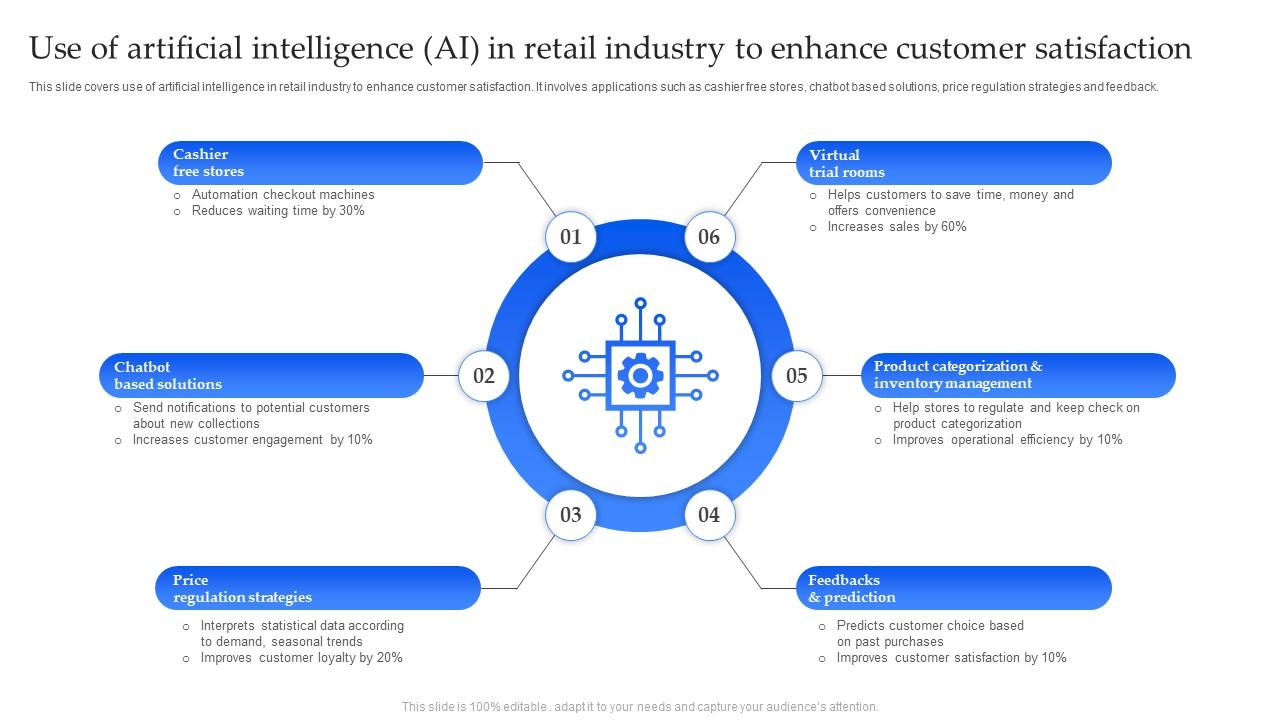
AI forecasting tools can analyze historical sales alongside factors such as seasonality, promotions, weather, and local events. These models help retailers estimate demand at the product, store, or regional level.
Better forecasts can support replenishment decisions and reduce waste, especially for perishable goods. However, unexpected disruptions and changing consumer behavior can still make predictions inaccurate. Human oversight remains important, particularly when conditions differ sharply from historical patterns.
AI-Powered Customer Service
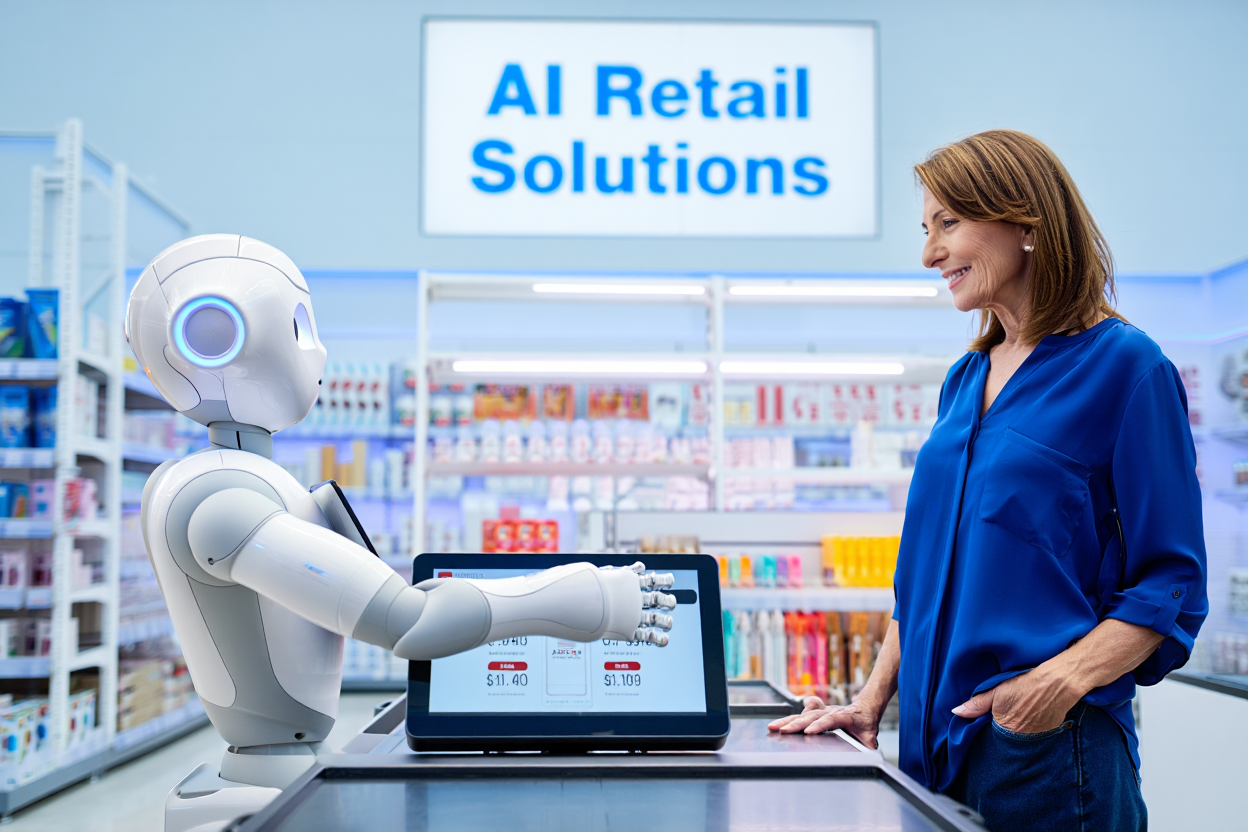
Chatbots and virtual assistants can answer routine questions about delivery, returns, store hours, and product availability. When integrated with current product catalogs and order systems, they can provide more useful, context-specific assistance.
Generative AI also enables more conversational interactions, allowing customers to describe their needs in everyday language. A shopper could ask for a compact coffee maker suitable for a small kitchen instead of searching through multiple filters.
These systems need safeguards. Incorrect product details, invented policies, or misleading answers can create frustration and financial risk. Customers should have an easy way to reach a human representative when an issue is complex or unresolved.
Pricing, Promotions, and Merchandising
AI can help retailers evaluate how prices and promotions affect demand. Models may consider inventory levels, competitor prices, historical purchasing patterns, and profit margins to recommend adjustments.
Retailers can also use AI to identify products that sell well together, improve category planning, and assess promotional performance. These insights can make merchandising decisions more precise.
Pricing systems require careful governance. Retailers should monitor for errors, unfair outcomes, and practices that undermine customer trust. Legal review may also be necessary, particularly when pricing tools use competitively sensitive information.
In-Store Operations and Loss Prevention
Computer vision can help detect empty shelves, misplaced products, and checkout errors. Some retailers also use sensor-based systems to support automated checkout or monitor store conditions.
For loss prevention, AI may flag unusual transactions or behavior for review. Such alerts are not proof of wrongdoing. False positives can lead to unfair treatment, making staff training, accuracy testing, and privacy protections essential.
Generative AI Behind the Scenes
Beyond customer-facing applications, generative AI can assist employees with drafting product descriptions, summarizing customer feedback, translating content, and locating internal information.
These tools can reduce repetitive work, but their output still needs review. Product descriptions must accurately reflect specifications, marketing claims require substantiation, and generated content must respect intellectual property rights.
What Retailers Need to Get Right
Successful AI adoption starts with a focused use case and measurable objectives. A retailer might begin by improving forecast accuracy, reducing customer service response times, or lowering stockout rates.
Before expanding a system, businesses should evaluate:
- Data quality: Incomplete or outdated information can undermine performance.
- Privacy and security: Customer and business data require appropriate protection and access controls.
- Fairness: Systems should be tested for biased or unequal outcomes.
- Integration costs: Software, infrastructure, maintenance, and training affect the total investment.
- Human oversight: Employees need clear responsibilities and ways to challenge automated recommendations.
The Future of AI in Retail
AI is likely to become more closely integrated across online shopping, physical stores, and supply chains. Its strongest applications will connect better analysis with practical improvements: more reliable availability, faster service, and less repetitive work.
The goal is not automation for its own sake. Retailers that combine useful technology with sound judgment, transparent practices, and customer trust will be better positioned to create lasting value.
8 Practical Tips for Using AI in Retail
- Use AI to personalize product recommendations.
- Forecast demand to reduce overstock and stockouts.
- Automate routine customer service with chatbots.
- Analyze sales data to spot emerging trends.
- Use computer vision to improve shelf monitoring.
- Protect customer data with strong privacy controls.
- Test AI tools on a small scale before expanding.
- Train staff to use AI tools effectively.
Use AI to personalize product recommendations.
Use AI to personalize product recommendations by analyzing customers’ browsing activity, purchase history, and preferences. Instead of showing every shopper the same products, AI can suggest relevant items, complementary accessories, or alternatives that match their interests and budget. For example, a customer buying running shoes might receive recommendations for moisture-wicking socks or a running belt. To keep recommendations helpful, use accurate product data, respect customer privacy, and regularly evaluate results through metrics such as conversion rates and customer satisfaction. Thoughtful personalization can simplify product discovery, encourage repeat purchases, and create a more relevant shopping experience.
Forecast demand to reduce overstock and stockouts.
Use AI-powered demand forecasting to predict how much of each product customers are likely to buy and when. By analyzing sales history alongside factors such as seasonality, promotions, local events, and weather, retailers can make better inventory decisions. More accurate forecasts help prevent overstock—which ties up cash and can lead to waste—and stockouts, which can frustrate customers and cost sales. For best results, keep data current and review forecasts when market conditions change unexpectedly.
Automate routine customer service with chatbots.
Automating routine customer service with chatbots can help retailers answer common questions quickly, around the clock. A chatbot can assist with order status, shipping details, store hours, return policies, and product availability, freeing staff to focus on more complex or personal requests. For the best experience, keep its information accurate, make it easy for customers to reach a human representative, and clearly explain when they are interacting with a chatbot.
Analyze sales data to spot emerging trends.
Use artificial intelligence to analyze sales data and spot emerging trends before they become obvious. AI tools can identify patterns across products, locations, and sales channels, helping retailers detect growing demand, shifting customer preferences, and new purchasing habits. For example, a sustained increase in sales of refillable household products could signal an opportunity to expand that category. Compare these patterns with seasonal changes, promotions, and inventory availability to avoid mistaking a temporary spike for a lasting trend. With reliable data and regular human review, these insights can guide purchasing, merchandising, and marketing decisions.
Use computer vision to improve shelf monitoring.
Use computer vision to improve shelf monitoring by analyzing images from store cameras or mobile devices to identify empty spaces, misplaced products, and incorrect price labels. Timely alerts can help employees restock shelves and fix issues before they affect sales or frustrate customers. To make the system effective, keep product images and inventory data up to date, and use monitoring practices that respect customer privacy.
Protect customer data with strong privacy controls.
Retailers should protect customer data with strong privacy controls at every stage, from collection and storage to analysis and deletion. Collect only the information needed for a clear purpose, limit access to authorized staff, and use safeguards such as encryption and secure authentication. Be transparent about how data supports AI-powered features, and give customers meaningful choices about its use. Regular security reviews and clear retention policies can help reduce the risk of misuse or breaches while strengthening customer trust.
Test AI tools on a small scale before expanding.
Test AI tools on a small scale before rolling them out across the retail business. Start with one store, product category, or customer service task to evaluate performance in a controlled setting. Set clear goals, such as reducing stockouts, improving recommendation relevance, or shortening response times, and compare results against a reliable baseline. Gather feedback from employees and customers, monitor errors, and account for integration and training costs. Expand only when the pilot demonstrates consistent benefits and any operational, privacy, or accuracy concerns have been addressed.
Train staff to use AI tools effectively.
Training staff to use AI tools effectively helps retailers turn new technology into practical improvements. Employees should learn how to use tools relevant to their roles, such as inventory forecasting systems, product recommendation platforms, and customer service assistants. Hands-on practice with realistic scenarios can build confidence while teaching staff to verify AI-generated information, protect customer data, and recognize when human judgment is needed. Regular refresher sessions and clear guidance on reporting errors help employees adapt as tools evolve, supporting more reliable operations and better customer service.