Environment and Ethics: What Do We Owe the Planet?
Environmental issues are often described in terms of science, economics, and public policy. Yet they are also ethical questions. Decisions about energy, land, food, and consumption affect not only ecosystems, but also people—both those living today and generations yet to come. They raise a fundamental question: What responsibilities do humans have toward the natural world?
Beyond Human Needs
One influential ethical perspective centers on human well-being. Clean air, safe water, fertile soil, and a stable climate support health and livelihoods. From this viewpoint, protecting nature matters because human societies depend on functioning ecosystems.
Other perspectives argue that nature has value beyond its usefulness to people. Animals, plants, and ecosystems may deserve moral consideration in their own right. This view challenges the idea that the natural world is merely a collection of resources to be used. It encourages respect for the lives and relationships that make up the broader community of life.
Fairness Across Communities and Generations
Environmental harm is rarely shared equally. Communities with fewer resources may face greater exposure to pollution, extreme heat, flooding, or other hazards, even when they have contributed less to the problem. Environmental ethics therefore asks whether the benefits and burdens of development are distributed fairly.
Responsibility also extends across time. Choices made today can affect the conditions in which future generations live. A society that uses resources without regard for long-term consequences may leave others with fewer options and greater risks. Ethical decision-making requires considering those who cannot participate in today’s debates but will inherit their outcomes.
Responsibility in Everyday Choices
Individual decisions—such as how people travel, eat, shop, and use energy—can influence environmental impacts. However, responsibility should not rest only on consumers. Businesses, governments, and institutions often shape the choices available to the public through infrastructure, regulations, product design, and investment.
A fair approach recognizes both personal agency and shared responsibility. Individuals can make thoughtful choices, while organizations and public leaders can reduce harm on a larger scale. Ethical solutions should make sustainable options practical and accessible rather than placing the greatest burden on people with the fewest resources.
Balancing Competing Values
Environmental decisions can involve difficult trade-offs. A clean-energy project may reduce emissions while changing a local landscape. Conservation efforts may protect habitats but affect communities that rely on nearby land. New regulations may improve public health while creating costs for workers or small businesses.
Ethical decision-making does not eliminate every conflict. It requires honest evaluation of likely consequences, meaningful participation from affected communities, and attention to alternatives. Transparency matters: people should be able to understand who benefits, who bears the risks, and what uncertainties remain.
Building a More Ethical Relationship With Nature
Environmental ethics is not only about preventing damage. It is also about reconsidering what progress means. If progress is measured solely by production and consumption, the health of ecosystems and communities may be overlooked. A broader measure includes clean air and water, resilient neighborhoods, biodiversity, and opportunities for future generations.
Protecting the environment is a practical necessity, but it is also a moral choice. It reflects how societies value other forms of life, how they treat vulnerable communities, and how seriously they take obligations to the future. A more ethical relationship with the planet begins with recognizing that human well-being is deeply connected to the health of the natural world.
Environmental Ethics FAQs: Key Concepts, Examples, and Anthropocentrism
- What is anthropocentrism in environmental ethics?
- What are 5 examples of ethics?
- What is environmental ethics?
- What is an example of environmental ethics?
- What is the relationship between environment and ethics?
What is anthropocentrism in environmental ethics?
Anthropocentrism is the view that humans are the primary or most important holders of moral value, and that nature should be protected mainly because it benefits people. From this perspective, forests, wildlife, and clean water matter for reasons such as human health, livelihoods, and future generations. Environmental ethics also includes views that recognize nature, animals, or ecosystems as valuable in their own right, beyond their usefulness to humans.
What are 5 examples of ethics?
Five examples of environmental ethics include conserving natural resources, reducing pollution, protecting animal welfare and biodiversity, ensuring that environmental harms do not unfairly burden vulnerable communities, and preserving a healthy planet for future generations. Together, these principles encourage people, businesses, and governments to make choices that respect nature and consider the effects of their actions on others.
What is environmental ethics?
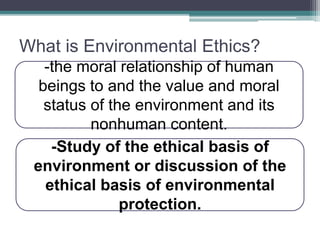
Environmental ethics is the study of the moral responsibilities people have toward the natural world. It considers questions such as whether animals, plants, and ecosystems have value beyond their usefulness to humans, how environmental risks and resources should be shared, and what people owe future generations. These ideas help guide decisions about issues such as pollution, conservation, climate change, and sustainable use of natural resources.
What is an example of environmental ethics?
An example of environmental ethics is choosing to protect a wetland even when developing it could generate short-term economic benefits. The decision reflects the belief that wetlands have value beyond their immediate usefulness: they provide habitat for wildlife, help filter water, and reduce flooding. It also considers the well-being of nearby communities and future generations who may depend on those benefits.
What is the relationship between environment and ethics?
The relationship between environment and ethics centers on how people’s choices affect the natural world and one another. Environmental ethics asks what responsibilities individuals, businesses, and governments have to protect ecosystems, animals, and natural resources, and how environmental benefits and harms should be shared. It also considers the rights and well-being of future generations, whose lives may be shaped by decisions made today. In short, it guides us in deciding not only what we can do with the environment, but what we ought to do.