The Evolution and Impact of AI Deep Learning
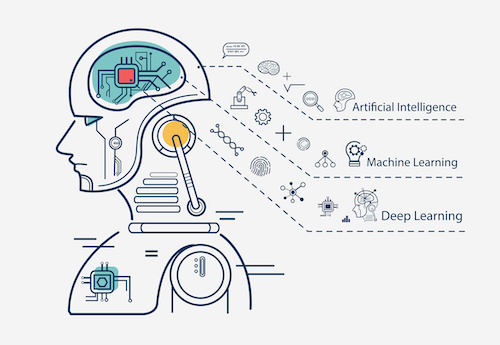
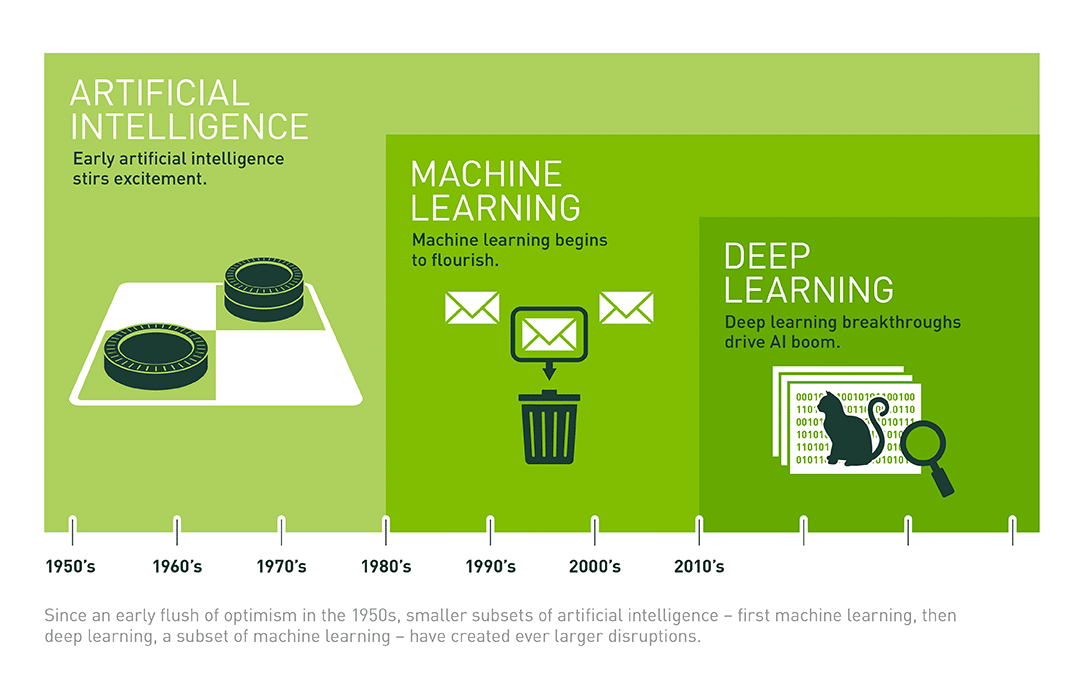
Artificial Intelligence (AI) has transformed numerous industries, and at the heart of this revolution lies deep learning. This subset of machine learning has enabled computers to mimic human-like decision-making processes, leading to advancements in areas from healthcare to entertainment.
What is Deep Learning?
Deep learning is a type of machine learning that involves neural networks with many layers. These artificial neural networks are inspired by the human brain’s structure and function, allowing machines to process data in complex ways. By using large datasets and powerful algorithms, deep learning models can recognize patterns and make decisions with remarkable accuracy.
Key Components
- Neural Networks: Composed of nodes or “neurons,” these networks process input data through multiple layers, each extracting different features for analysis.
- Training Data: Deep learning requires vast amounts of labeled data to train models effectively. The more data available, the better the model can learn and generalize.
- Algorithms: Algorithms such as backpropagation help optimize the network by adjusting weights based on errors in predictions.
- Computational Power: Advances in hardware, including GPUs and TPUs, have significantly boosted the capability to train complex models efficiently.
Applications Across Industries
The impact of deep learning spans various sectors:
Healthcare
In healthcare, deep learning algorithms assist in diagnosing diseases from medical images with high precision. For example, they can detect anomalies in X-rays or MRI scans that might be missed by human eyes.
Automotive Industry
The development of autonomous vehicles relies heavily on deep learning. These systems use neural networks to interpret sensor data and make real-time driving decisions.
Natural Language Processing (NLP)
NLP applications like virtual assistants rely on deep learning to understand and respond to human language naturally. This technology powers chatbots, translation services, and sentiment analysis tools.
Entertainment
The entertainment industry uses deep learning for content recommendation systems that personalize user experiences on platforms like Netflix or Spotify by predicting user preferences based on past behavior.
The Future of Deep Learning
The future holds immense potential for deep learning as research continues to push boundaries. Emerging areas such as explainable AI aim to make these models more transparent and understandable. Additionally, efforts are underway to reduce the computational demands of training large models, making them more accessible across different devices and platforms.
The ethical considerations surrounding AI also remain a critical focus area. Ensuring that algorithms are fair and unbiased is essential as they increasingly influence decisions impacting people’s lives globally.
Conclusion
The journey of AI deep learning is just beginning. As technology evolves, it promises even greater innovations that could redefine how we interact with machines—and how they interact with us—across all facets of life. Embracing this technology responsibly will be key to unlocking its full potential for societal benefit.
9 Advantages of AI Deep Learning: Transforming Data Analysis, Automation, and Innovation
- 1. Enhanced Data Analysis
- 2. Automation of Tasks
- 3. Improved Predictive Capabilities
- 4. Personalized Experiences
- 5. Increased Efficiency
- 6. Advanced Image Recognition
- 7. Real-time Decision Making
- 8. Scalability
- 9. Innovation Catalyst
Challenges of AI Deep Learning: High Energy Use, Black Box Complexity, Data Dependency, Vulnerability to Attacks, Bias Risks, Limited Transferability, and Lack of Common Sense
- High computational requirements for training deep learning models, leading to significant energy consumption.
- Complexity in interpreting and explaining decisions made by deep learning algorithms, often referred to as the ‘black box’ problem.
- Dependency on large datasets for effective training, which can raise privacy concerns and limit accessibility.
- Vulnerability to adversarial attacks where slight modifications to input data can lead to incorrect predictions.
- Potential biases in AI models due to skewed or incomplete training data, resulting in unfair outcomes for certain groups.
- Difficulty in transferring knowledge learned from one deep learning model to another, hindering scalability and generalization.
- Lack of human-like common sense reasoning abilities in AI systems, limiting their ability to understand context or make nuanced judgments.
1. Enhanced Data Analysis
Deep learning algorithms offer a significant advantage in enhanced data analysis by efficiently handling massive datasets with speed and precision. This capability allows organizations to extract valuable insights from complex data sources that would be challenging or impossible to analyze manually. By swiftly identifying patterns, trends, and correlations within the data, deep learning empowers decision-makers to make informed choices based on comprehensive and reliable information. The ability of these algorithms to process data quickly and accurately opens up new possibilities for improving efficiency, driving innovation, and gaining a competitive edge in various industries.
2. Automation of Tasks
AI deep learning plays a crucial role in automating repetitive tasks, which significantly enhances efficiency across various industries. By taking over routine and time-consuming activities, such as data entry, sorting, and basic customer service inquiries, deep learning algorithms allow human resources to focus on more complex and strategic tasks that require critical thinking and creativity. This shift not only boosts productivity but also leads to increased job satisfaction as employees can engage in more meaningful work. Furthermore, automation through deep learning reduces the likelihood of human error in mundane tasks, ensuring higher accuracy and consistency in operations. As a result, businesses can streamline processes and allocate their workforce to areas where human insight is most valuable.
3. Improved Predictive Capabilities
Deep learning models offer a significant advantage in improved predictive capabilities by leveraging intricate patterns within data to make highly accurate forecasts. Through the sophisticated layers of neural networks, these models can discern subtle relationships and trends that might be challenging for traditional algorithms to detect. By analyzing vast amounts of data, deep learning enhances prediction accuracy across various domains, empowering organizations to make informed decisions and anticipate future outcomes with greater confidence and precision.
4. Personalized Experiences
Deep learning has revolutionized the way personalized experiences are crafted, significantly enhancing user satisfaction across various platforms. By analyzing vast amounts of data and recognizing patterns in user behavior, deep learning algorithms can tailor content and recommendations to suit individual preferences. Whether it’s a streaming service suggesting movies based on past viewing habits or an e-commerce site customizing product recommendations, these personalized interactions create a more engaging and satisfying user experience. This level of customization not only meets users’ unique needs but also fosters loyalty by making each interaction feel relevant and intuitive. As deep learning technology continues to advance, the potential for even more refined personalization is immense, promising to transform how users interact with digital services.
5. Increased Efficiency
AI deep learning significantly enhances efficiency across various industries by optimizing processes and improving decision-making capabilities. In manufacturing, for instance, deep learning algorithms can predict equipment failures before they occur, reducing downtime and maintenance costs. In the financial sector, these algorithms analyze vast amounts of data to detect fraudulent activities in real-time, ensuring faster and more accurate responses. Retailers use deep learning to manage inventory levels more effectively by predicting consumer demand trends, thereby minimizing overstock and stockouts. Additionally, in logistics, AI-powered systems optimize delivery routes to reduce fuel consumption and improve delivery times. By streamlining operations and providing actionable insights, deep learning enables businesses to operate more efficiently and competitively.
6. Advanced Image Recognition
Deep learning’s prowess in image recognition is truly remarkable. By leveraging complex neural networks, deep learning algorithms have revolutionized tasks such as facial recognition and medical imaging analysis. The ability to accurately identify patterns and features within images has opened up a world of possibilities in various fields, from enhancing security systems to aiding medical professionals in diagnosing illnesses with greater precision. The advanced capabilities of deep learning in image recognition underscore its transformative impact on technology and society as a whole.
7. Real-time Decision Making
One of the significant advantages of AI deep learning is its capability for real-time decision-making. Neural networks, with their intricate architecture, can process vast amounts of information rapidly and efficiently. This ability is particularly beneficial in dynamic environments where quick decisions are crucial. For instance, in autonomous vehicles, deep learning models analyze sensor data instantaneously to make split-second driving decisions that ensure safety and efficiency on the road. Similarly, in financial markets, these systems can evaluate market trends and execute trades faster than humanly possible, capitalizing on fleeting opportunities. The speed and accuracy with which neural networks operate enable them to handle complex tasks in real-time, making them invaluable across various high-stakes applications.
8. Scalability
Deep learning models offer a significant advantage in scalability, as they can efficiently manage larger volumes of data while maintaining high performance levels. This capability is crucial in today’s data-driven world, where the amount of information generated continues to grow exponentially. By being able to scale effectively, deep learning models ensure that they can adapt to the ever-expanding datasets, making them versatile tools for various applications across industries such as healthcare, finance, and technology.
9. Innovation Catalyst
AI deep learning serves as a powerful innovation catalyst by unlocking new possibilities for problem-solving and optimization across various sectors. Its ability to analyze vast amounts of data and identify patterns that humans might miss enables organizations to develop cutting-edge solutions and improve existing processes. For instance, in the manufacturing industry, deep learning algorithms can optimize production lines by predicting equipment failures before they occur, thereby reducing downtime and maintenance costs. In the financial sector, these algorithms can enhance fraud detection by identifying unusual transaction patterns in real time. By driving such advancements, AI deep learning not only enhances efficiency but also opens up new avenues for growth and development, pushing industries toward a more innovative future.
High computational requirements for training deep learning models, leading to significant energy consumption.
Deep learning models, while powerful, come with the drawback of high computational requirements during training. This demand for substantial processing power often leads to significant energy consumption, as these models rely on advanced hardware like GPUs and TPUs to handle complex calculations efficiently. The energy-intensive nature of training deep learning models not only raises concerns about environmental sustainability but also increases operational costs for companies deploying these technologies. As a result, there is a growing need for more energy-efficient algorithms and hardware solutions to mitigate the environmental impact and make deep learning more accessible and sustainable in the long term.
Complexity in interpreting and explaining decisions made by deep learning algorithms, often referred to as the ‘black box’ problem.
The complexity in interpreting and explaining decisions made by deep learning algorithms, commonly known as the ‘black box’ problem, poses a significant challenge in the field of AI. These algorithms operate with numerous layers and intricate structures that process data in ways not easily understood by humans. As a result, it becomes difficult to trace how specific inputs lead to particular outputs, making it challenging to ensure transparency and accountability. This lack of interpretability raises concerns, especially in critical applications like healthcare or finance, where understanding the rationale behind a decision is crucial for trust and compliance. Addressing this issue is essential for advancing AI’s integration into society while maintaining ethical standards and public confidence.
Dependency on large datasets for effective training, which can raise privacy concerns and limit accessibility.
AI deep learning’s dependency on large datasets for effective training presents significant challenges, particularly regarding privacy and accessibility. To develop accurate models, vast amounts of data are required, often containing sensitive personal information. This raises privacy concerns as the collection, storage, and use of such data must comply with stringent regulations to protect individuals’ rights. Moreover, access to these large datasets is typically limited to organizations with substantial resources, creating a barrier for smaller entities and researchers who may lack the means to acquire or process such data. This limitation can stifle innovation and lead to a concentration of power among a few tech giants, potentially skewing the development and application of AI technologies. Addressing these issues is crucial to ensure that deep learning advancements are both ethically responsible and widely accessible.
Vulnerability to adversarial attacks where slight modifications to input data can lead to incorrect predictions.
Deep learning models, despite their impressive capabilities, are notably vulnerable to adversarial attacks. These attacks involve making subtle, often imperceptible changes to the input data that can drastically alter the model’s output. For instance, an image classifier might confidently misidentify a picture of a cat as a dog simply because a few pixels were altered in a way that is invisible to the human eye. This vulnerability poses significant risks, especially in critical applications like autonomous driving or medical diagnostics, where incorrect predictions could lead to dangerous consequences. Addressing this issue is crucial for ensuring the reliability and safety of AI systems in real-world scenarios.
Potential biases in AI models due to skewed or incomplete training data, resulting in unfair outcomes for certain groups.
AI deep learning models are highly dependent on the data they are trained on, and potential biases in this data can lead to significant issues. When training datasets are skewed or incomplete, the resulting AI models may inadvertently learn and perpetuate these biases. This can result in unfair outcomes for certain groups, particularly those that are underrepresented or misrepresented in the data. For example, if a facial recognition system is primarily trained on images of individuals from one ethnic group, it may perform poorly when identifying individuals from other ethnic backgrounds. Such biases can lead to discrimination and reinforce existing societal inequalities, highlighting the critical need for diverse and representative training datasets to ensure fairness and equity in AI applications.
Difficulty in transferring knowledge learned from one deep learning model to another, hindering scalability and generalization.
One significant challenge of AI deep learning is the difficulty in transferring knowledge from one model to another, which hinders scalability and generalization. Unlike humans, who can apply learned concepts from one context to different situations, deep learning models often struggle to adapt their knowledge beyond the specific tasks they were trained on. This limitation means that each new task typically requires training a separate model from scratch, consuming considerable time and computational resources. As a result, this lack of transferability can impede the efficient deployment of AI solutions across diverse applications and environments, ultimately slowing down progress in areas where quick adaptation is crucial.
Lack of human-like common sense reasoning abilities in AI systems, limiting their ability to understand context or make nuanced judgments.
Despite the remarkable advancements in AI deep learning, a significant limitation is the lack of human-like common sense reasoning abilities. AI systems often struggle to understand context or make nuanced judgments, which are essential for interpreting complex real-world situations. While these systems excel at processing vast amounts of data and recognizing patterns, they lack the intuitive grasp of everyday knowledge that humans use to navigate ambiguous scenarios. This deficiency can lead to errors in decision-making when faced with situations that require an understanding of subtleties or implicit information, highlighting the gap between machine intelligence and human cognitive abilities. As a result, AI may misinterpret context or overlook important nuances, limiting its effectiveness in applications that demand sophisticated reasoning and adaptability.