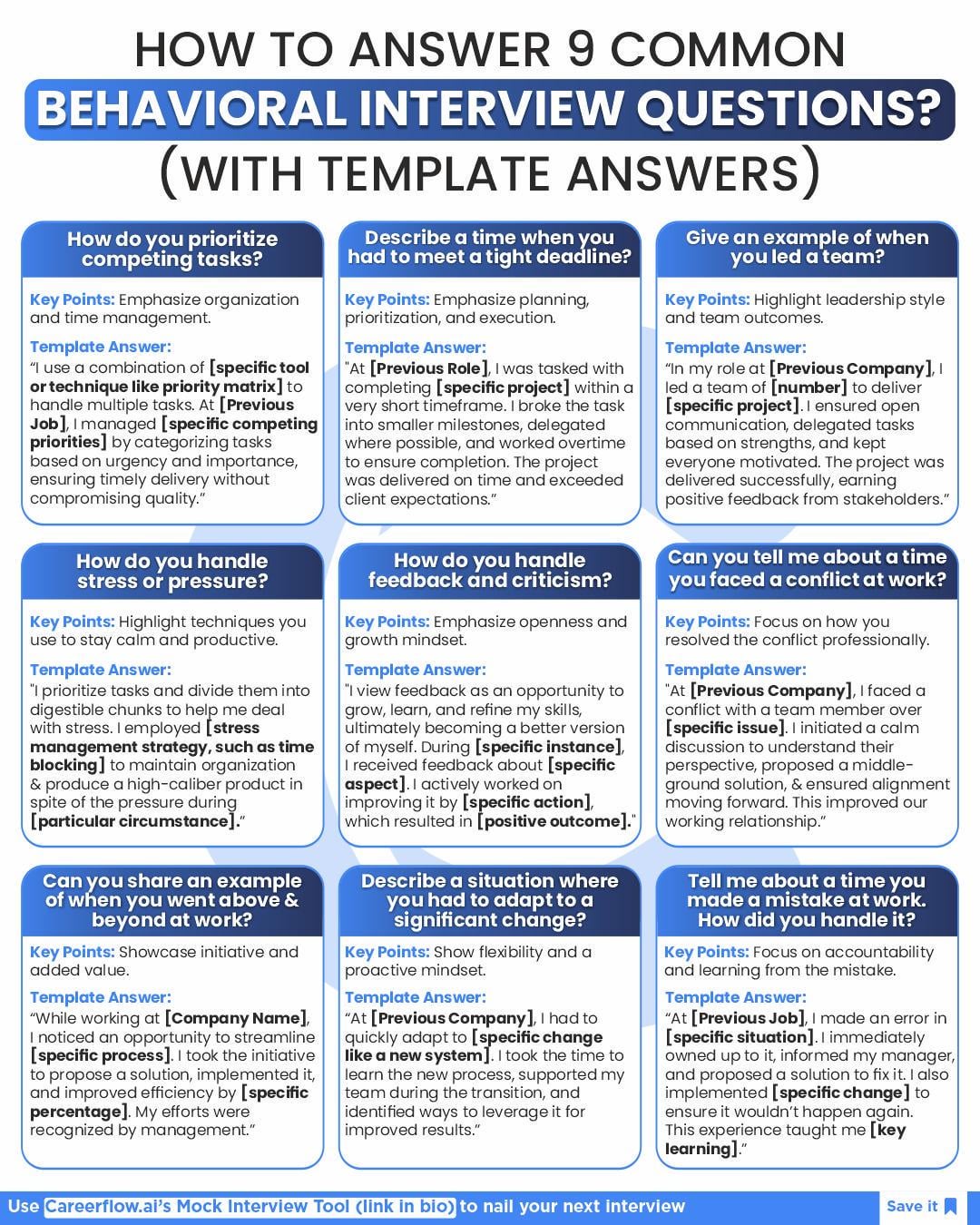
Exploring Common Behavioral Interview Questions
Behavioral interviews have become a popular method for employers to assess a candidate’s suitability for a job. Unlike traditional interviews that focus on qualifications and skills, behavioral interviews delve into past experiences and behaviors to predict future performance. One key aspect of preparing for a behavioral interview is familiarizing yourself with common behavioral questions that may be asked. Let’s explore some of these questions and how you can effectively respond to them.
Tell me about a time when you had to work under pressure.
This question aims to assess your ability to handle stress and meet deadlines. When responding, provide a specific example from your past work experience, highlighting the actions you took to manage the pressure effectively and achieve successful outcomes.
Describe a situation where you had to resolve a conflict with a coworker.
Employers want to know how you navigate interpersonal challenges in the workplace. Share a real-life scenario where you successfully resolved a conflict by demonstrating effective communication, problem-solving skills, and the ability to collaborate towards a resolution.
Can you give an example of when you showed leadership skills?
This question evaluates your leadership potential and ability to take charge in various situations. Discuss an instance where you assumed a leadership role, inspired others, made decisions, and achieved positive results through your guidance and direction.
How do you handle failure or setbacks?
Your response to this question demonstrates your resilience and ability to learn from challenges. Share an example of a setback you encountered, explain how you approached the situation, what lessons you learned, and how you used those lessons to grow professionally.
In conclusion, preparing for behavioral interview questions is essential for showcasing your skills, experiences, and qualities effectively. By understanding common behavioral questions and practicing thoughtful responses based on your past experiences, you can confidently navigate through interviews and impress potential employers with your competency and suitability for the role.
Mastering Behavioral Interviews: 7 Essential Tips for Success
- Research common behavioral interview questions in advance
- Prepare specific examples from past experiences to showcase your skills
- Use the STAR method (Situation, Task, Action, Result) to structure your answers
- Focus on highlighting your problem-solving abilities and teamwork skills
- Be honest and authentic in your responses
- Practice active listening during the interview to understand questions clearly before answering
- Ask follow-up questions to demonstrate your interest and engagement
Research common behavioral interview questions in advance
It is highly recommended to research common behavioral interview questions in advance to prepare effectively for your job interview. By familiarizing yourself with typical questions that may be asked, you can strategize and craft thoughtful responses based on your past experiences. This proactive approach not only boosts your confidence during the interview but also demonstrates to the interviewer that you are well-prepared and serious about the opportunity. Researching common behavioral interview questions allows you to anticipate what might be asked and tailor your answers to highlight relevant skills and achievements, increasing your chances of making a strong impression on potential employers.
Prepare specific examples from past experiences to showcase your skills
When preparing for a behavioral interview, it is crucial to gather specific examples from your past experiences that highlight your skills and abilities. By showcasing concrete instances where you successfully demonstrated key competencies such as problem-solving, teamwork, leadership, and adaptability, you provide tangible evidence of your qualifications to potential employers. These specific examples not only validate your claims but also help interviewers visualize how you can apply your skills in a work environment, making a compelling case for why you are the ideal candidate for the job.
Use the STAR method (Situation, Task, Action, Result) to structure your answers
When facing common behavioral interview questions, employing the STAR method (Situation, Task, Action, Result) can significantly enhance the structure and impact of your responses. By outlining the specific Situation or context, detailing the Task at hand, describing the Actions you took to address it, and concluding with the Results achieved, you provide a clear and comprehensive framework for illustrating your skills and experiences. This method not only helps you organize your thoughts but also enables interviewers to grasp the depth of your capabilities and accomplishments effectively.
Focus on highlighting your problem-solving abilities and teamwork skills
When addressing common behavioral interview questions, it is crucial to emphasize your problem-solving abilities and teamwork skills. Employers value candidates who can effectively navigate challenges and collaborate with others to achieve goals. By showcasing your problem-solving approach in past situations and illustrating how you have contributed positively to team dynamics, you demonstrate your capacity to handle complex tasks and work well with colleagues. Highlighting these qualities not only sets you apart as a candidate but also showcases your readiness to excel in a professional setting that values collaboration and innovation.
Be honest and authentic in your responses
When it comes to addressing common behavioral interview questions, one crucial tip to remember is to be honest and authentic in your responses. Employers value sincerity and genuine reflections on past experiences, as they provide insight into your character and how you approach challenges. By being truthful in your answers, you not only build trust with the interviewer but also demonstrate integrity and self-awareness. Authentic responses allow you to showcase your unique qualities and capabilities, setting you apart as a candidate who is transparent, reliable, and well-suited for the role.
Practice active listening during the interview to understand questions clearly before answering
One valuable tip for handling common behavioral interview questions is to practice active listening during the interview process. By actively listening to the interviewer’s questions, you can ensure that you fully understand the context and requirements before formulating your responses. This approach allows you to provide relevant and concise answers that directly address the question at hand, demonstrating your attentiveness and communication skills. Active listening also helps you avoid misunderstandings and enables you to tailor your responses effectively to showcase your qualifications and experiences in the best possible light.
Ask follow-up questions to demonstrate your interest and engagement
When facing common behavioral interview questions, it is beneficial to ask follow-up questions to showcase your genuine interest and active engagement in the conversation. By seeking clarification, additional details, or examples related to the initial question, you not only demonstrate your curiosity and eagerness to understand the topic thoroughly but also showcase your critical thinking skills and ability to delve deeper into complex situations. Engaging in follow-up inquiries can further highlight your communication skills and demonstrate your proactive approach to problem-solving and decision-making in a professional setting.