Understanding Deep Learning in AI
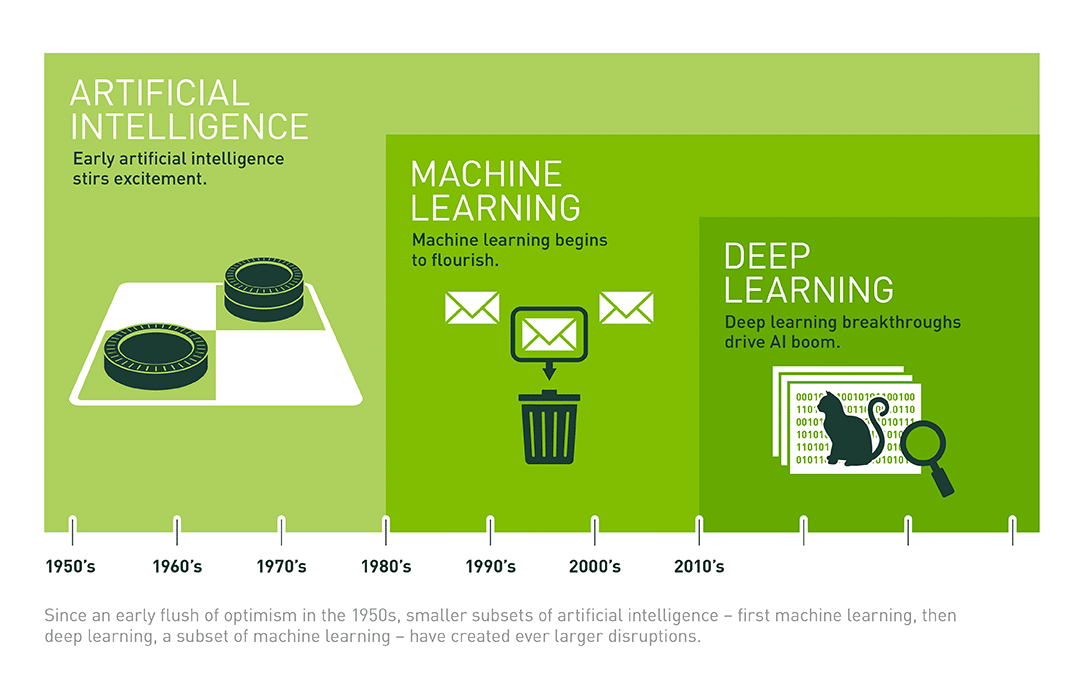
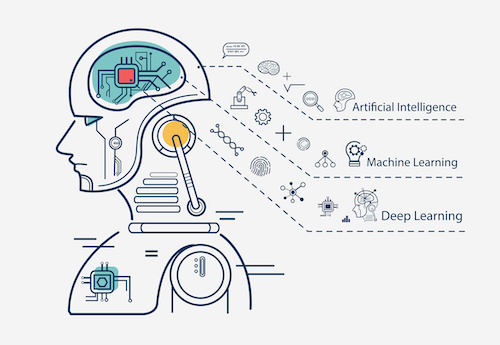
Deep learning is a subset of artificial intelligence (AI) that has revolutionized the way machines learn and process information. By mimicking the human brain’s neural networks, deep learning enables computers to perform complex tasks such as image and speech recognition with remarkable accuracy.
What is Deep Learning?
At its core, deep learning involves training artificial neural networks with multiple layers. These layers allow the system to learn representations of data with increasing levels of abstraction. Unlike traditional machine learning algorithms that rely on manually crafted features, deep learning models automatically discover patterns in raw data.
How Does It Work?
Deep learning models are typically built using structures known as neural networks. These networks consist of interconnected nodes, or “neurons,” organized into layers:
- Input Layer: The first layer receives raw data inputs.
- Hidden Layers: Intermediate layers where computations are performed to extract features from the data. The term “deep” refers to having many hidden layers.
- Output Layer: The final layer produces predictions or classifications based on the processed information.
The power of deep learning comes from its ability to learn from vast amounts of data and improve over time. As more data is fed into the system, it adjusts its weights and biases through a process called backpropagation, minimizing errors and enhancing accuracy.
Applications of Deep Learning
- Image Recognition: Deep learning models can identify objects within images with high precision, powering technologies like facial recognition systems and autonomous vehicles.
- NLP (Natural Language Processing): From language translation to sentiment analysis, deep learning enhances how machines understand and generate human language.
- Healthcare: By analyzing medical images and patient data, deep learning assists in diagnosing diseases and personalizing treatment plans.
- Agriculture: Deep learning aids in crop monitoring and disease detection through image analysis captured by drones or satellites.
The Future of Deep Learning
The potential for deep learning continues to expand as computational power increases and more sophisticated algorithms are developed. Researchers are exploring areas such as unsupervised learning, where systems can autonomously identify patterns without labeled data, further broadening AI’s capabilities.
The integration of deep learning into various industries promises transformative changes in how we live and work. However, challenges remain regarding ethical considerations, interpretability of models, and ensuring unbiased outcomes.
Conclusion
The impact of deep learning on AI is profound, enabling machines to perform tasks once thought impossible for computers. As technology advances, it will be crucial for society to navigate both the opportunities and challenges presented by this powerful tool responsibly.
6 Essential Tips for Mastering Deep Learning in AI
- Understand the basics of neural networks and how they work.
- Preprocess your data carefully to ensure good model performance.
- Experiment with different network architectures to find the best one for your task.
- Regularize your model to prevent overfitting on the training data.
- Monitor and analyze the performance of your model regularly to make improvements.
- Stay updated with the latest research and advancements in deep learning.
Understand the basics of neural networks and how they work.
Understanding the basics of neural networks and how they work is fundamental to grasping deep learning in AI. Neural networks are inspired by the human brain and consist of layers of interconnected nodes, or “neurons,” that process data. Each neuron receives input, performs a calculation, and passes its output to the next layer. The network learns by adjusting the weights of these connections through a process called backpropagation, which minimizes error in predictions. By comprehending these foundational concepts, one can better appreciate how deep learning models identify patterns and make decisions from complex datasets, driving advancements across various fields such as image recognition and natural language processing.
Preprocess your data carefully to ensure good model performance.
When delving into deep learning in AI, a crucial tip to remember is the importance of carefully preprocessing your data to guarantee optimal model performance. Data preprocessing involves tasks such as cleaning, normalization, and feature engineering, all of which are essential for feeding high-quality input to the deep learning model. By meticulously preparing your data before training the model, you can enhance its ability to extract meaningful patterns and make accurate predictions. Proper data preprocessing sets the foundation for a successful deep learning system that can effectively learn from the provided information and deliver reliable results.
Experiment with different network architectures to find the best one for your task.
To optimize the performance of your deep learning model in AI, it is essential to experiment with various network architectures to determine the most suitable one for your specific task. By exploring different configurations of layers, nodes, and connections within the neural network, you can identify the architecture that yields the best results in terms of accuracy and efficiency. This iterative process of experimentation allows you to fine-tune your model and enhance its ability to tackle the complexities of the task at hand effectively.
Regularize your model to prevent overfitting on the training data.
Regularizing a deep learning model is essential to prevent overfitting, which occurs when a model learns the training data too well, including its noise and outliers, resulting in poor performance on new, unseen data. Techniques such as L1 and L2 regularization add a penalty to the loss function based on the magnitude of the coefficients, discouraging overly complex models. Dropout is another effective method where random neurons are ignored during training, forcing the network to learn more robust features. By applying these regularization techniques, models can generalize better to new data, striking a balance between fitting the training set and maintaining predictive accuracy in real-world applications.
Monitor and analyze the performance of your model regularly to make improvements.
Monitoring and analyzing the performance of a deep learning model regularly is crucial for ensuring its effectiveness and reliability. By consistently evaluating metrics such as accuracy, precision, recall, and loss, developers can identify areas where the model may be underperforming or drifting from expected outcomes. This continuous assessment allows for timely adjustments, such as fine-tuning hyperparameters or updating the training data to improve the model’s accuracy and generalization capabilities. Additionally, regular monitoring helps in detecting potential biases or errors that could affect decision-making processes. In essence, maintaining a vigilant eye on model performance is key to optimizing its functionality and ensuring it remains aligned with real-world requirements.
Stay updated with the latest research and advancements in deep learning.
To stay at the forefront of deep learning in AI, it is essential to remain informed about the latest research and advancements in the field. By staying updated, you can gain insights into new techniques, algorithms, and applications that can enhance your understanding and expertise in deep learning. Continuous learning and awareness of emerging trends will not only keep you informed but also empower you to adapt to changes and contribute meaningfully to the ever-evolving landscape of artificial intelligence.