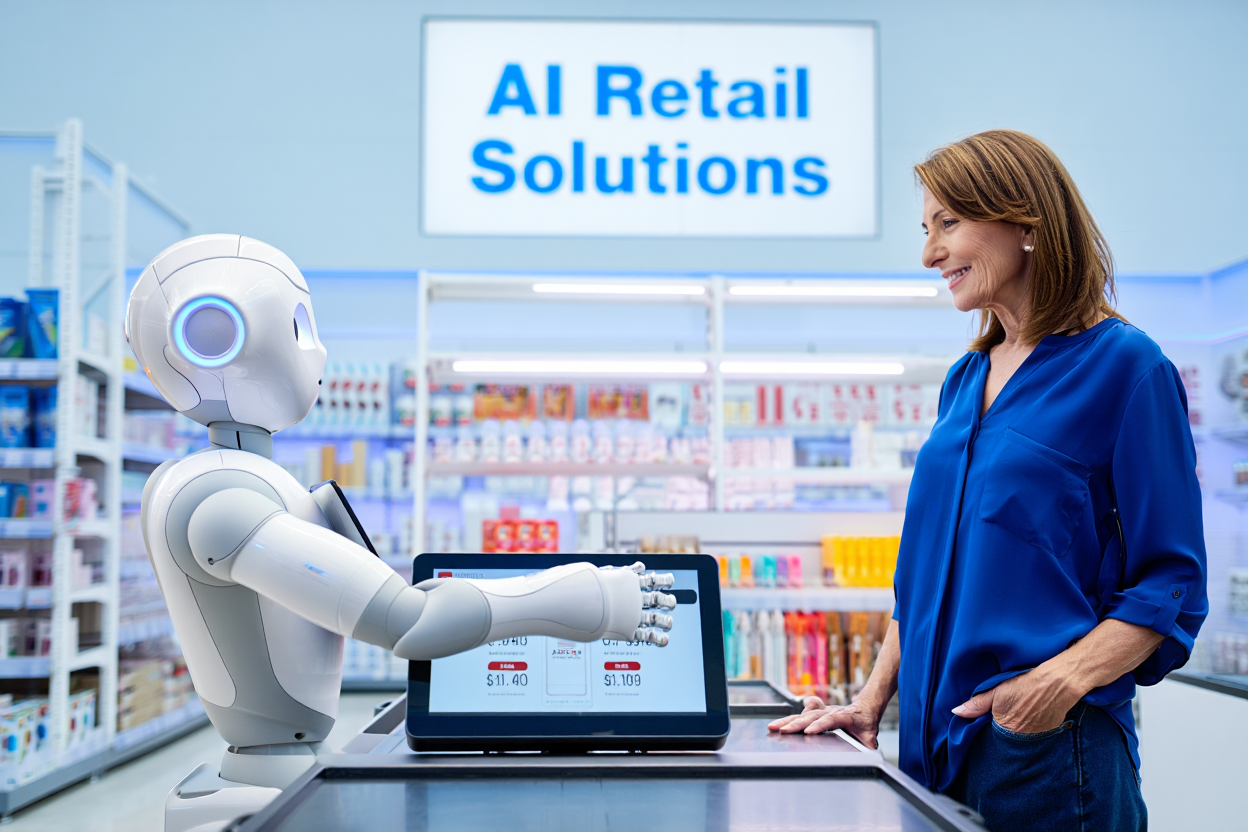
AI in the Retail Industry: Applications, Benefits, and Challenges
Artificial intelligence is changing how retailers forecast demand, manage inventory, serve customers, and detect fraud. From product recommendations to tools that help employees locate merchandise, AI can support decisions throughout the retail business.
Its value, however, depends on more than the technology itself. Successful adoption requires reliable data, clear business goals, and safeguards that protect customers and employees. Understanding both the opportunities and the limitations is essential for retailers considering an investment.
How Is AI Used in Retail?
AI systems analyze information to identify patterns, make predictions, or generate content. In retail, that information may include sales records, inventory levels, product descriptions, customer interactions, and seasonal trends.
Different tools serve different purposes. Machine learning can help forecast product demand, computer vision can identify potential gaps on store shelves, and generative AI can draft product descriptions or answer questions in conversational language. Not every retail automation tool uses AI, and not every problem requires it.
Key Applications of AI in Retail
Personalized Shopping Experiences
Recommendation systems help shoppers discover products based on signals such as browsing activity, previous purchases, and similarities between items. A clothing retailer, for example, might suggest accessories that complement a selected outfit.
Useful personalization makes shopping easier without feeling intrusive. Retailers should explain how customer data is used, honor applicable privacy choices, and avoid collecting information that is unnecessary for the service.
Demand Forecasting and Inventory Management
Predicting demand is one of retail’s most persistent challenges. Ordering too much ties up cash and can lead to markdowns or waste. Ordering too little creates stockouts and missed sales.
AI forecasting tools can analyze historical sales alongside factors such as promotions, holidays, and weather. These forecasts can help retailers plan replenishment and distribute inventory across stores and fulfillment centers.
Predictions still require oversight. A new competitor, an unexpected disruption, or a sudden shift in consumer preferences can make historical patterns less useful.
Customer Service and Shopping Assistance
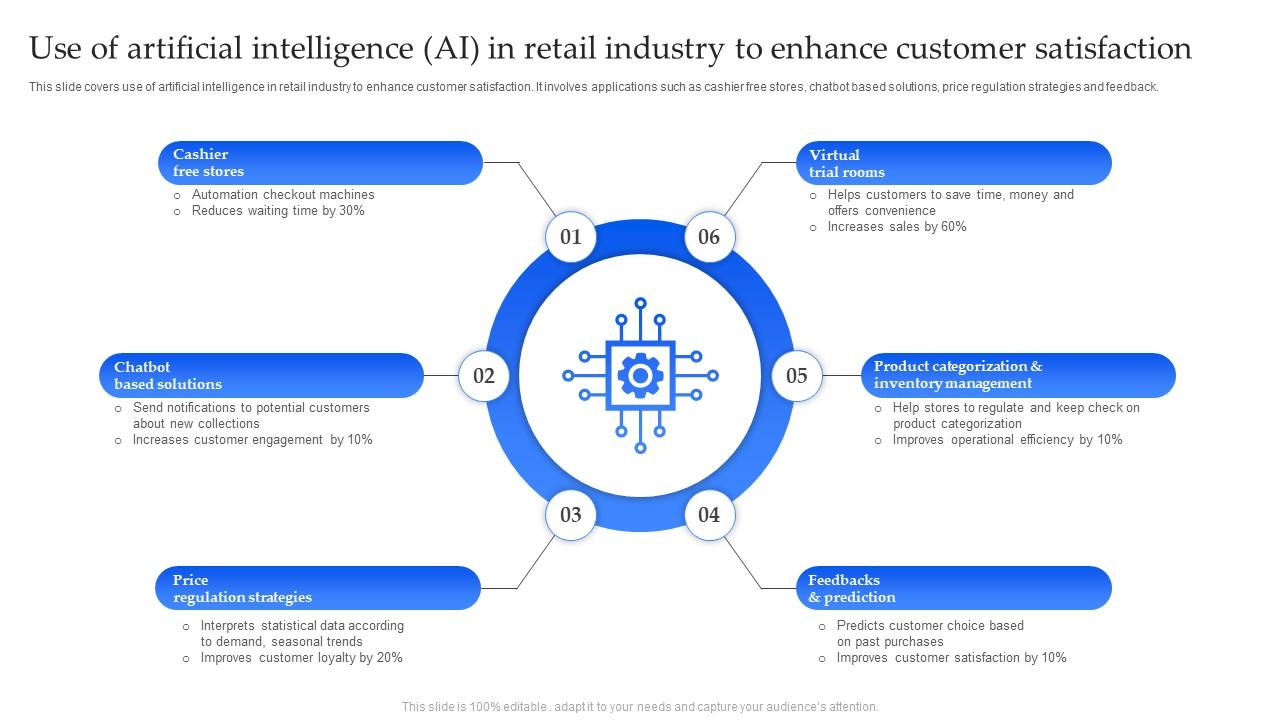
AI-powered assistants can answer common questions about delivery, product availability, returns, and store policies. Generative AI can also help shoppers compare products or narrow their choices through conversation.
These systems work best when connected to accurate, current information. An assistant should not invent a refund policy or promise an unavailable item. Customers also need a straightforward way to reach a human representative when a request is complex or unresolved.
Pricing and Promotion Planning
Retailers can use AI to evaluate how demand, inventory, competitor prices, and promotional activity may affect sales. This can support decisions about discounts, clearance timing, and promotional offers.
Pricing tools need clear boundaries. Incorrect data or poorly defined objectives can produce confusing or inappropriate price changes. Retailers should review outcomes for accuracy, fairness, and compliance with applicable consumer protection and competition laws.
In-Store Operations
Computer vision and other AI tools can help identify empty shelf spaces, misplaced products, or checkout issues. Employee-facing assistants can make it easier to find product information, check procedures, or answer customer questions.
Accuracy varies with store conditions, equipment, and system design. Tools that monitor people introduce additional privacy concerns, especially when biometric information is involved. Their use calls for careful evaluation rather than an assumption that more monitoring always improves operations.
Fraud Detection
AI can flag patterns associated with payment fraud, account takeovers, or suspicious return activity. By evaluating multiple signals together, these tools may help retailers identify risks that simple rules miss.
False positives remain a concern. Legitimate customers can be blocked or subjected to unnecessary verification. Human review and accessible appeal processes help reduce the harm caused by incorrect decisions.
Benefits for Retailers and Customers
When implemented well, AI can support several practical improvements:
- Better product availability: More accurate replenishment decisions can reduce stockouts.
- Less waste: Improved demand planning can limit overstock, particularly for perishable goods.
- Faster service: Automated assistance can handle routine questions while employees address more complicated needs.
- More relevant discovery: Recommendations can help customers find suitable products more easily.
- Greater operational efficiency: Employees can spend less time searching for information or completing repetitive tasks.
These benefits are not guaranteed. Results depend on the use case, data quality, integration costs, and how effectively employees can use the tools.
Challenges Retailers Need to Address
Data Quality and System Integration
Retail data often sits across separate sales, inventory, e-commerce, and customer service platforms. Inconsistent product records or delayed inventory updates can undermine AI performance. Improving basic data management may be necessary before advanced tools deliver meaningful value.
Privacy, Security, and Fairness
Retailers must protect sensitive information and control access to it. AI systems also need testing for unfair outcomes, such as fraud screening that disproportionately inconveniences certain customers. Generated content requires review for factual errors, misleading claims, and inappropriate language.
Employee Training and Oversight
Employees need to understand what a tool can do, where it can fail, and when to override its recommendations. Training and clear accountability are as important as technical deployment.
How to Get Started
A practical approach begins with one clearly defined problem, such as frequent stockouts or slow responses to routine service requests. The retailer can establish a baseline, run a limited pilot, and compare results against measurable goals.
Evaluation should include total costs, error rates, customer satisfaction, and employee workload—not just speed or sales. A pilot should expand only when the evidence supports it.
The Future of AI in Retail
AI is likely to become more closely integrated into everyday retail software, making predictive and conversational tools accessible to a wider range of businesses. Its strongest applications will connect useful recommendations with reliable operational data and appropriate human judgment.
For retailers, the goal is not to use AI everywhere. It is to apply it where it solves a real problem, improves the shopping experience, and earns customer trust.
8 Key Benefits of AI in the Retail Industry
- Improves demand forecasting.
- Reduces inventory waste.
- Helps prevent stockouts.
- Personalizes product recommendations.
- Speeds up customer service.
- Automates repetitive tasks.
- Detects suspicious transactions.
- Supports faster business decisions.
Five Key Drawbacks of AI in the Retail Industry
- Can compromise customer privacy.
- May produce biased or unfair outcomes.
- Can make costly errors with poor data.
- May reduce some retail jobs.
- Requires significant setup and maintenance.
Improves demand forecasting.
AI improves demand forecasting in the retail industry by analyzing historical sales, seasonal trends, promotions, and factors such as weather to predict what customers are likely to buy. These insights help retailers adjust inventory levels, reduce stockouts, and avoid excess stock that can lead to markdowns or waste. AI-powered forecasting tools can also update predictions as new sales data becomes available, helping retailers respond more quickly to changing demand. While forecasts still require human oversight, they can support more informed purchasing and replenishment decisions, improving product availability and operational efficiency.
Reduces inventory waste.
AI helps retailers reduce inventory waste by forecasting demand more accurately. By analyzing sales history, seasonal trends, promotions, and other relevant factors, AI tools can help businesses decide how much stock to order and when to replenish it. This reduces the risk of overstocking products that may expire, become outdated, or remain unsold. AI can also flag slow-moving items so retailers can adjust prices or redistribute stock before those products lose value. The result can be lower storage costs, fewer markdowns, and less waste, especially for perishable goods such as groceries.
Helps prevent stockouts.
AI can help retailers prevent stockouts by analyzing sales history, current inventory, seasonal trends, promotions, and other demand signals to predict when products may run low. With earlier, more accurate forecasts, businesses can replenish popular items before shelves are empty, helping customers find what they need and reducing lost sales.
Personalizes product recommendations.
AI helps retailers personalize product recommendations by analyzing signals such as a customer’s browsing activity, past purchases, and preferences. It can use these insights to suggest relevant products, complementary items, or new options a shopper may not have discovered otherwise. When recommendations are accurate and respectful of customer privacy, they can make shopping easier, improve product discovery, and help retailers create a more engaging experience.
Speeds up customer service.
AI speeds up customer service in the retail industry by handling routine questions quickly and helping shoppers find information without waiting for a representative. AI-powered chatbots and virtual assistants can provide around-the-clock support for tasks such as tracking orders, checking product availability, and explaining return policies. These tools can also gather relevant details before transferring more complex requests to a human agent, reducing repetitive questions and helping employees resolve issues faster. When supported by accurate information and an easy path to human assistance, AI can shorten wait times and make customer service more convenient.
Automates repetitive tasks.
AI automates repetitive tasks in the retail industry, such as updating inventory records, categorizing products, and answering routine customer questions. By handling these time-consuming activities, AI can reduce manual work, improve consistency, and help stores operate more efficiently. Employees can then focus on tasks that require human judgment and personal attention, such as resolving complex issues, advising shoppers, and building customer relationships.
Detects suspicious transactions.
AI can help retailers detect suspicious transactions by analyzing patterns in payment activity, account behavior, and purchase details. When a transaction differs from a customer’s usual activity or matches known fraud indicators, the system can flag it for review or request additional verification. This can help retailers respond more quickly and reduce losses, while human oversight helps prevent legitimate purchases from being incorrectly blocked.
Supports faster business decisions.
AI supports faster business decisions in the retail industry by quickly analyzing sales trends, inventory levels, and customer behavior. Instead of manually reviewing large amounts of data, retail managers can use AI-generated insights to identify emerging demand, spot underperforming products, and prioritize restocking. For example, an AI system can flag a sudden increase in demand for a product, helping managers adjust orders before shelves run empty. With accurate data and appropriate human oversight, these insights help retailers respond more quickly to changing market conditions.
Can compromise customer privacy.
AI in retail can compromise customer privacy when it collects or analyzes sensitive information, such as shopping habits, location data, or payment details, without clear consent or adequate protection. If this data is stored insecurely, shared too broadly, or used in ways customers don’t expect, it can lead to unwanted profiling, targeted marketing, or data breaches. Retailers should be transparent about what they collect, why they use it, and how customers can control their information.
May produce biased or unfair outcomes.
AI systems in retail may produce biased or unfair outcomes when they rely on incomplete, unrepresentative, or historically biased data. For example, a system used to flag suspicious purchases could wrongly scrutinize certain customers more often, while a recommendation or pricing tool might offer different experiences to different groups without a valid reason. Retailers should regularly test these systems for disparate impacts, use representative data, and provide human review and a clear way to challenge decisions.
Can make costly errors with poor data.
AI in the retail industry can make costly errors when it relies on inaccurate, incomplete, or outdated data. For example, incorrect sales records or inventory counts can lead AI systems to recommend ordering too much of a slow-selling product or too little of a popular item. These mistakes can result in wasted stock, unnecessary storage costs, lost sales, and frustrated customers. Inaccurate pricing data can also trigger discounts that reduce profit margins. To minimize these risks, retailers need to validate their data regularly, monitor AI-generated recommendations, and maintain human oversight of high-impact decisions.
May reduce some retail jobs.
AI may reduce some retail jobs by automating tasks such as checkout, inventory tracking, and routine customer service. As retailers adopt self-checkout systems, automated stock monitoring, and chatbots, they may need fewer employees for certain roles or reduce available work hours. Although AI can also create jobs in technology support and system management, these positions often require different skills and may not be accessible to displaced workers without additional training. Retailers can help ease this transition by offering retraining and opportunities to move into roles that benefit from human judgment and personal interaction.
Requires significant setup and maintenance.
Implementing AI in the retail industry can require significant upfront investment and ongoing maintenance. Retailers may need to upgrade existing systems, organize large amounts of data, integrate new software, and train employees to use it effectively. After deployment, AI tools require regular monitoring, updates, and testing to remain accurate as customer behavior, product selections, and market conditions change. Technical support, data security, and specialized expertise add to the long-term costs, making AI adoption particularly challenging for smaller retailers with limited budgets.